

Audio By Carbonatix
A Local Government Expert, Dr Eric Oduro Osae, is calling for a 40 per cent increment in the District Common Funds.
He argues that there is a lack of scientific basis for the current 5 per cent rate proposed by the constitution, which he believes fails to meet development needs.
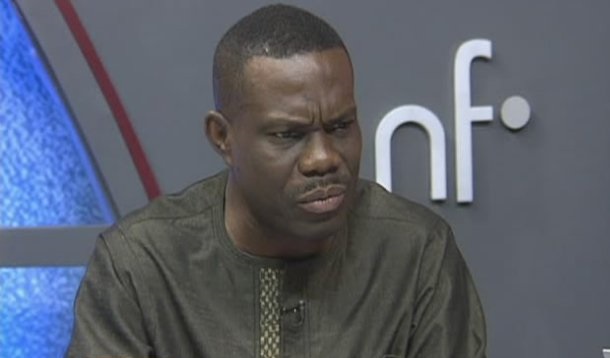
Speaking on the Super Morning Show on Joy FM, Dr Osae explained that the underperformance of the various assemblies stems from the financial challenges that most are facing.
“I think that if the Common Fund is raised to about 40% of total national revenue it will help because Article 252 of the Constitution sets only the lower limit and not the upper limit,” he said.
His comment comes on the back of assertions by the Greater Accra Regional Minister, Henry Quartey, that most assemblies within the capital are not performing.
During a meeting with some MMDCEs on Tuesday, Mr Quartey expressed disappointment with the state of affairs in the Greater Accra Region.
He also questioned the role of the Assemblies in curbing indiscipline and ensuring development.
But the Local Government expert insists allocating funds based on identified needs will ensure they are used for that purpose and not to address other issues.
“If government is not mobilising enough, then 5% of government revenue will definitely not be enough to finance development. So it is a national conversation that we should have.
"But I have always made a proposal that we should use a scientific base to calculate the development needs of the local government and transfer an amount equal to what they need to develop.
"Because the not-less-than 5% figure that was fixed in the constitution for Common Fund has no scientific basis,” he emphasised.
However, the Member of Parliament for Ho Central, Benjamin Komla Kpodo, disagrees.
He argues that the proposed increment will not yield any impact due to government's lack of desire to decentralise local governance.
“The constitution says a minimum of 5% then during President Kufuor’s time it was raised to 7.5 and then President Mahama continued with it. But when this government came it brought it back to 5% and went ahead to cap it.
"So you see that the desire for a centralized government which often initiates the decentralization process is to keep the money at the centre so they will have control. They do not want the district assemblies to have control over their affairs,” he said.
Meanwhile, the Director of the Institute of Local Government Studies, Nicholas Awortwi, says Metropolitan, Municipal, and District Chief Executives (MMDCEs) will only be accountable to the public when they are elected.
“We have a situation where the Chief Executive who should have the power and be the representative of the people is rather a representative of the central government because the law makes the Chief Executive the representative of the central government and in that case, his allegiance and accountability are all up to the central government.
“If DCEs are elected, they will make themselves more relevant and accountable to the people and will do more than what they are doing now,” he said.
Latest Stories
-
NACOC concludes four-day anti-drug operation in Eastern, Greater Accra regions
7 minutes -
Cedi dips further as external shocks intensify; one dollar equals GH¢11.70 at forex bureaus
19 minutes -
Sampa chieftaincy dispute: Sammordua dragged to court for contempt
27 minutes -
Okyere Baafi calls for suspension of Publican AI system over ‘serious flaws’
29 minutes -
Fuel fraud: OSP uncovers “secret collusion” between 5 oil companies and 3 state entities
36 minutes -
VIP Transport defends fare increase over rising fuel and maintenance costs
51 minutes -
LGBTQ+ issues not a priority for Ghanaians – Felix Kwakye Ofosu
1 hour -
Kwakye Ofosu rejects NPP Minority’s call for apology over anti-LGBTQ bill
1 hour -
Music giant Universal gets $64bn takeover offer
1 hour -
NPP criticism of anti-LGBTQ Bill ‘nothing more than political posturing’ — Kwakye Ofosu
2 hours -
Joy FM was birthed over a bowl of fufu’ – Tommy Annan-Forson shares interesting story
2 hours -
World Athletics to introduce standalone World Marathon Championships from 2030
2 hours -
Africa’s voice in global journalism grows as funding, AI and misinformation shape newsrooms
2 hours -
First Atlantic Bank holds Annual General Meeting, reports strong growth and bold outlook for 2026
2 hours -
Ghanaian-founded fintech WeWire secures Canadian PSP license to bridge African, global payments
2 hours