

Audio By Carbonatix
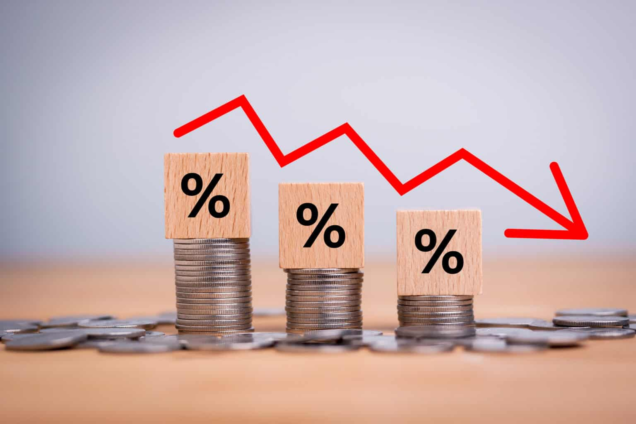
Ghana's inflation rate fell further to 3.3 per cent in February 2026, down from 3.8 per cent in January and a dramatic decline from 23.1 per cent recorded in the same month last year, the Ghana Statistical Service (GSS) has announced.
The latest Consumer Price Index (CPI) data, released by the GSS, shows the country's general price level continues to ease, offering some relief to Ghanaian households who have endured years of high living costs.
"The February figure marks the 14th consecutive decline in year-on-year inflation since January 2025 and represents the lowest rate recorded since the CPI rebasing in 2021," the GSS stated in its report.
In practical terms, the CPI stood at 264.4 in February 2026, compared to 255.9 in February 2025 — a year-on-year increase of 3.3 per cent.
On a month-on-month basis, prices rose by just 0.8 per cent between January and February, suggesting the pace of price increases remains modest.
Overall, inflation has fallen by 19.8 percentage points over the past year — a significant turnaround for an economy that was grappling with one of its worst cost-of-living crises in recent memory.
One of the clearest signs of easing pressure came from the food basket. Food inflation — which covers food and non-alcoholic beverages and carries a weight of 42.7 per cent in the CPI — dropped sharply to 2.4 per cent in February from 3.9 per cent in January, a 1.5 percentage point decline. Month-on-month, food prices rose by just 0.2 per cent.
Non-food inflation, however, crept slightly higher, rising to 4.0 per cent in February from 3.8 per cent in January.
On a month-on-month basis, non-food prices rose by 1.2 per cent, reversing the -0.5 per cent recorded in January.
Prices of imported goods showed notable stability. Year-on-year inflation for imported items eased significantly to 0.6 per cent in February from 2.0 per cent in January.
On a month-on-month basis, imported goods actually recorded a marginal decline of -0.02 percent — suggesting the cedi's relative stability in recent months may be filtering through to consumer prices.
Locally produced goods, by contrast, recorded year-on-year inflation of 4.5 per cent in February, marginally higher than the 4.4 per cent in January, with a month-on-month reading of 1.2 per cent.
The inflation story was uneven across the country. The Savannah Region recorded the lowest inflation rate at -2.6 percent, meaning prices there were actually lower than a year ago. The North East Region, on the other hand, recorded the highest rate at 8.9 per cent — more than double the national average.
The sustained disinflation trend is expected to influence the Bank of Ghana's upcoming monetary policy decisions.
Latest Stories
-
Calls for royal meeting with Epstein survivors grow ahead of US visit
2 minutes -
Ibn Chambas advocates blend of technology and human values in education
3 minutes -
UMA improves healthcare access in Asutifi North with GH₵700k ‘Kim Taylor Legacy’ Walkway
8 minutes -
Scholarships Authority and Fanaka University offer sponsorship for procurement and supply chain studies
11 minutes -
Bisa Kdei drops new single ‘Go N Look’ featuring Medikal
17 minutes -
Benin facing rising terrorism in north as French military presence faces growing criticism
19 minutes -
UEW Public Lecture Series 2026: Education debate ‘about the soul of Ghana’s future’ — Dr Ibn Chambas
20 minutes -
EU fingerprint and photo travel rules come into force from today
47 minutes -
Anti-LGBTQ+ Bill: Ghanaians demand expedited passage, not dialogue – Ntim Fordjour to Mahama
55 minutes -
EU airline industry warns of fuel shortages if Strait of Hormuz stays closed
58 minutes -
White House staff told not to place bets on prediction markets
1 hour -
Auctioneers petition Prez Mahama over ‘interference’ in public auctions
1 hour -
GEA, Mastercard Foundation drive market access for MSMEs at Kwahu Business Forum
1 hour -
Education Ministry begins review of Ghana Library Authority law
1 hour -
Ghana U-15 girls clinch back-to-back CAF Schools titles
1 hour