

Audio By Carbonatix
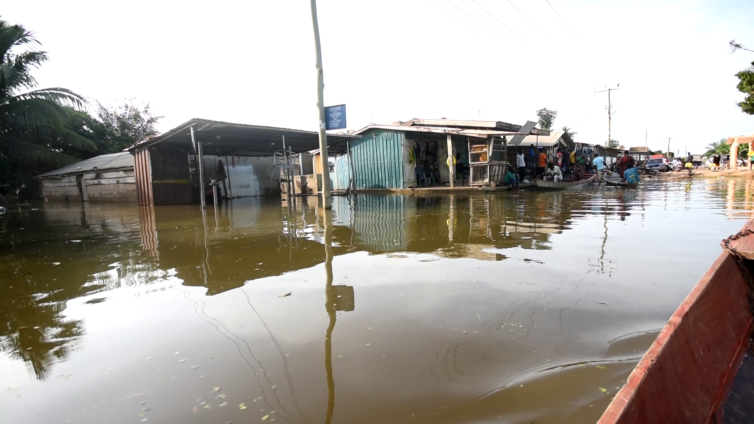
This letter article is situated within the context of the flooding that began on October 9, 2023, which is associated with VRA standard operations of spilling excess water to safeguard the integrity of the Akosombo and Kpong Hydropower dam.
On Wednesday, October 5, 2022, hundreds of houses were reported submerged at Oblogo, Tetegu, New Weija, SCC, Tatop, Sampa valley parts of Top Town and American Farm at Ngleshie Amanfro following the opening of the Spill gates of the Weija Dam by the Ghana Water Company Limited (GWCL) which caused the destruction of vehicles, home appliances and personal effects running into millions of Ghana Cedis.
A year on, on October 9, 2023, an even stronger flooding is reported at downstream communities specifically, South, Central and North Tongu, Shai Osudoku, Anlo, Ada East and Asuogyaman after the double-stage spillage of the Akosombo and Kpong Hydropower facilities by the Volta River Authority (VRA) which effect on life and property is not dissimilar from the GWCL spillage in 2022.
In order to strengthen infrastructure monitoring for flood risk reduction in the face of changing global environment associated with climate variability, a three-step solution is recommended.
One strengthened collaboration between the Water Resources Commission (WRC), The Ghana Meteorological Agency (GMET) and The Hydrological Services Authority (HSA) to build an Integrated Hydro Informatics Management System (IHIMS) on future Climate Scenario Models and System Dynamics for qualitative and quantitative monitoring and data analysis.
This requires a basin-wide installation of stream gauge networks and sensors. Then two data exchange between upstream riparian regions and their activities on the system, then three granting water infrastructure institutions system access.
A Flood Early Warning System could be a sub-component within the larger IHIMS. This will strengthen our flood emergency preparedness through the collection of quality data, analysis and forecasts to minimize the scale of damage going forward.
We hope the floods will go away but experience has shown that it is here to stay. So, we need to strengthen our adaptability for an improved disaster management.
Thank you.
About the author; Ing. Mark Benyah is a Water Resources Development and Management Consultant. Email: nakmaben@gmail.com
Latest Stories
-
Three UDS students remanded over alleged armed robbery
3 minutes -
Kudus Mohammed at risk of missing World Cup 2026 after fresh injury blow
6 minutes -
Minority urges cocoa farmers to resist pressure from galamseyers
6 minutes -
President Mahama applauds astronaut Christina Koch’s Ghana ties in Artemis II mission
8 minutes -
Ex-wife of Richard Nii Armah Quaye moves to Court of Appeal
10 minutes -
Insecurity: US orders non-emergency staff to leave embassy in Nigeria
10 minutes -
ASFC 2026: Ghana U15 girls set up Burkina Faso final after win over Zambia
14 minutes -
The passport question: Why Ghana must let its best abroad come home to serve
26 minutes -
We will be losing twice if these commodities expire at the port – CSOs Coordinator warns
34 minutes -
Setting up national champions to fail: the case of Ibrahim Mahama and E&P
34 minutes -
Rwanda’s capital embraces urban farming as development squeezes rare land
36 minutes -
Argentina passes bill loosening protection of its glaciers
36 minutes -
Sammi Awuku to question GMA in Parliament over vessel linked to alleged drug trafficking
49 minutes -
Trapped miner rescued from flooded Mexican tunnel after 14 days
58 minutes -
NPRA to prosecute employers over unpaid Tier 2 Pension contributions — Deputy CEO warns
1 hour