

Audio By Carbonatix
The integration of Indigenous Peoples and local communities into REDD+ projects in Africa is highlighted as a significant means of honouring traditional knowledge and sustainable methods and upholding Indigenous Peoples' rights at the Regional Knowledge Exchange Workshop in Abidjan.
The week-long event assessed achievements and insights from various African countries, including a learning lab that focused on "strengthening social inclusion in REDD+ implementation."
Participants concurred that promoting a human-rights-based approach to development, social justice, and equity is most effectively and efficiently achieved by ensuring the inclusion of Indigenous Peoples, women and local communities.
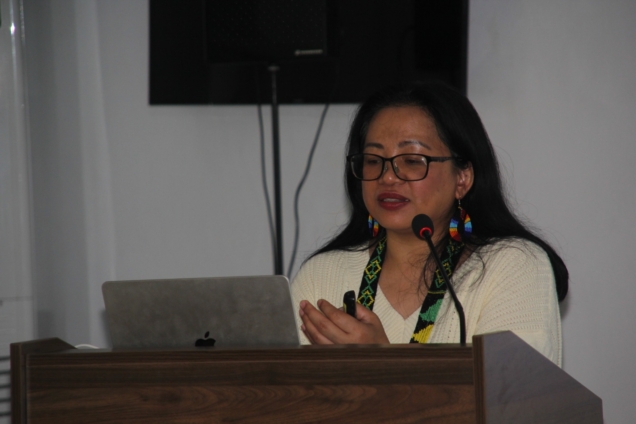
Mary Ann Manja Bayang and her colleague Elizabeth Berth, specialists in Climate Change, Indigenous Peoples, and Local Communities from the United Nations Development Programme (UNDP) climate and forest hub, emphasized the importance of integrating social inclusion and gender approaches into REDD+ planning and implementation.
Their presentations underscored the crucial role of indigenous and local communities in sustaining and enhancing REDD+ initiatives.
Manja emphasised that Indigenous Peoples are the guardians of the world's biodiversity, protecting about 80% of it. She highlighted the need to conserve Africa's significant wealth of forests, which host some of the world's hotspots in terms of biodiversity.
Manja pointed out that without the active and meaningful participation of Indigenous Peoples, and local communities, including children and women who hold valuable local environmental knowledge, REDD+ initiatives may not fully achieve their expected potential.
To successfully incorporate Indigenous Peoples' traditional knowledge and sustainable practices into REDD+ projects, various strategies can be employed.
She suggested that legal and policy reform, community engagement, leadership, capacity building, and empowerment could play pivotal roles in transforming the narrative.
“Involving Indigenous communities from the beginning stages of the project from planning and design to implementation and monitoring, and empowering Indigenous leaders to take key roles in project management and decision-making process would ensure their voices are heard and their knowledge is valued,” she said.
Manja highlighted the Surui Forest Carbon Project in Brazil as an exemplary case, being the first indigenous-led conservation initiative funded by the sale of carbon offsets. She noted that the Painter Indigenous Peoples led the project in partnership with NGOs and private entities.
However, the project faced setbacks when it was suspended in 2018 due to the discovery of gold deposits within the Surui territory, leading to increased deforestation activities.
“It demonstrates how indigenous communities can play a crucial role in forest conservation and climate change.”
The Surui Forest Carbon Project produced 299,895 carbon offsets, equivalent to removing 64,000 cars from the road.
“The Paiter-Surui used the proceeds from the offset sales to support six sustainable development initiatives that generated income and supported traditional practices such as harvesting of medicinal plants, creation of artisanal handicrafts that enabled Indigenous Peoples to live off the land while maintaining the forest.”
The workshop organised by Africa Forest Forum (AFF) in partnership with the United Nations Collaborative Programme on Reducing Emissions from Deforestation and Forest Degradation in Developing Countries (UN-REDD Programme) brought together over 45 participants from more than 12 African countries.
These included experts, REDD+ representatives, and technical staff from Burkina Faso, Cameroon, Ghana, the Republic of Congo, the Democratic Republic of Congo, Ethiopia, Uganda, Togo, Zambia, and other stakeholders involved in REDD+ implementation.
Participants such as Godfred Phiri, REDD+ environmental and social safeguards from Zambia, Tessia Boateng with the Ghana Forest Commission, Teshale Wolderamanuel, REDD+ consultant from Ethiopia, Dr Jewel Andoh with CSIR-Forestry Research Institute of Ghana among other participants lauded emphasis on issues social inclusion and gender concerns as well ensuring full and effective participation of a diverse range of stakeholders and rights-holders in REDD+ implementation.
“The inclusion of Indigenous Peoples, women and local communities in REDD+ activities will ensure the effectiveness, legitimacy, ownership and sustainability of this international voluntary climate change mitigation efforts by developing countries,” Dr Andoh said.
Latest Stories
-
Journalism out loud: Why silence is no longer an option
31 seconds -
5,000 miners stranded in Ahafo-Ano North as alleged NAIMOS operatives take over site
8 minutes -
GMTFcare rollout begins at Komfo Anokye Teaching Hospital to transform patient support
15 minutes -
Leicester lose appeal against points deduction
23 minutes -
Telecel hosts Women 100 Power Connect 2026 on reciprocity in leadership
31 minutes -
Ken Ofori-Atta released from ICE detention after judicial order — Lawyer confirms
33 minutes -
Women in PR Ghana unveils Top 10 PR Women for 2025
39 minutes -
Tourism Minister advocates expansion of Vodza Regatta in Volta region to boost coastal tourism
48 minutes -
Gradual recovery signals shift in fortunes of Tema Oil Refinery
51 minutes -
Greece to ban social media for under-15s from next year
51 minutes -
Volta Chiefs condemn EOCO over alleged disregard for Court ruling in Kwamigah-Atokple case
53 minutes -
We need collective action to advance sustainability in Ghana and Africa – Deloitte Tax Partner
57 minutes -
Imperial College promotes science communication and Africa–UK innovation links
58 minutes -
Imperial College President calls for global science partnerships with Africa
1 hour -
NPP leaders converge at party headquarters ahead of NEC meeting on polling station elections
1 hour