


Audio By Carbonatix
CEO of Vodafone Ghana has asked the government and private businesses to work together to improve access to the internet and make smart devices more affordable to improve distance education in Ghana.
According to Patricia Obo-Nai, emerging technology has changed the concept of distance education, where students travel from far locations to campuses, sometimes on weekends, to be taught.
She said that even though times are changing, there is still a gap in access to internet connectivity and affordable smart devices.
To illustrate her point, Patricia said that about 80% of the 1,000 girls who signed up for Vodafone’s free online coding course could not take part because they did not have smart devices or access to the internet.
Patricia Obo-Nai highlighted these points during her speech as the guest speaker at the 10th Congregation of the Jackson College of Education, a teacher training college that operates by distance learning is accredited by the Ghana Tertiary Education Commission (GTEC), and is affiliated with the University of Education, Winneba.
She stated: “Driving access to internet connectivity across Ghana should be a shared concern between the government and the private sector if we are to make significant strides in education.
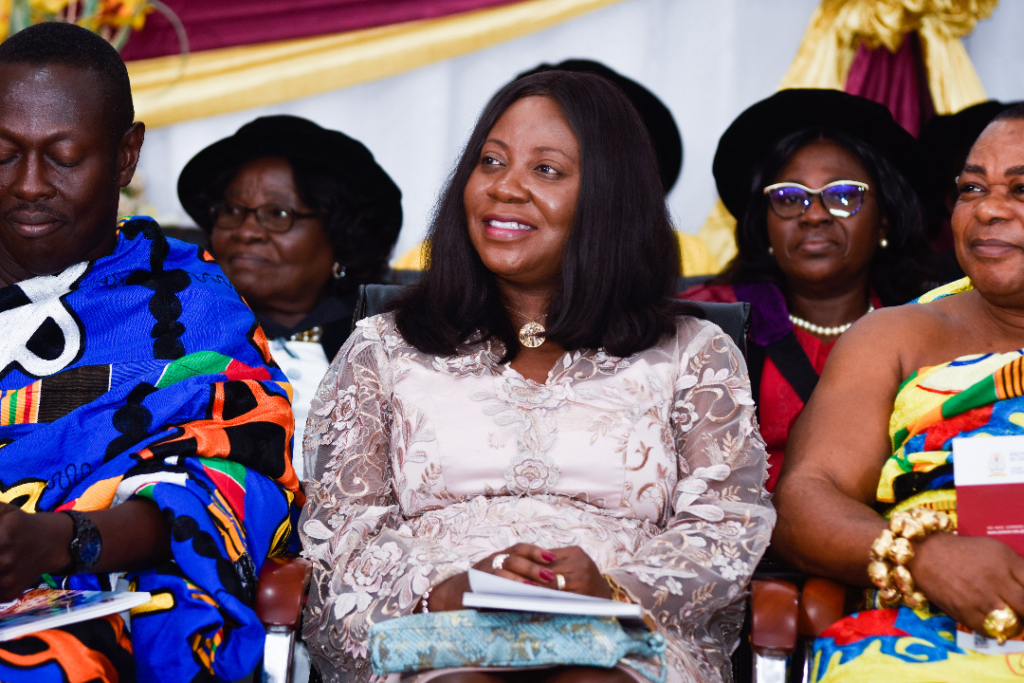
"Access to reliable internet connectivity in communities is now a necessity, equivalent to electricity and water, and collectively we must make it happen. Also, what is the use of providing internet coverage across the country if the people in the community do not have access to smart devices?
"Affordability is key. While we drive manufacturers to produce low-cost smart devices for Africa, we must reduce costs through the entire supply chain, even if it means assembling in Ghana and reducing the cost of imports. We can also provide tax incentives to suppliers to speed up adoption and usage.”
Concerning what Vodafone Ghana has done to improve access to the internet, the CEO revealed that her company has worked with the government through the Ghana Investment Fund for Electronic Communications (GIFEC) to connect over 300 rural communities to Vodafone’s network.
Meanwhile, Patricia Obo-Nai urged educators who graduated from the school to embrace a mindset change regarding technology.
“We need a new breed of educators who are open to modern ways of solving challenges, communicating, and collaborating in and out of learning environments. We need teachers who will use modern technologies in the classroom to make learning more connected.
"To do this effectively as an educator, you need to be curious about the world outside your curriculum. You must take the initiative to learn what you need to know.
As you expose your students to emerging technologies that you yourself have learned about, they can keep in step with the changing times,” she concluded.
Latest Stories
-
Armed men reportedly storm Adjen Kotoku Onion Market amid tensions
7 minutes -
Tecco Mensah writes: Why football fans must look beyond statistics
50 minutes -
Police recover stolen Honda CR-V in Kumasi within 48 hours
1 hour -
Apetorku Gbodzi 2026 Festival opens in Dagbamete with development focus
2 hours -
President Mahama arrives in Lyon to co-chair One Health Summit
2 hours -
Beverly View Plus Hotel draws crowds amid coastal Easter rush in Volta
2 hours -
Maiden Zongo Festival held in Wa amid calls to tackle drug abuse among the youth
2 hours -
FDA warns of fake HIV test kits on Ghanaian market
3 hours -
Africa urged to build resilient health systems as donor support tightens
3 hours -
Easter gesture: Ablakwa settles medical bills for 85 North Tongu constituents
4 hours -
Africa must harness its population strength—Titus-Glover
4 hours -
Visa-free access doesn’t mean unlimited stay – Lom Ahlijah
5 hours -
From Golgotha to Kwahu: The Easter Migration of the Faithful and the Faithless
6 hours -
How the Ghanaian onion traders’ standoff with Nigeria unfolded and threatened local supply
6 hours -
No compensation for demolished structures on 24-Hour Economy market lands — Gov’t to structure owners
6 hours