

Audio By Carbonatix
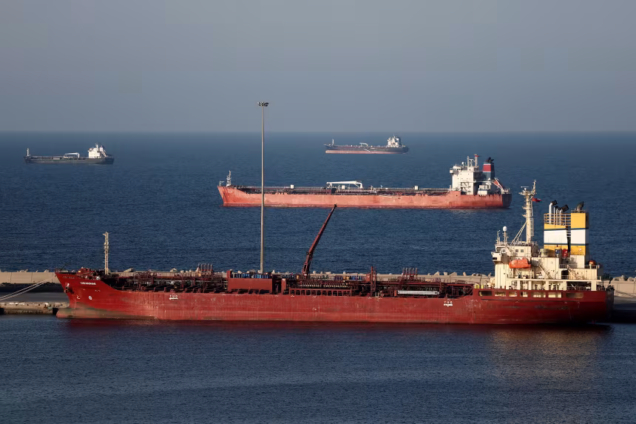
Iran has begun laying mines in the Strait of Hormuz, the world’s most important energy chokepoint that carries about one-fifth of all crude oil, according to two people familiar with US intelligence reporting on the issue.
The mining is not extensive yet, with a few dozen having been laid in recent days, the sources said. But Iran still retains upward of 80% to 90% of its small boats and mine layers, one of the sources said, so its forces could feasibly lay hundreds of mines in the waterway.
Iran’s Islamic Revolutionary Guard Corps, which now effectively controls the strait along with Iran’s traditional navy, has the capability to deploy a “gauntlet” of dispersed mine-laying craft, explosive-laden boats and shore-based missile batteries, CNN has reported.
The IRGC previously warned that any ship passing through the strait would be attacked, and the channel has effectively been closed since the start of the war. The state of the strait has been described to CNN as a “death valley” given the risks involved in transiting.
US officials said today that the US Navy had not escorted any vessels through the strait, though President Donald Trump said Monday that his administration was looking at options to do so.
President Donald Trump said in a post on Truth Social on Tuesday that “if Iran has put out any mines in the Hormuz Strait, and we have no reports of them doing so, we want them removed, IMMEDIATELY!”
He added that “if for any reason mines were placed, and they are not removed forthwith, the Military consequences to Iran will be at a level never seen before. If, on the other hand, they remove what may have been placed, it will be a giant step in the right direction!”
Trump also said during a Monday press conference that “the Strait of Hormuz is going to remain safe. We have a lot of Navy ships there. We have the best equipment in the world inspecting for mines.”
Nearly 15 million barrels per day (bpd) of crude production, plus another 4.5 million bpd of refined fuels, are now effectively stranded in the Gulf, CNN has reported, and producers like Iraq and Kuwait have no alternative to shipping oil through Hormuz. The G7 group of large economies have hinted they could move to release more oil to try to offset the shortages.
Uncertainty surrounding the ability to move oil through the waterway appeared to be causing severe volatility on the crude oil market on Tuesday, with the price per barrel fluctuating between more than $90 and less than $80 in a series of peaks and valleys.
Latest Stories
-
We can tackle multiple priorities – Sam George defends Anti-LGBTQ Bill push
3 minutes -
Statement: Ghana Chamber of Mines’ Response to Claims in Joe Jackson’s “Ananse Stories about the Economy of Ghana”
4 minutes -
GES opens 2026 teacher recruitment for licensed B.Ed graduates
6 minutes -
Ghana must value skilled trades, build resilient learners — Ibn Chambas
15 minutes -
Ghana must rethink education around relevance, resilience and responsibility — Ibn Chambas
17 minutes -
Prince Harry faces defamation lawsuit from charity he co-founded
19 minutes -
South Korea deploys thermal cameras to track escaped zoo wolf
21 minutes -
Calls for royal meeting with Epstein survivors grow ahead of US visit
24 minutes -
Ibn Chambas advocates blend of technology and human values in education
26 minutes -
UMA improves healthcare access in Asutifi North with GH₵700k ‘Kim Taylor Legacy’ Walkway
31 minutes -
Scholarships Authority and Fanaka University offer sponsorship for procurement and supply chain studies
34 minutes -
Bisa Kdei drops new single ‘Go N Look’ featuring Medikal
40 minutes -
Benin facing rising terrorism in north as French military presence faces growing criticism
41 minutes -
UEW Public Lecture Series 2026: Education debate ‘about the soul of Ghana’s future’ — Dr Ibn Chambas
42 minutes -
EU fingerprint and photo travel rules come into force from today
1 hour