

Audio By Carbonatix
Many health professionals in Ghana are failing to conduct regular recalibration of medical equipment for quality healthcare delivery.
Public health experts argue that non-compliance to the standard practice of fixing uncertainties in medical devices frequently could be contributing to false diagnoses of diseases.
The concern was expressed at a workshop on Health Industry and Regulatory Affairs by the Mastercard Foundation Africa Higher Education Health Collaborative in Kumasi.
Speaking at the event, a lecturer at the School of Public Health, KNUST and pillar lead of Health Employment under the Collaborative, Dr. Kofi Akohene Mensah, observed some challenges in the regulation of the pharmaceutical industry and the use of medical equipment.

Dr. Kofi Akohene Mensah - Pillar Lead, Health Employment under the Mastercard Foundation Africa Higher Education Health Collaborative.
He highlighted some practices by health professionals contributing to false diagnosis of disease.
“Most health care professionals are not aware of regular calibrations. When we buy thermometers, sphygmomanometers, we don’t calibrate them. Even when they conduct initial calibrations, they don’t do it regularly. So, only God knows the number of people who have been diagnosed falsely of hypertension,” he said.
The Mastercard Foundation Africa Higher Education Health Collaborative in partnership with the School of Public Health-KNUST is organising a weeklong event on Healthcare Industry and Regulatory Affairs.

The workshop targets researchers and practitioners from varied sectors of the health industry.
Participants will undertake courses in the regulatory framework of the pharmaceutical and medical equipment divisions of the health industry.
With the emergence of advanced technology, including artificial intelligence, Professor Anthony Kwaku Edusei, a facilitator for the coursework, believes the training would apprise participants of current digital health practices.
“The participants will be equipped with knowledge and skills in technologies that can help facilitate healthcare delivery,” he said.
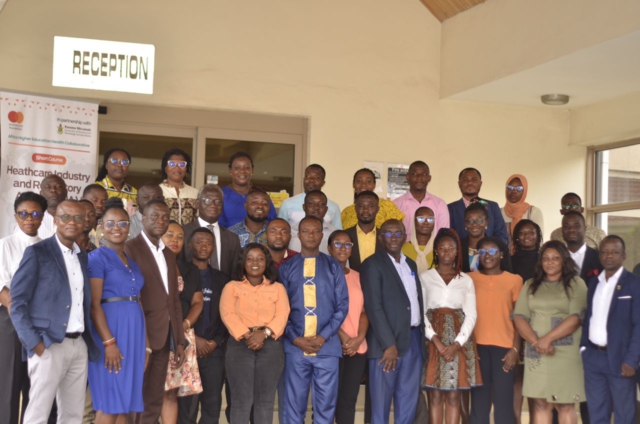
The workshop brought together 30 participants from across the country who are positive about grasping concepts in the coursework for application.

“We will better understand how these medical devices work. We can also collaborate with others from the industry to conduct research in these fields,” Martha Naab said.
Latest Stories
-
Brandon Asante and Coventry all but promoted to Premier League despite Sheffield Wednesday draw
10 minutes -
GPL 2025/26: Late Kwartemaa strike downs Hearts in Tema
16 minutes -
Ghana Faces Sierra Leone Moment as Prosecutorial Powers come under strain
26 minutes -
Don’t consume fish or seafood from Tema Shipyard until further notice – FDA warns
31 minutes -
Why volunteering might be Africa’s most underrated career accelerator
37 minutes -
ActionAid Ghana raises concern over gender gaps in Feed Ghana Programme
39 minutes -
Windstorm wreaks havoc in Gushegu, displacing nearly 2,000 residents and damaging schools
41 minutes -
Friends of Bridget Bonnie Marks her 35th birthday with donation to Kasseh Model Health Centre
1 hour -
From Ekumfi Kokodo to the Pulpit Stage: Essi Donkor’s gospel journey takes shape
2 hours -
Landfilling waste management creates no value, it’s an economic waste
2 hours -
Photos: Speaker Bagbin Commissions MPs constituency office under parliamentary decentralisation programme
2 hours -
Black Stars technical advisor Winfried Schäfer sacked as GFA shakes up backroom staff
2 hours -
Wenchi water project almost complete, critical to gov’t agenda – GWL MD
3 hours -
Anti-LGBTQ+ bill not part of government’s legislative agenda – Inusah Fuseini
3 hours -
Anti-LGBTQ Bill: Forget the rumour mongers, I’m a man of action, and will pass the bill – Speaker
3 hours