


Audio By Carbonatix
Over the years, rainfall patterns have changed and rural farmers have had to adjust their farming seasons to avoid loss.
But due to farmers' inability to understand the nature of recent weather patterns compared to the past, most of them are always caught in the middle of the disaster.
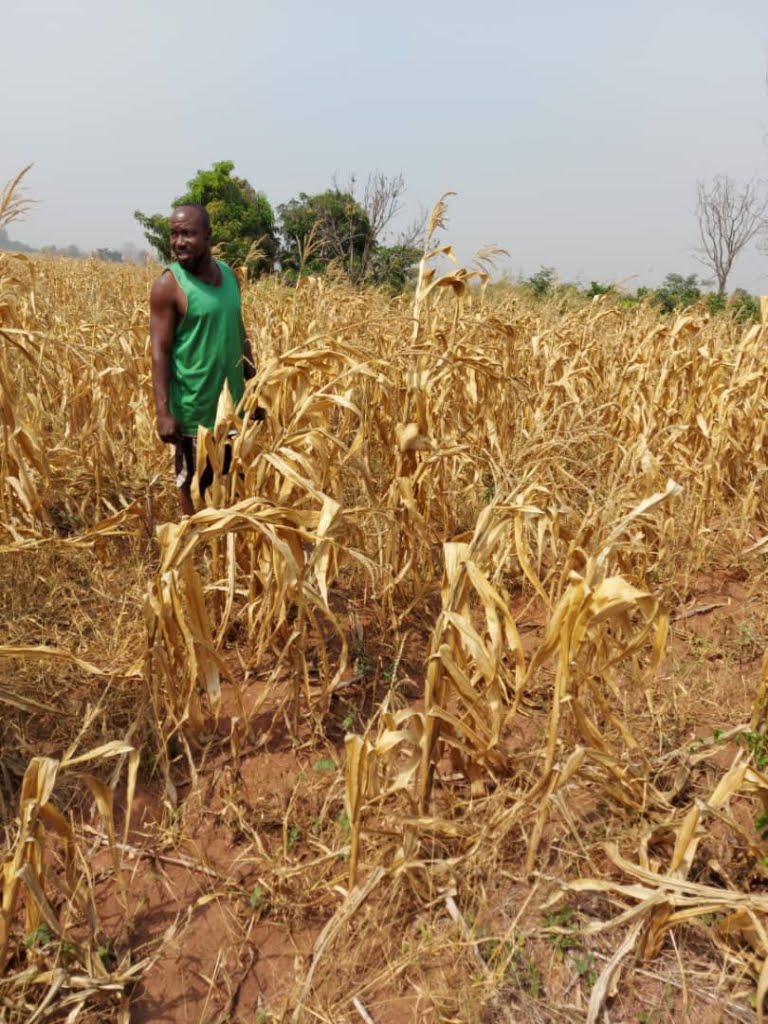
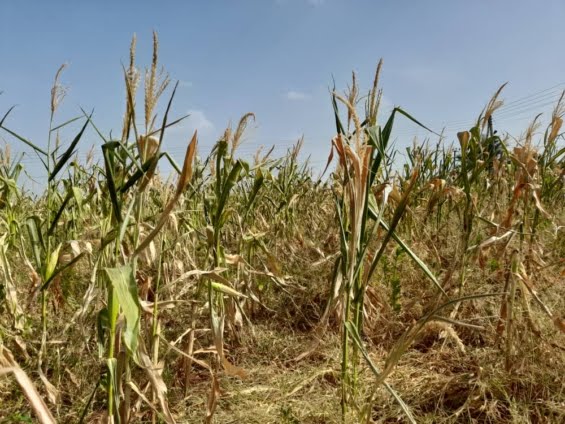
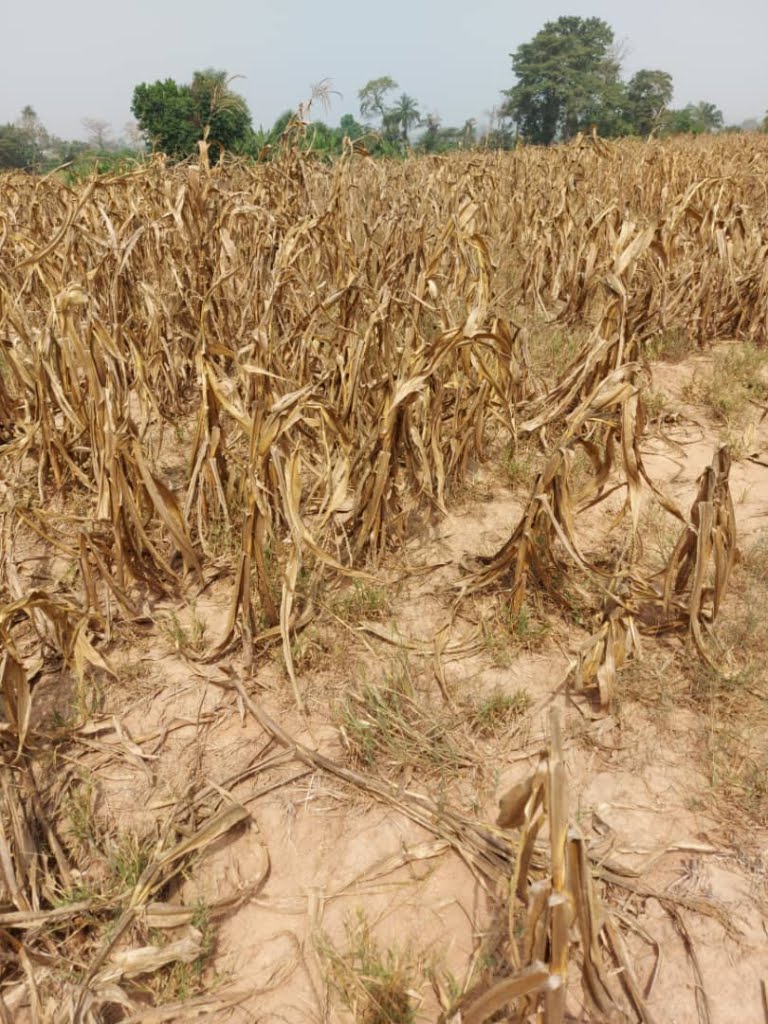
In 2020, for instance, farmers in some parts of Ghana were impacted by drought.
They had their crops dried up on the farms because the rains didn't come at the expected time. And they lost millions of cedis to the devastating drought.
The 2019 national best youth farmer is one of the farmers who was alarmed by the situation and now holds onto God.
“With that kind of weather, I only made a loss,” Ayuba Gyibrilla says.
Ayuba has 500 acres of farmland and all under cultivation.
He also supports 700 farmers who work on 1,500 acres. But the 2020 drought that hit some parts of the country robbed Ayuba and his farmers millions of cedis.
His store, once full of sacks of maize, is now empty. Ayuba says he invested about 1.5 million cedis. He regrets the money he invested in Maize farming was of no benefit.
The 2020 farming season started well for Ayuba and his colleague farmers. He says the planting was perfect and germination worked well too.
At the Centre for Climate Change and Food Security experts dialogue on the Ghanaian Maize Crisis early this year, an official at GMET, Jeremiah Lazia told participants that there were longer dry spells within the raining season for the 2020 period which was part of GMET forecast.
"Intra-seasonally, the rains show variability rather than diminishing,” he says.
Mr Lazia revealed GMET is also collaborating with the University of Ghana and Makerere University to come out with a Weather Information Dissemination System to bring the interface to the farmers in local languages.
Bob Ward, Policy and Communications Director at the Grantham Research Institute of Climate Change and Environment at the London School of Economics says, climate change makes it difficult for farmers to determine the onset of the season.
He told JoyNews’ Mahmud Mohammed-Nurudeen via zoom interview, "It is going to be very difficult because what's happening is that climate is changing."
According to Bob, the overall pattern is changing, rainfall can be more intense, but also longer periods of drought and evaporation rates are higher.
"The only thing that we can do is monitor how things are happening and have scientists help farmers to understand what patterns might be emerging. It means that farmers need to change their planting patterns and then change the kind of crops that they grow in order to adapt to the changing rainfall conditions and that's gonna be very difficult," he noted.
Bob cites an example where the UK government tries to help the development of a micro-insurance scheme which allows Malawian farmers to take out affordable insurance, and pay small amounts.
"At least it compensated them for say a loss of crop, or livestock which they will normally use as a source of income," he added
He says insurance can help farmers cope with the increasing uncertainty, as it is difficult to predict exactly how the climate changes over the future.
Bob also advises farmers to push for access to weather information and greater use of mobile technology from local, national policy makers and politicians.
"If the meteorological service in Ghana is able to predict the drought conditions is about to start or in two months’ time, they can give the farmers an earlier bit of warning,” he said.
With many scientists constantly asking the world to tackle climate change, Bob also wants the world to become more resilient to the impacts of climate change.
He also wants rich countries like the UK to take up the challenge of supporting and investing in improving access to information for farmers in countries like Ghana.
"It is a responsibility in my view that the rich countries have to," he opined.
Asked what happens in the next five years if farmers in Africa, including Ghana, continue to face the impacts of drought, Bob answered, "I am afraid in the worst case, you would get famine and people will die and you might have a crisis."
He says many droughts have caused hunger in the world, especially in Ethiopia in the 1980s, and Syria in 2010.
According to him, these examples show the link between drought, famine, and conflict.
Latest Stories
-
Kwaku Azar writes: A-G vs OSP
12 minutes -
Mfantsipim–Adisadel rivalry built excellence, not division – Sam Jonah
36 minutes -
Vice President launches Mfantsipim’s 150 years of shaping Ghana’s greatest mind
53 minutes -
I assure Otumfuo, Mahama will join him to commission KNUST Teaching Hospital by end of this year – Haruna Iddrisu
2 hours -
Gov’t to roll out free special education for persons with disabilities from July 1 – Education Minister
2 hours -
“We used it to test our officiating officials’ readiness” – Bawah Fuseini after CAA Athletics event
2 hours -
Volleyball emerges as Ghana’s fastest rising sport
3 hours -
National Sports Fund needs strong leadership from the top – Administrator David Wuaku
3 hours -
JoySports Exclusive: Steve McLaren in talks with GFA after expressing interest in Black Stars job
3 hours -
Fire guts auto parts warehouse at Bubuashie, one fire officer injured
3 hours -
I owe my victory to coach Ofori Asare – Allotey after winning WBA Africa Gold Super Flyweight belt
3 hours -
Church of Pentecost supports over 2,000 BECE candidates in Obuasi with career guidance seminar
5 hours -
Brandon Asante and Coventry all but promoted to Premier League despite Sheffield Wednesday draw
5 hours -
GPL 2025/26: Late Kwartemaa strike downs Hearts in Tema
5 hours -
Ghana Faces Sierra Leone Moment as Prosecutorial Powers come under strain
5 hours