

Audio By Carbonatix
Japan's top court has ruled as unconstitutional a defunct eugenics law which saw 16,500 disabled people forcibly sterilised between the 1950s and 1990s.
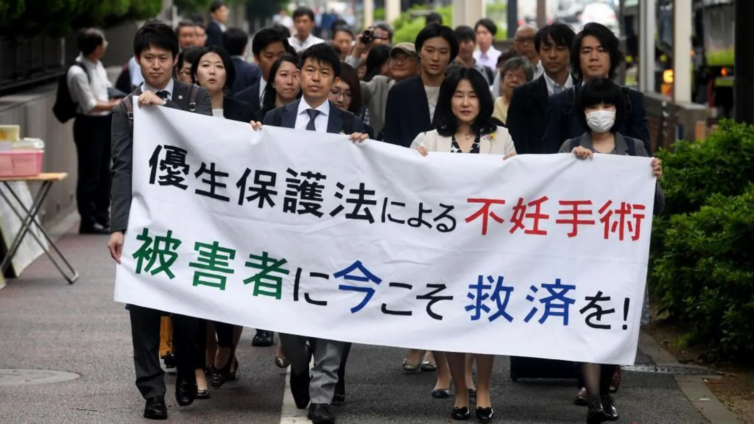
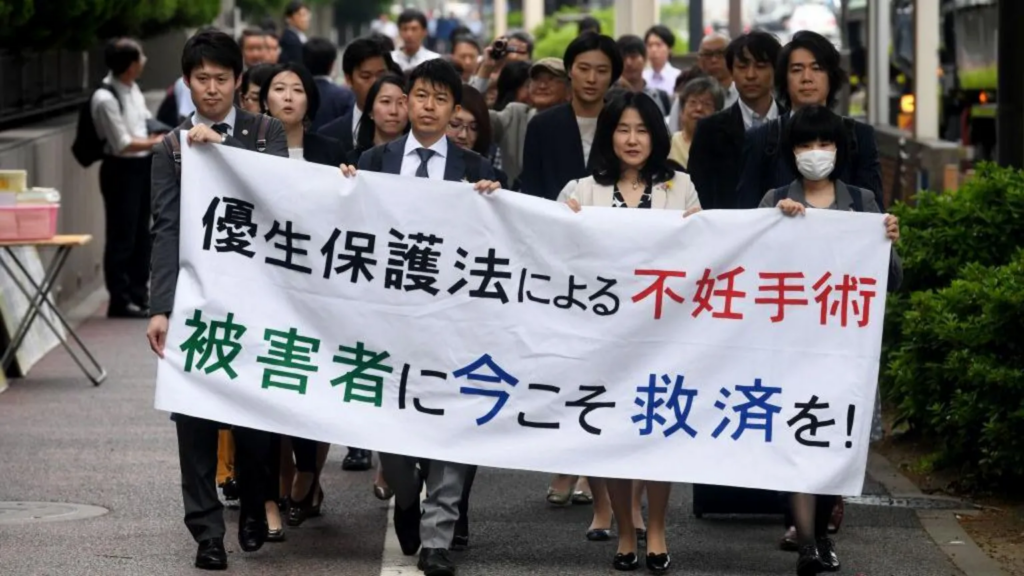
The Supreme Court also ordered the government to pay damages to 11 victims, who were involved in five cases that were heard on appeal.
Wednesday's landmark ruling brings to an end a decades-long fight for justice by victims who have been demanding compensation and an apology.
After years of lawsuits, a 2019 law finally granted surviving victims damages but some have continued to fight for higher compensation.
In four of the cases brought to the court, the central government had appealed against the lower courts' compensation orders.
In the fifth case, two female plaintiffs had appealed against a dismissal of their claims, with the lower court citing the statute of limitations.
Under a post-World War Two law enacted in 1948, some 25,000 people - many of whom had inheritable disabilities - underwent surgeries to prevent them from having children deemed "inferior".
Japan's government acknowledged that 16,500 of the sterilisation operations were performed without consent.
Although authorities claim the 8,500 other people consented to the procedures, lawyers have said they were "de facto forced" into surgery because of the pressure they faced at the time.
Victims were as young as nine years old, according to a parliamentary report published in June last year.
The law was repealed in 1996.
'I could never be a mother'
On Wednesday, the Supreme Court also ruled that a 20-year statute of limitations could not be applied to compensation claims in forced sterilisation cases.
Lawyers had argued that the statute had meant that some victims, especially those who had been sterilised without their knowledge, had learnt of the surgery too late to meet the legal deadline.
Forced sterilisations were most prevalent in the 1960s and 1970s, during the post-war baby boom. Many of those forcibly sterilised had physical and intellectual disabilities, mental health problems or chronic diseases such as leprosy.
Physical restraint, anaesthesia and even "deception" were allowed for these operations, according to a government notice in 1953.
"From here, I believe that the government must take a hard turn and move forward at full speed toward a full-fledged resolution," said lawyer Yutaka Yoshiyama, who represented two of the plaintiffs.
He added that Japan has to date "turned a blind eye" to the "horrific harm" suffered by the victims and their family. Several of the victims who had sued the government died without receiving due reparations, he noted.
Under a law passed in 2019 following one of the lawsuits, surviving victims can each receive 3.2 million yen ($19,800; £15,600). About 1,300 people have applied for this compensation and 1,100 have been awarded so far, reports say.
Still, for some of the victims, financial compensation can only go so far.
“When I found out I realized I could never be a mother... It broke my heart," Yumi Suzuki, who was born with cerebral palsy and forcibly sterilised when she was just 12, told the BBC in a 2021 interview.
The 68-year-old is among the 11 plaintiffs whose cases were brought to the court on Wednesday.
"I [have] faced discrimination from when I was small but his was very different. It broke my heart.
"I don’t want money. I want people to know what happened to us. To make sure it never happens again. I want disabled people to be treated equally. We are not things. We are human beings."
Latest Stories
-
Chisora beaten by Wilder in captivating bout
18 minutes -
One dead, six maimed as bloody land feud tears Krachi Nchumuru apart
42 minutes -
Missing service member rescued by US forces after jet downed in Iran, Trump announces
1 hour -
Gomoa Easter Carnival: Sarkodie, Kuami Eugene, Tinny, set festival ablaze as Day 3 ends on high note
1 hour -
“Feels amazing” – Antoine Semenyo reveals after Manchester City dismantle Liverpool
2 hours -
Mahama calls for emergency cabinet meeting over rising fuel prices
3 hours -
Asante Gold reports US$345million loss for 2025
4 hours -
Prof. Naana Jane Opoku-Agyemang provides update on Women’s Development Bank
4 hours -
‘It’s not easy’ – Mother of late Dr Omane Boamah breaks silence
4 hours -
Gov’t making progress in clearing $1.7bn power debt – Mahama
4 hours -
Justice is the engine of growth – Chief Justice
5 hours -
Meet us halfway – Trade Minister tasks private sector with AfCFTA success
6 hours -
After more than 14 years at Atletico Madrid, what next for Simeone?
6 hours -
Conquering the World – Building on the foundations laid by Otto Addo
6 hours -
[Playback] Sarkodie, Kwami Eugene, Tinny, Keche and others thrill fans at Gomoa Easter Carnival
6 hours