

Audio By Carbonatix
Ghana has deepened its Democratic Governance since the inception of the Fourth Republican Constitution of 1992. While Democratic Governance in the country has been credited with a peaceful transfer of political power from one government to another, it is fraught with a number of challenges, including the winner-takes-all syndrome, the inability of the governance system to drive transformative socioeconomic development, excessive monetisation, etc. This opinion piece presents my views on the excessive monitisation of Ghana’s democratic governance and why it should not be for sale.
The Concept of Democracy
In simple terms, Democracy is a government by the people or a majority of the people as opposed to a government by an individual or a few individuals. Thus, the Oxford English Dictionary defines it as a government by the people or that form of government in which the sovereign power of the state or a country resides in the people as whole, and is exercised either directly by them or by individuals elected by them. So, Democracy is a system of government in which everybody within a state or a country has equal rights without hereditary or rank or privileges.
From the definitions above, the concept of democracy in all its forms stresses individual dignity and that every individual is his/her own master or has the liberty or autonomy in the determination of all aspects of his/her life. The concept of democracy, therefore, stresses equality of all human beings in the sense that all human beings are masters of their own lives. So, for democracy to function, this equality of human beings requires mutual respect from every individual to every other individual and vice versa. Ghana’s
Democratic Governance
Democratic governance in Ghana started during the colonial era although in a limited form under colonial rule and took root during the First Republic under Osagyefo Dr. Kwame Nkrumah’s government. The process was truncated by the 1966 military intervention by the National Liberation Council. Although democratic governance was restored during the Second Republic under Dr. Kofi Abrafa Busia’s government, it was truncated again in 1972 by General Ignatius Kutu Acheampong’s military intervention. In 1979, democratic governance was again restored during the Third Republic under Dr. Hilla Limann’s government. However, the process was again truncated by Flt. Lt. Jerry John Rawlings’ military intervention in 1981. It was not until 1992 that democratic governance took proper roots in the country.
While Ghana’s democratic governance since its inception under the Fourth Republic has been lauded for ensuring peaceful transfer of power from one government to another, it is also fraught with a number of challenges. One of such challenges is the winner-takes-all syndrome. The winner-takes-all syndrome has contributed to social fragmentation and a pull-him-down syndrome in the country. The pull-him-down syndrome has contributed to the inability of the political elite to build consensus on very important national issues. This is often so because opposition parties at the receiving end of the winner-takes-all syndrome devise strategies to ensure that government’s development efforts do not succeed for the electorate to retain it in power. Ghana’s democratic governance has also been criticised for its inability to transform the country’s socioeconomic development across all sectors of the country.
Another challenge to Ghana's democratic governance is its excessive monetisation. Democratic governance is a very expensive governance system. This is rightly so for several reasons. Democratic governance thrives on institutions to function and such institutions are expensive to establish. Institutions, such as the three arms of government - the Executive, the Legislature and the Judiciary, as well as other institutions, such as the fourth estate, the ombudsman, etc., are very expensive to establish and maintain. Similarly, the establishment of the electoral system and the conduct of elections are very expensive ventures. Since these are statutory responsibilities, the state takes care of the expenses involved which might not be anything to worry about.
However, what is worrying is how political parties finance their activities. While political parties are public institutions as their establishments are guaranteed by the Fourth Republican Constitution, the state is unable to regulate their activities due to lack of funding and inability to enforce the law on their operations. This has resulted in private financing of political party activities.
Private financing of political parties has undesirable consequences for national development. It leads to the winner-takes-all syndrome that I alluded to earlier. Individuals will not invest in political party activities and not expect returns on their investments. The returns on such investments have been in the form political appointments, business contracts, etc. This is the reason many people scramble for political party positions, both electoral and appointment. The scramble for such positions increases the monetisation as candidates compete among themselves to woe voters and appointing authorities. This definitely leads to corruption, favouritism and nepotism, which negatively affect national development.
Why Democracy should not be for Sale
Democratic governance is a contractual agreement between the government and the citizenry. John Locke refers to this contractual agreement as a social contract between government and the governed for the distribution of national resources or the national cake if you like, such as stake security, development programmes and projects and what have you. The reason this is contractual is because democratic governance hinges on mutual respect as human beings are equal by virtue of the fact that they are human beings. It is the reason every human being has an equal stake in democratic governance in relation to the concept of one man, one vote.
The concept of every human being having equal stake in democratic governance presupposes that everyone can be the ruler and decide on the sharing of the national cake as in the case of Direct Democratic governance. It is the difficulty of practising Direct Democratic governance that Indirect or representative Democratic governance is practised all over the world. Therefore, for one to relinquish their rulership by electing others to do so on their behalf, the ruler must of necessity share the national cake in a way that benefits them. Anything short of that allows that individual to revoke the social contract by removing the ruler from power as allowed by law.
This said, situations where the electorate makes unrealistic demands, such as pay me before I vote for you, on persons seeking their mandate for political office defeats the rationale of the social contract. This is because, if those seeking the mandate satisfy the demands, it will mean that there is no more contract between them. But the question arises as to why the electorate make such demands before they vote for persons seeking their mandate? My experience is that the electorate thinks they have often been taken for granted because, after voting, the politicians disappear and only reappear when they need their mandate again. Thus, the politicians do not fulfill the social contract after they are voted for so the electorate thinks they should be paid before they vote for them. But, can the person seeking the mandate fulfill the social contract in terms of development programmes and projects when they do not have the mandate to do so?
Way Forward
My opinion about the reason democracy should not be for sale is because doing so amounts to selling one’s dignity. Dignity is all that a human being has. As indicated earlier, dignity is what gives everyone in democracy equal stake in decision making in terms of who becomes the President, the Minister, the Chief Executive, the Parliamentarian, the Assembly Member and what have you. Dignity is what gives everyone the power to demand accountability from political representatives. Dignity is what gives an individual the power to retain or vote out political representatives from office. So if one sells their dignity, what becomes of them in a democratic society? This is the reason democracy should not be for sale!
Democracy should not also be for sale because of its negative consequences on national development. Some electorates vote for elected representatives based on the social contract. However, political representatives may fail to fulfill the social contract because of the demands some of them have to satisfy before they are voted for. The question is, how do they satisfy such demands when they do not have the mandate to do so? The answer is that wherever they get the resources from, they have to pay back after election in the form of appointments, business contracts, etc. Such practices definitely contribute to corruption, favouratis, neportism, etc., which have dire consequences on national development.
Besides these moral persuasions, the state needs to fund political parties and enforce laws on private funding of political parties. Since the formation of political parties are guaranteed by Article 55 of the 1992 Constitution because they are necessary for a multiparty democracy, the state needs to provide adequate resources for their activities and enforce regulations of their funding privately. Enforcement of regulations on political party financing and activities will limit excessive motisation of politics and limit its dire consequences on national development.
Conclusion
This opinion piece has tried to analyse the monetisation of Ghana’s democracy and why such monetisation should be discouraged. This is particularly so because monetisation of democracy reduces human dignity which is what makes everyone whom they are as human beings. Monetisation of democracy also has dire consequences on national development since national resources are channeled towards winning elections rather than national development. For these and other reason, democracy should not be for sale in Ghana!!!
**********
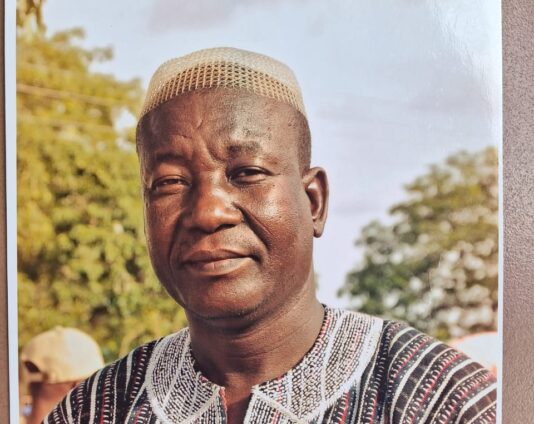
Prof. Adams Sulemana Achanso, Associate Professor of Social Policy, Department of Development Management and Policy Studies, Faculty of Sustainable Development Studies, University for Development Studies
Latest Stories
-
Mahama urges global institutions to invest in Africa’s cultural infrastructure
2 minutes -
Kuami Eugene joins UNICEF Ghana to promote universal birth registration
5 minutes -
Renard warns Côte d’Ivoire against complacency Ahead of Ghana clash
7 minutes -
‘Can the patient feel the difference?’ – GMTF boss challenges health leaders
8 minutes -
Office of the Registrar of Companies marks Risk Awareness Week with push for risk-smart, resilient institution
18 minutes -
Full text: Mahama’s speech at high-level side event on return and restitution of cultural properties and heritage
22 minutes -
ICU urges Ghanaian smock weavers to scale up production for local and export markets
22 minutes -
Human remains are not collectibles, specimens – Mahama demands restitution of Africa’s heritage
23 minutes -
EOCO, Baffour Awuah clash: Article 117 does not give MPs blanket protection from arrest – Samson Ayenini
25 minutes -
Mahama unveils 3 pillars to advance global reparatory justice agenda
43 minutes -
JoyNews Democracy Is Not for Sale regional dialogue – My take
48 minutes -
US ready to work with Ghana on reparatory justice despite opposing UN resolution – Ablakwa
59 minutes -
UK, Netherlands, Denmark ready to work with Ghana on reparatory justice – Ablakwa
1 hour -
Ghana TVET Service partners TOR to strengthen industry skills training
1 hour -
KNUST hosts Nyansapo Photonics School, commissions GPOL to boost research and innovation
1 hour