

Audio By Carbonatix
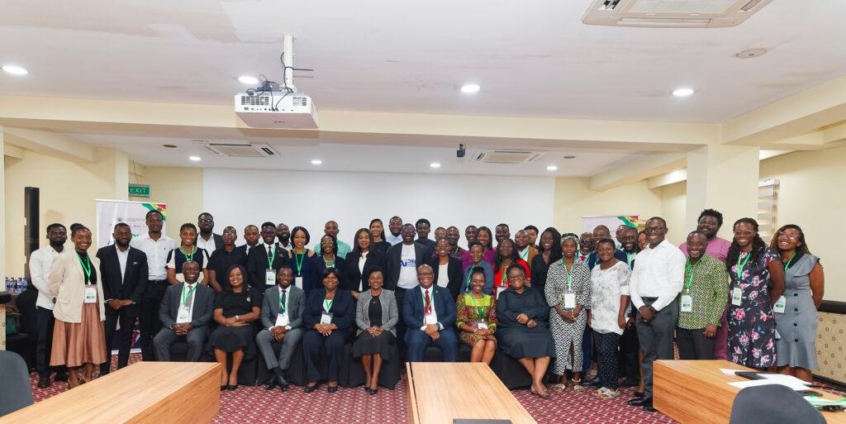
Stakeholders from Ghana’s judiciary convened at the AH Hotel in East Legon for the third National AI Strategy Consultation, a pivotal step toward finalising Ghana’s blueprint for artificial intelligence (AI) development.
The event underscored the need for an inclusive, ethical, and legally sound AI framework to drive innovation while safeguarding national interests.
Science and Innovation Officer at the British High Commission in Accra, Johnson Masagotin Singir emphasised AI’s global impact, stating that it “transforms how we live and work.”
He highlighted AI’s potential to revolutionise key sectors, including agriculture, health, education, and public service delivery, particularly in the justice system.
“Imagine judges and lawyers using AI to swiftly analyse vast legal documents, saving time and enhancing efficiency,” he said. He reaffirmed the UK’s commitment to supporting Ghana’s AI journey, stressing that AI must be open, responsible, secure, and resilient to be genuinely transformative. He also emphasised the importance of locally driven AI solutions tailored to Ghana’s unique needs.
Mr. Elikplim Sabblah, Technical Advisor for GIZ Ghana’s FAIR Forward initiative, outlined efforts to strengthen Ghana’s digital innovation ecosystem. FAIR Forward supports AI policy development in Africa and Asia, having contributed to Rwanda’s AI Policy and Kenya’s National AI Strategy.

He stressed the judiciary’s critical role in addressing AI ethics, human rights, and legal risks: “Engaging legal experts ensures AI aligns with Ghana’s data protection, privacy, and intellectual property laws. Their insights will help mitigate risks in AI deployment.”
Dickson Tweneboa-Koduah, Esq., representing the Ghana Bar Association, described the AI strategy as a bold step to ensure Ghana shapes its technological future rather than being shaped by it. While acknowledging AI’s benefits, he warned of risks like bias, misinformation (“hallucinations”), and threats to justice if left unchecked.
“AI must not roll out unregulated. We need constitutional fidelity, democratic oversight, and investment in local datasets,” he asserted, pledging the Bar Association’s support in shaping AI legislation and public education.

Dr. Arnold Karvaapuo, representing Hon. Samuel Nartey George, Ghana’s Minister of Communication, Digital Technology and Innovations, reiterated AI’s potential to reduce case backlogs, enhance legal research, and improve judicial efficiency.
“Your expertise is crucial in shaping AI tools that reflect Ghana’s values,” he told judicial stakeholders.
Mr. Darlington Akogo, CEO of MinoHealth AI Labs, said his presentation on AI is to make AI one of the country’s top three focus areas.
He explained what AI and Machine learning are and made a compelling case for AI’s economic potential, estimating a $20 billion boost to Ghana’s GDP by 2030. He called for an AI National Fund of $ 500 million to $ 1 billion and urgent prioritisation of AI development. He cited some AI systems in the legal field and said AI is a multiplier which requires effort.
Prof. Jerry John Kponyo, Principal Investigator of the Responsible AI Lab (RAIL), affirmed that Ghana’s AI strategy remains on track for approval by June 2025. He called for continued stakeholder collaboration to ensure a people-centred strategy that positions Ghana as an AI hub by 2035.
“RAIL recognises the immense importance of a national AI strategy to guide AI activities and their implementation and has worked with all relevant agencies over the past 4 years to ensure the completion of this process”
During discussions, participants raised critical points, including:
- Human oversight for high-risk AI decisions.
- Shortening the AI strategy timeframe from 10 to 5 years due to rapid AI advancements.
- Establishing a Ghana AI Institute instead of just a Responsible AI Office.
- Developing a national data strategy alongside AI policies.
- Addressing infrastructure gaps (energy, internet access).
Prioritising education, gender inclusion(women & children), and regional collaboration.
The consultation highlighted the judiciary’s vital role in shaping a fair, ethical, and innovation-driven AI future.
With strong legal safeguards, infrastructure investments, and multi-sector collaboration, Ghana’s AI strategy aims to harness technology for inclusive growth, justice, and global competitiveness.
Feedback on the draft strategy remains open as Ghana moves closer to finalising its landmark AI policy.
Latest Stories
-
The passport question: Why Ghana must let its best abroad come home to serve
11 minutes -
We will be losing twice if these commodities expire at the port – CSOs Coordinator warns
19 minutes -
Setting up national champions to fail: the case of Ibrahim Mahama and E&P
19 minutes -
Rwanda’s capital embraces urban farming as development squeezes rare land
21 minutes -
Argentina passes bill loosening protection of its glaciers
21 minutes -
Sammi Awuku to question GMA in Parliament over vessel linked to alleged drug trafficking
35 minutes -
Trapped miner rescued from flooded Mexican tunnel after 14 days
43 minutes -
NPRA to prosecute employers over unpaid Tier 2 Pension contributions — Deputy CEO warns
48 minutes -
ACCPA calls for Africa’s strategic repositioning at NUS, Singapore
56 minutes -
Oil prices rise as concerns grow over ‘fragile’ US-Iran ceasefire
59 minutes -
Crude production hits 6-year low—PIAC calls for urgent investment plan
1 hour -
NPP revises internal election guidelines to strengthen transparency and inclusiveness
2 hours -
NACOC set to issue licences to qualified applicants for cannabis cultivation – Deputy Director-General
2 hours -
Easter Outreach: Victory Bible Church offers free healthcare, NHIS support to hundreds
2 hours -
NPP cannot pressure Mahama to sign a bill not yet received—Solomon Owusu
2 hours