

Audio By Carbonatix
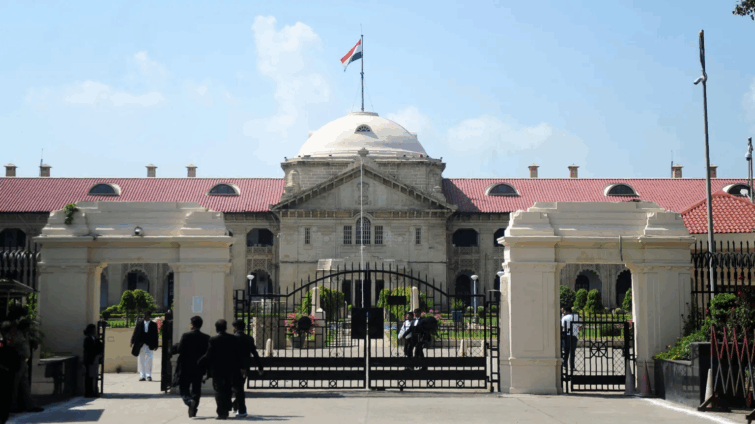
The Allahabad High Court - one of India's oldest and most prestigious, once graced by figures like India's first premier Jawaharlal Nehru and future Supreme Court judges - is back in the spotlight.
This time, though, for very different reasons.
With more than a million cases pending, it is among the most overburdened courts in the country. Matters ranging from criminal trials to property and family disputes have been pending here for decades, leaving thousands of people in India's most populous state, Uttar Pradesh, trapped in legal limbo.
Consider Babu Ram Rajput, 73, a retired government employee who has been battling a property dispute for over three decades.
He bought land at an auction in 1992, but the previous owner challenged the sale - and the case remains unresolved to this day.
"I just hope my case is decided while I'm still alive," Mr Rajput says.
The high court's struggle mirrors a broader crisis in India's judiciary, where too few judges and a constant flood of cases have caused crippling delays.
With a sanctioned strength of 160 that experts say has never been completely filled, the court is severely understaffed. Delays in police investigations, frequent adjournments, and poor infrastructure further add to the backlog, leaving the system stretched beyond capacity.
Each judge faces hundreds of cases a day - sometimes over 1,000. With just five working hours, that's less than a minute per case. In practice, many aren't heard at all.
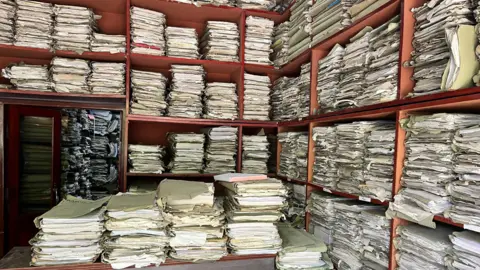
Lawyers say urgent matters - like bail pleas or eviction stays - are heard first, pushing older cases further down the list.
Senior lawyer Syed Farman Naqvi says courts often issue interim or temporary orders in urgent cases - but once the immediate need is met, the matter lingers as new cases pile up.
Retired judge Amar Saran says the mounting backlog has forced judges into a "cut-grass approach" - issuing quick, standard orders, from nudging the government to act to directing lower courts to handle the matter.
In April, the court confronted the scale of its delays while ruling on a rape and murder case pending for over 40 years. By the verdicts delivered, four of the five convicted men had died. Ordering the sole surviving convict to surrender, the court admitted it regretted not ruling sooner.
The backlog has even prompted legal action. Earlier this year, a group of Allahabad High Court lawyers petitioned for more judicial appointments, calling the court "paralysed" by a shortage of judges that leaves cases lingering for years.
The crisis has caught the attention of India's top court. In January, the Supreme Court called it "worrisome" that case listings at the Allahabad High Court are unpredictable, saying the system had completely collapsed.
Uncertain hearing dates hit people hard, especially in vast Uttar Pradesh. Many travel hundreds of kilometres to Prayagraj where the court is located, on just a few days' notice for their hearing.
Mr Rajput is from Kanpur, 200km (125 miles) from Prayagraj. He spends around four hours travelling each time his case is listed - yet can never be sure it will actually be heard.
"I'm over 70," he says. "I often learn just days in advance that my case is listed, "making travel a hassle." He adds that many times his case isn't heard because other matters take up the whole day.
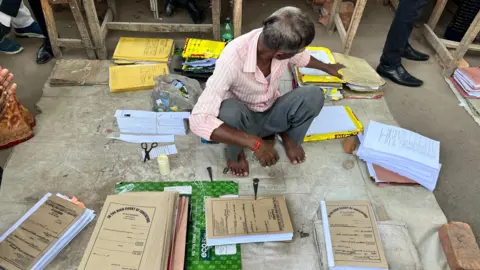
Lawyers have long urged the court to set up another bench - a branch of the high court in a different city to ease access and speed up hearings - in the western part of the state. Currently, an additional bench exists in the city of Lucknow. A similar recommendation was made in 1985 by a government commission, but it has yet to be implemented.
Earlier this year, the state government reportedly urged the high court to set up another bench, but the letter was later withdrawn for unknown reasons. The push for more benches isn't limited to Uttar Pradesh; a 2009 Law Commission report said all states would benefit from additional high court branches.
While new benches could help long-term, experts say quicker fixes - like appointing more judges - are needed.
But the process is slow and complex: senior high court judges first shortlist candidates, then the list is reviewed by the state and federal governments, and the Chief Justice of India. After this, senior Supreme Court judges forward the final list to the federal government for appointment.
Experts say picking the right candidates is often challenging. Former Allahabad High Court Chief Justice Govind Mathur notes that chief justices, often appointed from outside the state, may not know local lawyers or judges, complicating recommendations. Names can be rejected at any stage and remain confidential until the Supreme Court forwards them to the government.
Last year, the Supreme Court recommended just one appointment for the Allahabad High Court, despite nearly half the seats being vacant. Some progress came this year with 15 new judges, but almost half the posts remain empty after retirements and transfers. Earlier this month, 26 more names were sent to the government, raising hopes - but the impact on the backlog remains uncertain.
Experts say the backlog is so huge that even at full strength, each judge would handle over 7,000 pending cases. Some progress came this year, after 40 new judges were added - 24 of whom were appointed last week - but the backlog persists.
Mr Mathur says that deeper judicial reforms - like a "uniform policy for hearing and disposing of cases" - are essential, rather than leaving it to individual judges.
Latest Stories
-
Netherlands Fire Chief in Ghana to support fire safety reforms and market fire prevention efforts
2 hours -
Mason goes on remand for stealing
2 hours -
Gov’t cuts fuel taxes, deploys buses to curb impact of rising fuel prices
3 hours -
Interior Minister calls for intelligence-driven strategy as Ghana strengthens counter-terrorism efforts
3 hours -
Adenta Circuit Court remands Pastor William Gyimah over viral threats against Vice President
3 hours -
“We’ve implemented changes to prevent a repeat of the AFCON final” – CAF President Motsepe
3 hours -
Gov’t orders deployment of Metro Mass buses to cushion commuters amid fuel price hike
4 hours -
Key Indian state polls begin in test for Modi’s party
5 hours -
Playback: Gomoa Easter Carnival in photos
5 hours -
Gov’t orders removal of fuel taxes to ease pump price hikes
5 hours -
“Whatever the decision of CAS, we will respect it” – CAF President Motsepe after AFCON final meetings in Morocco
5 hours -
Emma Ankrah: When waiting becomes part of treatment – Reflections on hospital care
5 hours -
Ghana urges travellers to prepare for new EU border system roll-out
5 hours -
Mahama enforces fuel coupon ban for ministers as cabinet moves to slash fuel taxes
5 hours -
Task force probes strange fish deaths in Tema
5 hours