

Audio By Carbonatix
[A satirical dispatch from the Republic of Uncommon Sense]
By the time the word extradition reached the mango tree, it had already lost its passport. It arrived breathless in the public square—dragged by radio phone-ins, flogged by WhatsApp voice notes, and dressed in borrowed legal robes from TokTok University. Everyone had an opinion. Everyone had a verdict. Only the evidence had not yet found its shoes.
At the trotro station, the mate announced it between destinations: “If he’s innocent, why is he abroad?” At the barber shop, the clippers paused for emphasis: “Bring him now! America should cooperate!” At the office canteen, someone who once watched Law & Order explained extradition like a rice recipe—add heat, stir public anger, serve handcuffs.
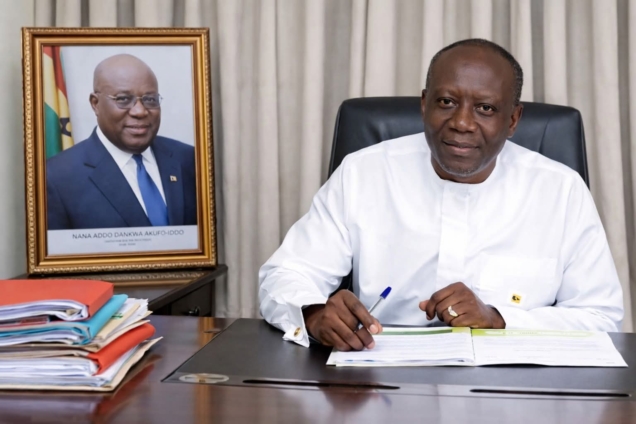
Thus began Ghana’s first international hide-and-seek championship, starring Ghana’s former finance minister Ken Ofori-Atta, a man who, depending on which bench you occupy in the square, is either a strategic chess player exercising his rights, or a magician who disappeared mid-sentence.
The public square, that sacred place where facts go to be cross-examined by feelings, quickly divided itself into two well-rehearsed choirs.
Choir One: “Bring Him Now!” Their hymn is simple. If you are clean, you stay put. If you travel, you are dirty. Distance, in this theology, is confession. “We will escort him from the airport ourselves,” they say, as if the arrival hall doubles as a courtroom and the baggage carousel dispenses justice in plastic trays. Evidence is a luxury; vibes are sufficient. Justice, they insist, should land before the luggage.
Choir Two: “Rule of Law!” They sing in Latin, or at least in legalese. “Due process,” they chant, tapping the constitution like a rosary. “Produce evidence. Follow procedure.” To them, extradition is not Uber. You do not tap an app, rate the ride, and receive a suspect at the gate. America, inconveniently, is not obliged to obey Ghana’s emotions. Proof, annoyingly, is still a thing.
Both choirs shout law with great confidence. Neither choir wants to read it. One wants speed; the other wants structure. Between them sits the judge of Ghanaian public discourse: volume.
Extradition, that big word, has become our favourite seasoning. We sprinkle it on everything—like pepper on waakye. It now sits comfortably alongside kenkey, galamsey, and ECG bills. Say it three times and a suspect should appear. To the Ghanaian ear, extradition means “send him back by next week Tuesday.” Any delay is sabotage. Any explanation is an excuse. Any insistence on evidence is betrayal.
Yet the law, that stubborn guest who refuses to dance to our drum, keeps clearing its throat. Extradition, it says, is a conversation between states, not a shouting match between radio callers. It requires requests, documents, standards. It requires evidence that can survive daylight, not just a trending hashtag.
This is where the story becomes awkward—like a wedding where the best man asks for the bride’s birth certificate.
Because while the square demands blood, the courthouse demands proof. And proof, like a shy goat, has been reported “on transit.” Sometimes it is “being compiled.” Sometimes it is “almost ready.” Always it is “coming soon”—the same phrase used for ECG power restoration and government road projects.
In the meantime, absence has become symbolism. Distance has become defense. Silence has become suspicious. Hiring foreign lawyers is either “smart strategy” or “international disrespect,” depending on the mood of the morning show. In Ghana, staying put is suspicious, but staying away is treason. The body is guilty either way; the mind has already decided.
Let us be honest. This is not our first rehearsal of public justice. We have a long tradition of trying cases in advance and presenting the evidence later, if at all. We love accountability—as long as it is abstract. We demand justice—as long as it is simple. We hate corruption—but adore shortcuts. Due process, we insist, should be fast, simple, and preferably done before lunch.
We forget, conveniently, that law is not theatre. It does not respond well to applause. It does not speed up because we are angry. It does not bow because we are loud. Law is a slow, boring animal. It eats documents. It drinks affidavits. It sleeps on procedure. When you rush it, it kicks.
The tragedy—and the comedy—is that both sides believe they are defending the Republic. One side fears impunity. The other fears persecution. Both fears are legitimate. What is illegitimate is the attempt to replace evidence with outrage, and procedure with performance.
If there is a case, let it walk on its own legs. If there is evidence, let it speak without a microphone. If there is wrongdoing, let it be proven where proof matters, not where noise lives. And if there is innocence, let it be defended with facts, not distance.
Until then, the Republic remains suspended between the airport and the courthouse, between the shout and the statute. The plane circles. The crowd waits. The evidence adjusts its tie.
There is an old saying shaped like a proverb: When the drumbeat is louder than the evidence, the dance becomes dangerous. We would do well to remember it—before we turn justice into a carnival and law into confetti.
The Republic of Uncommon Sense is watching. Quietly. Clipboard in hand.
Share your perspective in the comments—lawyers, radio judges, and WhatsApp professors are all welcome.
The writer, Jimmy Aglah, is a media executive, writer, and satirist with extensive experience in broadcasting, content strategy, and public discourse. He writes on governance, leadership, media culture, and the everyday contradictions of public life, blending insight with restrained satire. Jimmy is the creator of the Republic of Uncommon Sense, a platform dedicated to civic reflection through wit, irony, and cultural observation.
Latest Stories
-
Today’s Front pages: Wednesday, April 8, 2026
1 minute -
Julian Opuni reaffirms Fidelity Bank support for industry-led skills training at DTI Berekuso campus
7 minutes -
CAF President arrives in Dakar to meet Senegalese President, football authorities over AFCON title saga
8 minutes -
Pastor arrested over viral threats against Vice-President
11 minutes -
2026 Success Africa Summit: MTN’s Adwoa Wiafe challenges youth to act with purpose, not just pursue titles
14 minutes -
Nurse laureate launches Cancer Care Africa Foundation to tackle late diagnosis, workforce gaps
1 hour -
Ghana to lose GH¢18.15bn in revenue by 2027 from abolishing Covid levy, E-levy – CPS study
2 hours -
Reintroduce scrapped taxes to close revenue gap – Tax expert
2 hours -
GRA applauds CPS study, urges continuous policy scrutiny
2 hours -
Wear blue or green hat to survive – IBAG president says insurance industry ‘captured by politics’
2 hours -
AGI commends government’s move to resolve the power crisis in Volta and Oti Regions
2 hours -
Broker sector worse hit by state interference – IBAG president reveals
3 hours -
IBAG president alleges political interference driving kickbacks in insurance sector
3 hours -
Trump agrees to two-week ceasefire, Iran says safe passage through Hormuz possible
3 hours -
Dozens killed as Angola flood death toll rises
4 hours