

Audio By Carbonatix
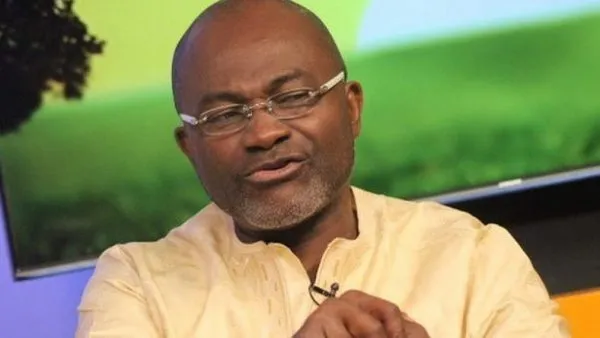
An independent researcher, chartered accountant, lecturer and financial economist, Dr Evans Duah has released the latest findings from a three-wave nationwide delegate preference study on the New Patriotic Party’s (NPP) forthcoming presidential primaries, placing flagbearer hopeful Kennedy Agyapong firmly in the lead.
According to a press statement issued by Dr Duah, the study, conducted between August 2025 and 9th January 2026, tracks the evolution of delegate sentiment in the aftermath of the NPP’s defeat in the 2024 general election.
It benchmarks current preferences against outcomes from the party’s 2023 presidential primaries, offering a longitudinal view of how delegates have reassessed leadership options during a period of political recalibration.
Rigorous nationwide methodology
According to Dr Duah, the research adopted a multi-wave tracking design to reflect the reality that post-election shifts in political preference tend to occur gradually rather than instantaneously.
The study achieved full national coverage across all 16 administrative regions and 276 constituencies, targeting the entire universe of 40,988 NPP delegates.
Out of this total, 31,556 interviews were successfully completed, validated and retained after stringent quality assurance checks.
Data collection protocols remained consistent across all three waves, ensuring comparability over time and minimising methodological bias.
To address uncertainty transparently, the analysis was conducted under two analytical lenses: a Worst-Case scenario, which adopts a conservative treatment of undecided and undisclosed respondents, and a Best-Case scenario, in which such respondents are proportionally allocated.
Dr Duah notes that this dual approach allows for robust interpretation of trends rather than reliance on a single-point estimate.
Best-Case scenario places Agyapong ahead
Under the Best-Case scenario in the final wave, the national standings among declared and proportionally allocated delegates are as follows:
- Kennedy Ohene Agyapong (KOA): 52.59%
- Dr Mahamudu Bawumia (DMB): 36.24%
- Dr Bryan Acheampong (DBA): 8.60%
- Dr Yaw Osei Adutwum (DYOA): 2.05%
- Kwabena Agyei Agyapong (KAA): 0.52%
On the basis of these figures, the study concludes that Kennedy Ohene Agyapong is on course to secure victory in the NPP’s presidential primaries and emerge as the party’s flagbearer.
Post-2024 reassessment shapes the contest
The findings suggest that the contest has been fundamentally shaped by an early post-2024 reassessment by party delegates, with increasing emphasis placed on electability, coalition reach, regional balance and the perceived capacity to lead the party’s recovery.
Kennedy Agyapong’s rise is attributed to the largest positive net movement across the three waves. He recorded steady gains in delegate-dense regions including Ashanti, Greater Accra, Eastern, Central, Western and Volta.
The study links this growth to what it describes as effective post-election positioning, consistent messaging centred on resilience and job creation, and strong grassroots engagement.
By contrast, former Vice-President Dr Mahamudu Bawumia experienced a net decline nationally. While he maintained dominance in his core northern strongholds, the research indicates erosion outside these areas as delegates reassessed electoral viability following the 2024 defeat.
Limited expansion into southern and middle-belt regions, combined with structural regional weighting, constrained his ability to regain national momentum.
Dr Bryan Acheampong is characterised as a “systemic shaper” rather than a direct challenger for the lead. His support followed a non-linear path, declining initially before rebounding, largely anchored in organisational networks and competitively balanced regions.
Although insufficient to mount a leadership challenge, his presence narrowed margins between the frontrunners in specific constituencies.
Dr Yaw Osei Adutwum recorded low single-digit support, concentrated mainly in parts of Ashanti and Greater Accra. The study attributes this to sectoral and relational networks that, while loyal, have not translated into broader national appeal amid post-election priorities focused on wide-scale viability.
Kwabena Agyei Agyapong ranked last, with sub-one per cent support nationally. His participation is described as largely symbolic, with no discernible regional clustering or momentum capable of influencing overall outcomes.
From fluidity to consolidation
Commenting on the findings, Dr Duah stated: “This study documents a transitioned contest from fluid reassessment to structured consolidation, grounded in verified data and transparent assumptions. Kennedy Agyapong’s lead exemplifies how early post-loss judgements and strategic engagement in delegate-dense regions drive durable outcomes, providing a factual terrain for the primaries ahead.”
Latest Stories
-
Airlines cut flights and hike fares as fuel prices surge
11 minutes -
Kane inspires Bayern to first-leg advantage over Real Madrid at Bernabéu
22 minutes -
Wireless Festival cancelled after Kanye West blocked from coming to UK
30 minutes -
Wa West MP commissions five boreholes for the benefit of his constituents
30 minutes -
Havertz’s late strike hands Arsenal narrow first-leg advantage over Sporting
32 minutes -
Damang mine award: Minority not against Ghanaian participation; we’re asking for fair process – Konadu
54 minutes -
NPA to enforce stricter registration rules for petroleum tankers
1 hour -
Manhyia South MP laments decline in hospitality operations in his constituency
2 hours -
How a simple clean charcoal innovation could benefit Ghana’s climate future
2 hours -
NPA, COMAC launch Safety Week 2026 to promote risk management in petroleum sector
2 hours -
Stakeholder engagement resolves onion trade impasse
2 hours -
Gender Ministry holds staff durbar, welcomes new Chief Director
2 hours -
Unexpected illness sparked my radio career – Tommy Annan-Forson
2 hours -
Bolt Ghana awards GH¢50,000 to women entrepreneurs through “She Moves to Win” campaign
2 hours -
NRGI Country Manager questions speed of ministerial approval in Damang mining deal
2 hours