

Audio By Carbonatix
Warning: Some readers may find parts of this article upsetting
John can barely remember a time when having sex with his wife did not end with her in tears.
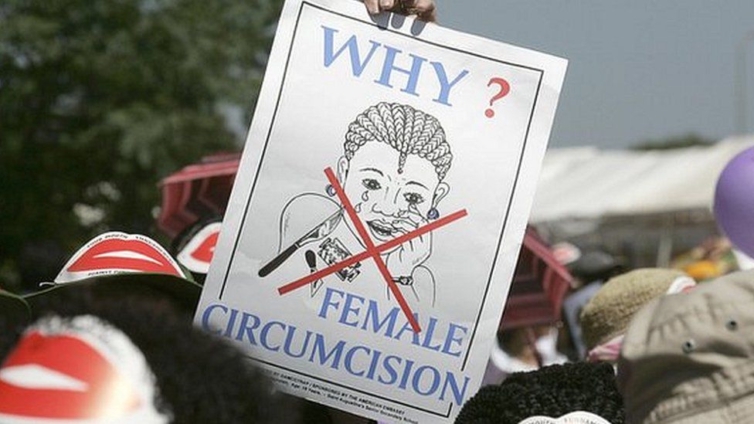
It was just too painful because she had undergone female genital mutilation (FGM).
"Anytime I go to Martha, she recoils, curling like a child. She cries, begging me to leave her alone. She doesn't want to have sex any more," the 40-year-old says.
John and Martha come from Kenya's Marakwet community in western Kenya.
Although FGM is illegal in Kenya, girls in their community often undergo FGM between the ages of 12 and 17, as a rite of passage in preparation for marriage.
Martha was cut when she was 15.
Sex as an endurance test
"It is painful when we have sex. I wish this practice would end," she says, adding that it had also made childbirth very difficult for her.
Recounting their first sexual experience, the couple describe it as traumatising.
Martha says she felt a lot of pain and it is not how she had imagined sex would be. She had to ask her husband to stop.
"I didn't realise a part of her [vulva] had been stitched, leaving only the urethra and a tiny vaginal opening," John tells the BBC.
"I try to be very compassionate with my wife. I don't want her to feel like I don't respect her, yet we are a couple."
They lived in agony with little hope that things would ever change - not just for them, but they feared for their young daughter as well.
That was until John heard of an anti-FGM campaign meeting in his village, targeting men.

He says it awakened him to the dangers the practice posed to women. It changed his attitude and he learned that as a man, he could help stop it.
"After all, it's men who have a say about children and if I say my child will not be cut, then she won't be."
It is a transformation Moses and his wife Josephine, also members of the Marakwet community, have embraced.
The couple, married for close to 25 years, have also had a difficult sex life because of FGM.
Josephine was cut at a young age and describes their sex life as an endurance test.
"It is always painful but I have learnt to persevere through it."
Josephine says the couple thought they were alone in their struggle until they met other couples who were struggling with similar challenges.
'Shame and ridicule'
Discussing sex and related topics such as FGM is still taboo in many Kenyan communities, especially among men.
"No-one told me anything about having sex, especially with an FGM survivor. Even now, it is considered a private matter," John says, laughing at the suggestion that sex could be discussed openly in his community.
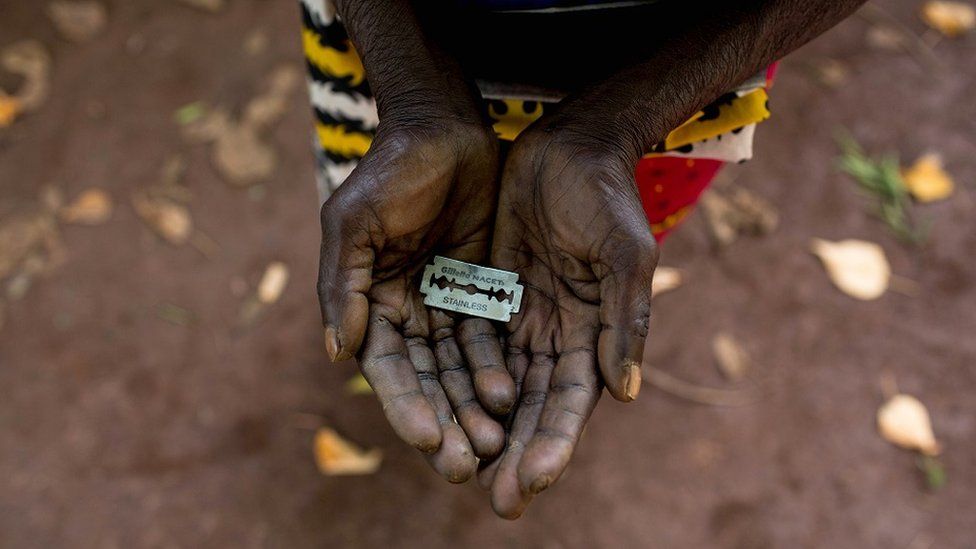
Moreover, men who speak against FGM can be seen as traitors, attacking a long-standing cultural practice.
In 2014, it was estimated that four million Kenyan women, around a fifth of the female population, had undergone some type of FGM. In most practising communities, it is considered a prerequisite for marriage.
"In the olden days if one refused to undergo FGM, they would never find a husband," Josephine says, "and if they did, they would never be fully accepted in that homestead. They would be returned to their family, bringing shame and ridicule to their people."
Dr Tamarry Esho, who researches FGM and campaigns against it, says that of Kenya's 42 recognised communities, only four have not historically practised FGM.
And some still do.
"This is a deep-rooted cultural practice. A lot of people still feel like it's their right," says Dr Esho.
'Men are the decision-makers'
But attitudes in many communities have changed and Kenya is seen as being among the more progressive countries in Africa on the issue. Just over one in 10 adolescent girls aged between 15 and 19 are now estimated to have undergone FGM, down from almost 50% in 1974.
Tony Mwebia, founder of the Men End FGM foundation, which trains community champions to tackle FGM, says that men can make a difference.
"In FGM-practising communities in Kenya, while it is women who cut fellow women, men are the decision-makers. However, they have no idea what is cut, how it's done and what damage is caused to women.
"Once [the men] understand the message, then it's a big change. They have the platforms, they have the audience, they have the influence," he says.
After attending the anti-FGM meeting, John decided that his daughter would not be cut.
He was also able to articulate something he says many men are not willing to admit.
"FGM affects men too. Many are in [emotional] pain but simply persevere. Some cultures say FGM reduces women's alleged promiscuity. FGM only reduces the love between a man and his wife."
For women like Josephine, having male allies makes all the difference, especially in a patriarchal society.
"We once felt powerless, not any more. As a survivor, when my husband says he doesn't want FGM for our daughters, I'm happy. Our neighbours have also followed suit. They say their daughter won't be cut."
*The names of the couples interviewed for this article have been changed to protect their identities.
Latest Stories
-
Armed men reportedly storm Adjen Kotoku Onion Market amid tensions
4 minutes -
Tecco Mensah writes: Why football fans must look beyond statistics
46 minutes -
Police recover stolen Honda CR-V in Kumasi within 48 hours
1 hour -
Apetorku Gbodzi 2026 Festival opens in Dagbamete with development focus
2 hours -
President Mahama arrives in Lyon to co-chair One Health Summit
2 hours -
Beverly View Plus Hotel draws crowds amid coastal Easter rush in Volta
2 hours -
Maiden Zongo Festival held in Wa amid calls to tackle drug abuse among the youth
2 hours -
FDA warns of fake HIV test kits on Ghanaian market
3 hours -
Africa urged to build resilient health systems as donor support tightens
3 hours -
Easter gesture: Ablakwa settles medical bills for 85 North Tongu constituents
4 hours -
Africa must harness its population strength—Titus-Glover
4 hours -
Visa-free access doesn’t mean unlimited stay – Lom Ahlijah
4 hours -
From Golgotha to Kwahu: The Easter Migration of the Faithful and the Faithless
6 hours -
How the Ghanaian onion traders’ standoff with Nigeria unfolded and threatened local supply
6 hours -
No compensation for demolished structures on 24-Hour Economy market lands — Gov’t to structure owners
6 hours