

Audio By Carbonatix
Kodu Technology, a social enterprise startup that produces eco-biodegradable sanitary pads from banana and plantain waste, has established menstrual pad banks in five senior high schools in northern Ghana.
The initiative aims to ensure no girl misses school due to ‘period poverty’ or the lack of access to menstrual pads.
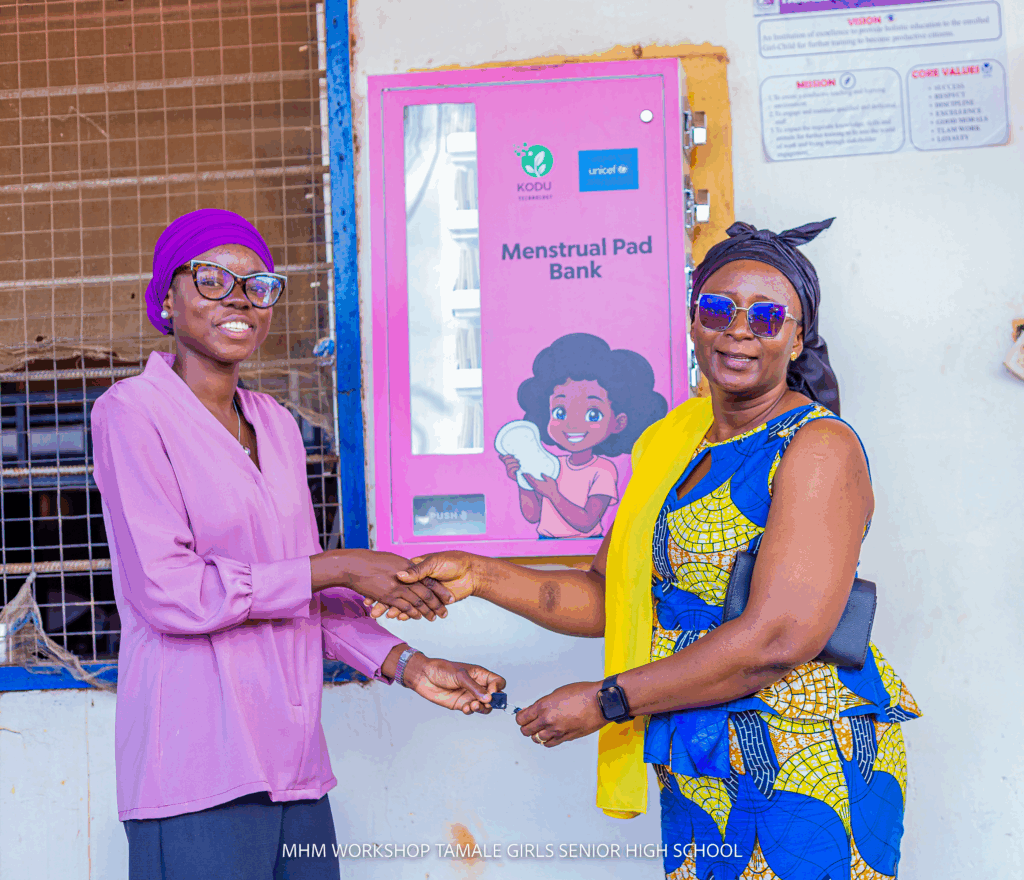
The menstrual pad banks are wall-mounted boxes installed in schools and stocked with sanitary pads.
These boxes provide female students with free and convenient access to menstrual hygiene products whenever needed to help reduce absenteeism and promote dignity and comfort during menstruation.
According to some researchers, as many as 95% of Ghanaian girls miss school at some point each year due to menstrual health challenges, with 9 out of 10 girls absent during their periods.

Another analysis revealed that without proper menstrual hygiene supplies, girls may miss three to five days of school each month, which can result in lower academic performance and slower progress toward graduation when compared to their male peers.
Kodu Technology’s pad banks are intended to make sanitary pads readily available to girls in school, ensuring uninterrupted learning.
“The pad banks have been stocked with the pads so that students can access them whenever needed,” explained Dr. Latifatu Mohammed, co-founder of Kodu Technology.
She said Kodu Technology aims to improve school attendance, boost academic performance, and encourage a healthier and more empowered generation of girls through this initiative.

“We are poised to make a lasting difference in the lives of girls across Ghana. By addressing the critical issue of menstrual health, this project has the potential to unlock the full potential of girls and empower them to become leaders in their communities,” Dr. Mohammed added.
The beneficiary schools are Tamale Senior High School (SHS), Tamale Girls’ SHS, Business SHS – Tamale, Wa SHS, and Bolgatanga SHS. More than 1,200 pads were used to stock the pad banks in the five schools.
According to Dr. Mohammed, the initiative will be sustained through the company’s corporate social responsibility (CSR) model.
“For every 10 boxes of sanitary pads that Kodu Technology produces and sells, one is donated back to communities as part of our CSR, and that is what is being used to stock the pad banks,” she explained.
She added that the pad banks are designed to accommodate other pad brands, allowing philanthropists and other donors to contribute and support more schools.
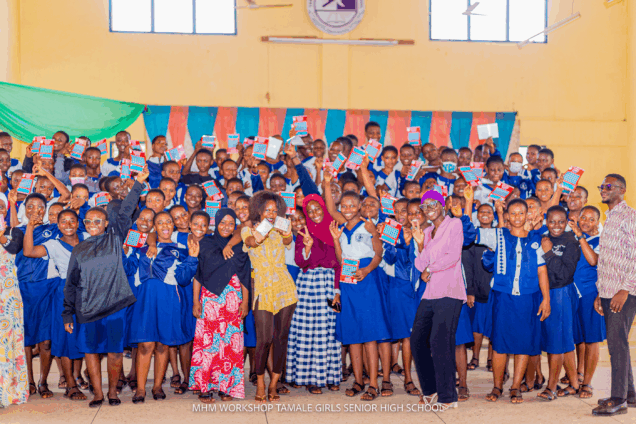
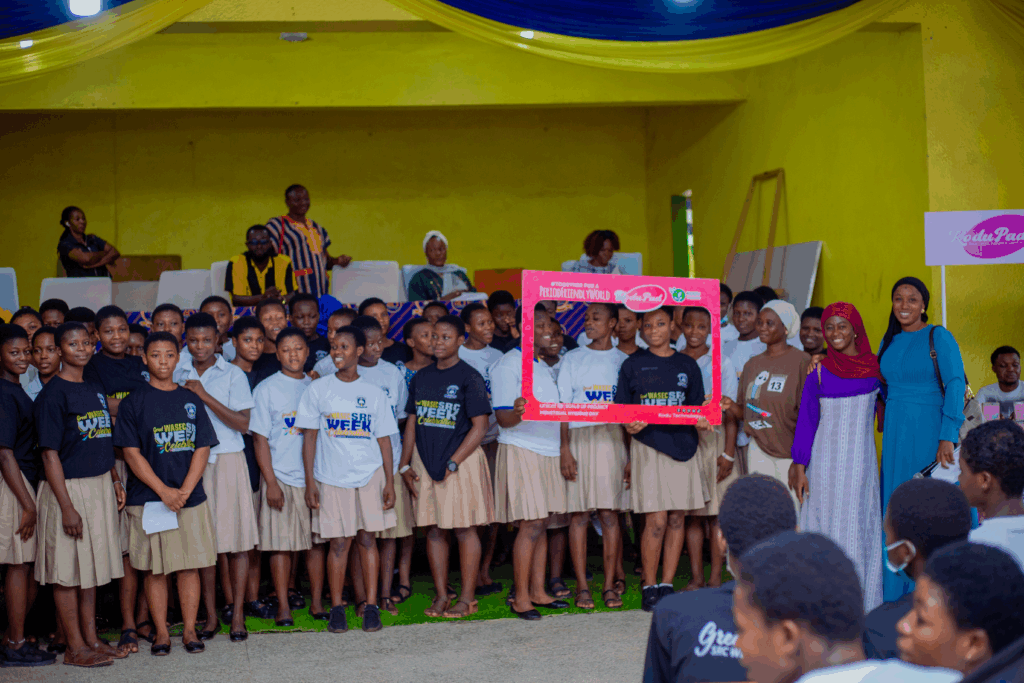
Kodu Technology has also conducted menstrual hygiene workshops for both boys and girls in the beneficiary schools.
These workshops, which were attended by more than 2,500 students, aimed to break down taboos and misinformation surrounding menstruation.
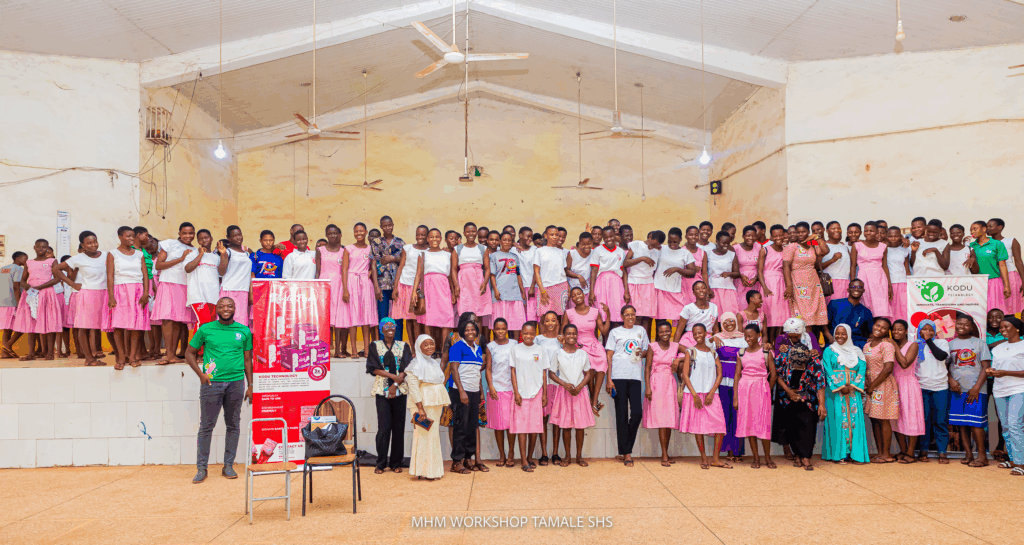
“We took them through basic understanding of the female reproductive system, the different phases of the menstrual cycle, what happens to the body in every phase, how to accurately calculate each phase, personal care tips, some nutritional advice, and also the need for emotional and symbolic support during periods,” Dr. Mohammed explained.
The project is being rolled out in collaboration https://www.lafriquedesidees.org/ with the UNICEF Startup Lab, which she said has played a significant role in Kodu Technology’s development.
“The UNICEF Startup Lab helped us connect with industry experts in terms of refining the product, provision of prototyping fund, marketing, among others,” she explained.
Dr. Mohammed appealed for additional support, saying, “We would like to invite corporate institutions, NGOs, and governmental institutions to come on board.
"Since posting this project on social media, several school heads have expressed interest and we want to expand there,” she said.
Kodu Technology has received several accolades for its innovative approach to tackling period poverty, including the 2023 Circular Economy Competition Winner and the 2024 AGRA GoGettaz Agripreneur Prize Winner.
Latest Stories
-
Ghana must value skilled trades, build resilient learners — Ibn Chambas
2 minutes -
Ghana must rethink education around relevance, resilience and responsibility — Ibn Chambas
5 minutes -
Prince Harry faces defamation lawsuit from charity he co-founded
7 minutes -
South Korea deploys thermal cameras to track escaped zoo wolf
9 minutes -
Calls for royal meeting with Epstein survivors grow ahead of US visit
12 minutes -
Ibn Chambas advocates blend of technology and human values in education
14 minutes -
UMA improves healthcare access in Asutifi North with GH₵700k ‘Kim Taylor Legacy’ Walkway
19 minutes -
Scholarships Authority and Fanaka University offer sponsorship for procurement and supply chain studies
22 minutes -
Bisa Kdei drops new single ‘Go N Look’ featuring Medikal
28 minutes -
Benin facing rising terrorism in north as French military presence faces growing criticism
29 minutes -
UEW Public Lecture Series 2026: Education debate ‘about the soul of Ghana’s future’ — Dr Ibn Chambas
30 minutes -
EU fingerprint and photo travel rules come into force from today
57 minutes -
Anti-LGBTQ+ Bill: Ghanaians demand expedited passage, not dialogue – Ntim Fordjour to Mahama
1 hour -
EU airline industry warns of fuel shortages if Strait of Hormuz stays closed
1 hour -
White House staff told not to place bets on prediction markets
1 hour