

Audio By Carbonatix
The Lands and Natural Resources Minister, Samuel Abu Jinapor, has advocated a policy and legislative framework in the determination of resource nationalism and exploitation of such resources for development.
According to him, a statutory framework on natural resources, that is known to both investors and states, ensures investors that come into Africa will be aware of the fiscal framework of countries.
He pointed out that if the regulatory framework is well known, the rules do not get changed in the middle of an agreement leading to conflict.
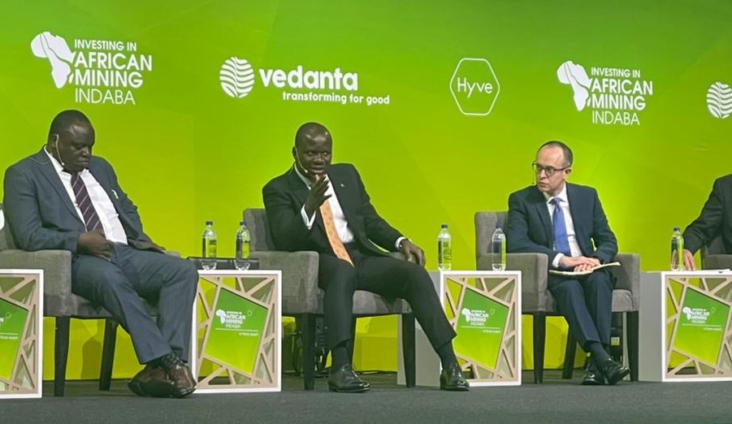
Speaking at a Mining Conference in South Africa on Tuesday, Mr Jinapor argued that resource nationalism is at the heart of the mining industry.
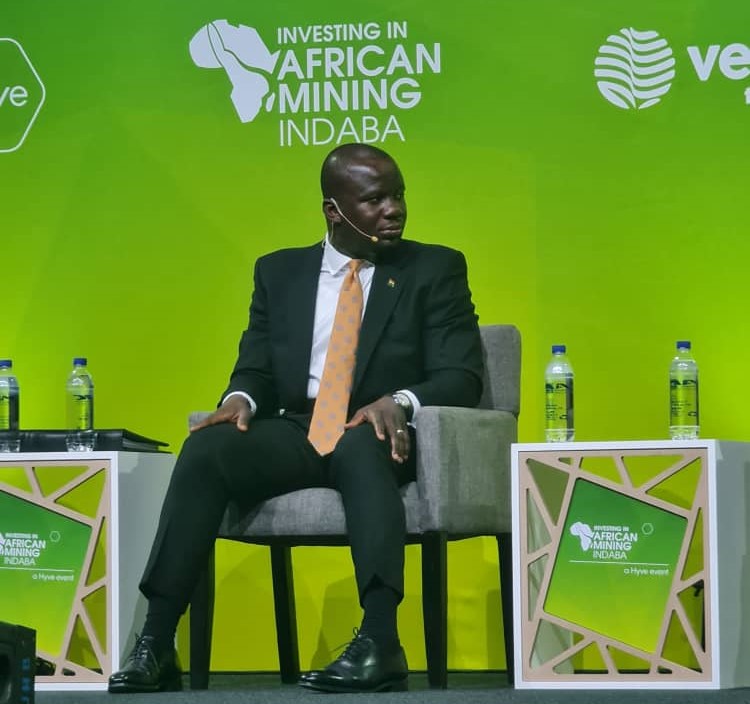
He added that the consideration of outright exploration, seizures and state control interventions has become quite unfashionable and given way to new reasoning.
“The sophisticated tools of local content, indigenisation, tweaking of already-established contracts and agreements and breach of contracts, and so on, which is also another mechanism for resource nationalism has become common.”
“Being able to attract the needed capital investment and technology and how to exploit these resources for the benefit of the citizens of the state is the biggest issue we have to deal with,” he stated.
The Damongo Member of Parliament (MP) encouraged investors to make it a decision to invest in Ghana because they can be certain they are investing in a democratic state where the rule of law prevails and sanctity of contract is the norm.
“And so if we get into negotiations, and we cast the terms of our negotiation in a contract, you can rest assured that it will be respected,” he added.
A paradigm shift in mining industry
The Lands Minister disclosed that President Akufo-Addo has rolled out a programme that will result in a major paradigm shift in how the Ghanaian mining industry is regulated and operated, which is an insistence on value addition.
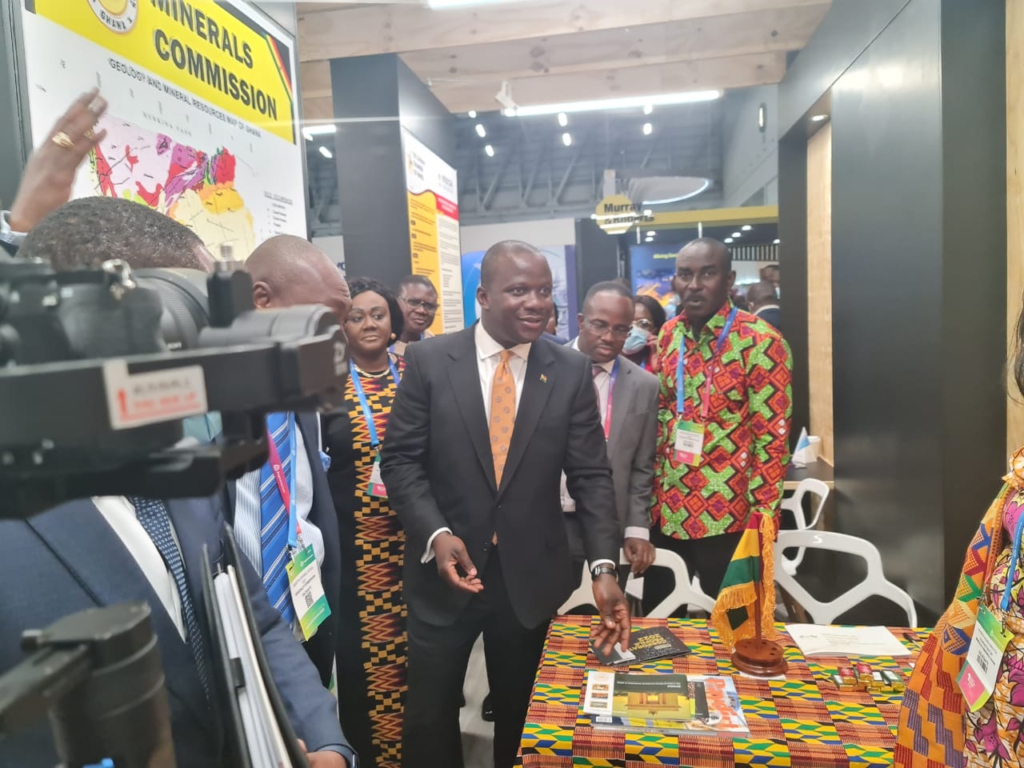
This programme, he said, is determined to ensure that value is added to minerals from exploration prospecting and mining to refinery to the downstream industries.
“All of these are matters that we’re planning. So is it for iron, steel and bauxite? By an Act of Parliament, we are insisting that within five years after the promulgation of the law, no raw bauxite can be exported out of Ghana.”
“Value addition will ensure that we retain a lot of the value in Ghana as well as also putting in place special institutional arrangements such as the Mineral Development Fund where we are dedicating 20% of our royalties for development in mining communities in Ghana, and the Minerals Income Investment Fund (MIIF) where we are seeking to collateralise and leverage royalties for national development and in mining communities and to also bring about capital to indigenise the mining community in our country,” he said.
Latest Stories
-
Seven African referees selected for World Cup 2026 as Ndala, Issa Sy miss out
17 minutes -
Why diaspora investors are using Accra real estate to hedge against global uncertainty in 2026
40 minutes -
GWL urges public support to stem water thefts
42 minutes -
Fire guts 2-storey apartment at Ashaley Botwe
43 minutes -
Come down and account, it’s a constitutional requirement – Martin Kpebu to Ofori-Atta
51 minutes -
The power of the private courtyard: How regalia is redefining resort-style living in Accra
1 hour -
Beyond roads and bridges: Understanding the true role of your MP
1 hour -
UK says Russia ran submarine operation over cables and pipelines
1 hour -
NPRA recovers GH¢27m in 2025, 30% of defaulted pension contributions
1 hour -
Power fluctuations slash Ashanti region water production by 959,000 cubic metres in March
1 hour -
Beyond the festivities: Gomoa must turn visibility into development
1 hour -
DVLA clarifies it is not responsible for Toyota Voxy commercial operations
1 hour -
Calls for Ofori-Atta’s return a non-issue if trial proceeds in absentia – Pius Hadzide
1 hour -
France names Ghana first beneficiary of newly established National Health Compact
2 hours -
US Immigration, extradition outcomes likely to influence each other in Ofori-Atta case – Amanda Clinton
2 hours