


Audio By Carbonatix
One person has died after he was diagnosed with Lassa Fever, a disease that has killed at least 54 people in Nigeria within the past seven weeks.
The man, 26, reportedly died at the Tema General hospital in the Greater Accra Region.
The infection was confirmed by the Noguchi Memorial Institute, Myjoyonline.com has learnt.
Interacting the media Thursday, Director-General of the Ghana Health Service, Dr Anthony Nsiah-Asare confirmed the death but said the Service is working to stop the spread of the disease.
Lassa Fever is transmitted to humans via contact with food or household items contaminated with the urine, saliva faeces, and blood of infected rodents.
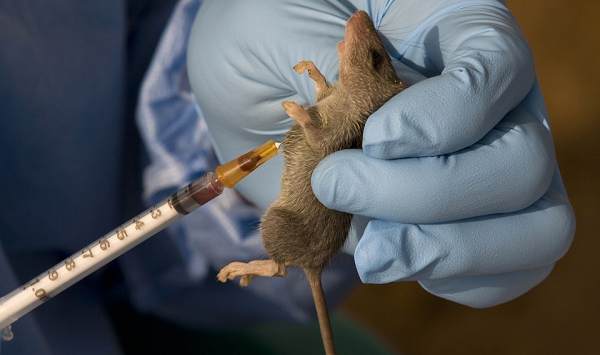
About 80% of the people who are infected with Lassa virus have no symptoms. One in five infections results in severe complications, with the virus affecting several organs such as the liver, spleen and kidneys.
It occurs in all age groups, both sexes and persons at the greatest risk are those living in rural areas, according to the World Health Organisation (WHO).
Demonstrating the preparation of the country, Dr Nsiah-Asare said currently all the frontline staff at the hospital that handled the patient before he died, were being screened.
He said further investigations to trace the background and all contacts of the deceased, were being pursued to prevent the spread of the virus.

Dr Anthony Nsiah-Asare
The GHS Director-General has called on the public to be extremely cautious of rodents, recommending good hygiene.
He also urged the public to report any suspected case of the disease.
Symptoms of Lassa fever
The incubation period of Lassa fever ranges from 6–21 days. The onset of the disease, when it is symptomatic, is usually gradual, starting with fever, general weakness, and malaise.
After a few days, headache, sore throat, muscle pain, chest pain, nausea, vomiting, diarrhoea, cough, and abdominal pain may follow. In severe cases, facial swelling, fluid in the lung cavity, bleeding from the mouth, nose, vagina or gastrointestinal tract and low blood pressure may develop.
Protein may be noted in the urine. Shock, seizures, tremor, disorientation, and coma may be seen in the later stages. Deafness occurs in 25% of patients who survive the disease. In half of these cases, hearing returns partially after 1–3 months. Transient hair loss and gait disturbance may occur during recovery.
Death usually occurs within 14 days of onset in fatal cases. The disease is especially severe late in pregnancy, with maternal death and/or fetal loss occurring in more than 80% of cases during the third trimester.
Latest Stories
-
Maiden Zongo Festival held in Wa amid calls to tackle drug abuse among the youth
11 minutes -
FDA warns of fake HIV test kits on Ghanaian market
39 minutes -
Africa urged to build resilient health systems as donor support tightens
45 minutes -
Easter gesture: Ablakwa settles medical bills for 85 North Tongu constituents
3 hours -
Africa must harness its population strength—Titus-Glover
3 hours -
Visa-free access doesn’t mean unlimited stay – Lom Ahlijah
3 hours -
From Golgotha to Kwahu: The Easter Migration of the Faithful and the Faithless
4 hours -
How the Ghanaian onion traders’ standoff with Nigeria unfolded and threatened local supply
4 hours -
No compensation for demolished structures on 24-Hour Economy market lands — Gov’t to structure owners
4 hours -
Financial Institutions must back local enterprises to spur growth – Deputy Minority Whip
5 hours -
Photos: Gomoa Easter Carnival 2026 ends in a burst of colour and celebration
5 hours -
Gomoa Easter carnival ends in colour as fashion, music and celebrity appearances light up final night
5 hours -
Families pick Luv Fm Family Party to celebrate Easter Monday with music and more
5 hours -
IMANI flags procurement issues in Ghana Gas insurance switch
5 hours -
Kaneshie footbridge rehabilitation to take up to 9 months — AMA
6 hours