

Audio By Carbonatix
This Christmas, I put before colleagues a question paper on which all homes should ponder and react: exam malpractice.
It begins with limited desk space in the classroom, allowing for two or more to share a desk in school.
Here you not only take liberties to chat during exams; you may move from chatting to cheating.
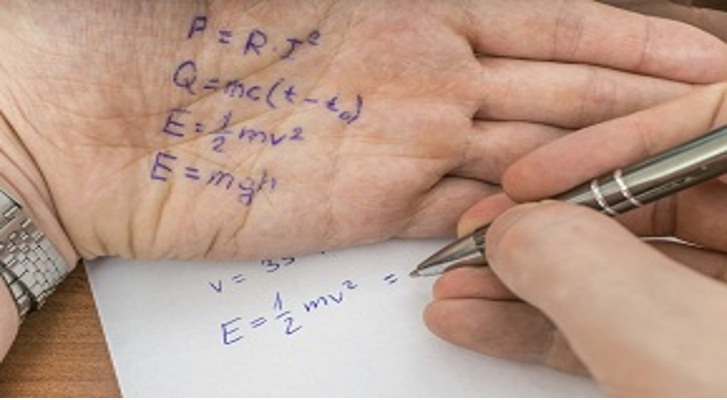
Students gifted with long necks ‘giraffe’ their way and ‘google’ all the answers beyond the elbow. You are lucky if the victim is a good student.
If not, you find yourself having copied from a neighbor who, unknown to you, is habitually at the bottom or ‘chews last.’ It would simply mean you are not a brilliant thief. Good exam thieves know where to look.
For the clever student, your best insurance against being victimized or rather being ‘stolen,’ was to cup your hands around your answers, to frustrate the giraffe next-door.
In our class in Winneba Zion, one such giraffe was ‘Araba Impraim,’ known to have a pungent intellectual odour; waab)n in local parlance.
Her male counterpart was ‘Kwamena Tetteh.’ Such students would ahead of formal seating arrangement, plan to share desks with those with well-done brains, of whom it was said, waaben (he/she is well cooked).
In that case there was no need to giraffe; you had thereby declared a kind of free trade agreement, AfCFTA, of sorts, where eyes and necks freely move back and forth in mutual window shopping.
Even so when caught, Teacher Acquaah would crack the whip at your back and inflict blisters, if you did not pad your shirt or ‘load’ your back that day.
But exam malpractice over the years, has matured across various stages of schooling through high school to universities.
It is now so formalized that some parents consider malpractice tolerance (or assurance) as an important factor in determining where to send their ward.
And some schools openly aid and abet, and proudly publicize their integrity deficit in adverts: ‘Our teachers are also WAEC examiners,’ signaling that they have a cheating management body, or one that is gifted in academic corruption.
So then parents who are interested in their kids’ welfare, readily agree and pay to schools a kind of malpractice assurance fees, partly meant to be given as cheating allowance to exam supervisors, and those favorably connected to the grand exam body, WAEC.
But the practice moves up to the tertiary level, where the malpractice skill receives a great boost partly through the student’s own interpretation of ‘academic freedom.’ When caught, not only is your paper cancelled, you may be suspended or even dismissed.
This reminds me of an egregious example in the premier university where a cheating student caught, decided to destroy all evidence when the invigilator was approaching. The suspect quickly stuffed his mouth with the unauthorized paper, chewed it, and swallowed it. He could indeed have facilitated digestion with a glass of water if the exam manual allowed.
Indeed some schools are so strict with exams, their students have gone on demonstrations against authorities and destroyed school property, accusing management of not being exam-helpful.
To all this, one small school has chuckled, laughing all the way to Brekuso. Ashesi University, perhaps the smallest private university in Ghana has taken initiatives the big ones in Africa could learn from.
Ashesi instills morality in students through an Honor Code. This is a Code, to which all students are compelled by regulation, ‘to swear at the University’s Matriculation ceremony, pledging sound morality, and the avoidance of examination malpractice.’
The effectiveness of the Honor Code makes invigilation at exams completely unnecessary. Examinations therefore take place without invigilators; for it is not only a breach of the code to actively engage in an exam malpractice, but also to not report an examination malpractice seen; that amounts to condoning the offense, and collective sanctions may be applied.
The system has helped produce talented students with a high sense of morality at Ashesi University who are in high demand the world over.
Unfortunately, through this post I may have done Ashesi University a big disservice. While my revealing this ‘secret’ may tantalize parents to send their kids to Ashesi; it may also be a deterrent, that may keep parents off Ashesi, which may be ‘blacklisted’ with the stigma: the University where students are not helped to pass exams.
My question this Christmas: Should the public sector not learn the wise ways of the ant: Ashesi University?
Finally, let us submit our dilemma this Christmas to Alhaji ‘Agyeman’ Bawumia, the Vice President, asking him to help out the public body WAEC with digitalized examinations, where human giraffes have no neck advantage, and where unauthorized papers cannot be chewed and swallowed.
Pens down please! And a merry Christmas to you all!
Latest Stories
-
‘We’ve become quite experienced in negativity’ – Liverpool’s Slot
4 hours -
Legendary manager Lucescu dies days after resigning
4 hours -
One dead as train travelling 99mph collides with lorry in France
5 hours -
Airlines cut flights and hike fares as fuel prices surge
5 hours -
Kane inspires Bayern to first-leg advantage over Real Madrid at Bernabéu
5 hours -
Wireless Festival cancelled after Kanye West blocked from coming to UK
5 hours -
Wa West MP commissions five boreholes for the benefit of his constituents
5 hours -
Havertz’s late strike hands Arsenal narrow first-leg advantage over Sporting
5 hours -
Damang mine award: Minority not against Ghanaian participation; we’re asking for fair process – Konadu
6 hours -
NPA to enforce stricter registration rules for petroleum tankers
6 hours -
Manhyia South MP laments decline in hospitality operations in his constituency
6 hours -
How a simple clean charcoal innovation could benefit Ghana’s climate future
6 hours -
NPA, COMAC launch Safety Week 2026 to promote risk management in petroleum sector
6 hours -
Stakeholder engagement resolves onion trade impasse
6 hours -
Gender Ministry holds staff durbar, welcomes new Chief Director
7 hours