

Audio By Carbonatix
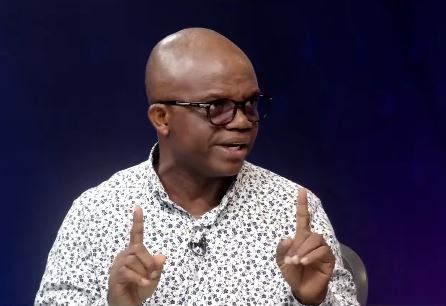
Former Deputy Finance Minister Dr Stephen Amoah has dismissed President John Mahama's claims that Ghana’s economy is in a dire state.
According to the Nhyiaeso MP, while the economy faces challenges, the President’s portrayal of the situation as a near-collapse is misleading and does not reflect reality.
“....Our President, John Mahama is respectfully creating a picture as if the economy is in a coma. Totally, it is not true," he asserted on JoyNews PM Express on Monday, March 3.
He argued that Ghana’s current economic trajectory under the former President Akufo-Addo-led administration is far better than what was handed over in 2016 by the National Democratic Congress.
He stated that while economic growth stood at 3.4 per cent in 2016, it had risen to 6.3 per cent by the end of 2024.
Similarly, agriculture, which grew at 2.7 per cent in 2016, had improved to 4.5 per cent by the time of transition.
Dr. Amoah also attributed some of the country’s economic challenges to global factors, particularly the impact of COVID-19.
He noted that Ghana’s debt-to-GDP ratio increased because of necessary debt financing, as government revenues took a major hit due to the pandemic.
“Maybe, if you say we have challenges, that one is true. Maybe our president is still dwelling on what happened with post-COVID, 2022, where the world grew negative 3.3 - we grew 0.4 or 0.5. We even grew positive, but it was too small,” he said.
He further noted that during the pandemic, civil servants were paid despite working in shifts, while over 40,000 private sector employees lost their jobs.
These, he said, were necessary but difficult decisions that impacted the economy.
“I've never seen in the history of this country that public and then civil service workers were asked to stay home, but they were paid for some months, and even beyond the months they ran a shift way over one year. That's if they’re 10, five workers go for one week or two weeks, and they were all being paid,” he explained.
Additionally, Dr. Amoah argued that Ghana’s debt situation should be analysed in context, stressing that debt-to-GDP ratio is more critical than nominal debt figures.
“You know, everywhere in the world, majorly, you use debt financing or your revenue. So if your revenue goes down badly, you will resort to debt financing. And debt to GDP is what matters, not even the nominal value,” he noted.
Latest Stories
-
Full text: Deputy Finance Minister delivers A-G’s report on 2024 arrears and payables
27 minutes -
Audit uncovers GH¢159m ‘ghost’ teacher trainee arrears
39 minutes -
Societe Generale Ghana records resilient performance amid macroeconomic resetting
54 minutes -
NaCCA applauds GPA at 50, stresses importance of books in education and national identity
55 minutes -
Grain scandal: Finance Ministry alarmed by GH¢61.7m ‘ghost transport’ payout in 2024
55 minutes -
ACPSEA launched to strengthen Africa’s peace and security architecture
57 minutes -
Tema port dredging to reduce delays for cement manufacturers – Deputy Trade Minister
60 minutes -
Mother allegedly assaults 12-year-old daughter over plantain sale in Abrabra
1 hour -
Proposed mining royalty regime could cost Ghana nearly one million jobs – Patrick Boamah
1 hour -
Gov’t blocks GH¢4.4bn in fraudulent recycled contract claims – Deputy Finance Minister
1 hour -
Transport, Fisheries Ministries vow to operationlise James Town Harbour after years of neglect
1 hour -
Auditor-General’s Report: Deputy Finance Minister flags missing rice, GH¢771m maize delivery shortfall
1 hour -
Auditor-General uncovers GH¢9.4m payment backed by forged documents – Deputy Finance Minister
1 hour -
Audit exposes massive ‘dry spell’ supply scandal; 10,000 tonnes of rice missing
1 hour -
35 contractors paid $7.9m under Agenda 111 failed to start work – Audit
1 hour