

Audio By Carbonatix
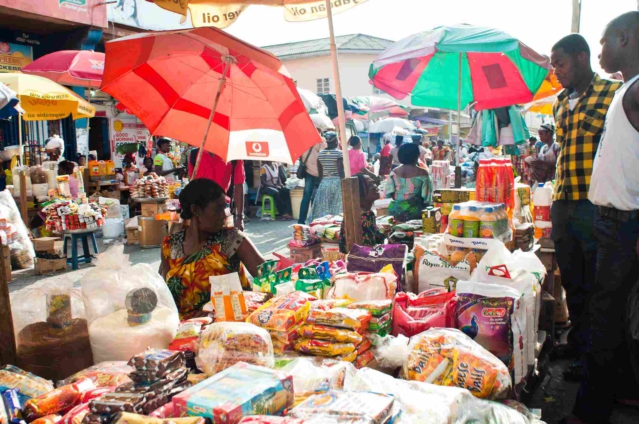
In most markets in Accra, 5:00 am is often bustling with a flurry of buying and selling of groceries.
Vendors behind the fresh supply of foodstuffs and other products to homes, restaurants, and schools are largely women.
These traders are usually under the hot sun with scanty or no covering, mostly on sideways, pedestrian walks, and street corners, all in an attempt to eke a living.
The sector is considered as the engine of the country’s economy since Small and Medium Enterprises contribute about 70% of Ghana's gross domestic product. Women in the service sub-sector in wholesale or retail trade contribute 55% of this figure.
However, this group's myriad problems include access to credit due to a lack of collateral, inadequate savings needed for equity payments required for loans, and cumbersome bureaucratic procedures for accessing formal credit facilities.
This, many of the women say is negatively impacting their businesses and further making life difficult.
Adoley, a petty trader at the Makola market, said her trading activities put food on her table and help cater for her three children, thus, their only means of survival.
“When I wake up, I prepare my kids for school, prepare food for the house and set off to do my petty trading. It has not even been easy since my husband died 10 years ago. I pay all the bills including light and water. I also pay the rent, it really difficult,” she said.
Speaking to the Labour series on JoyNews, although, Adoley is money-oriented and finds fulfillment in waking up early to sell groceries for her customers. She thinks life could be better if there was any help from somewhere.
“We beg government to help us at least reduce the fuel prices so that it can reflect in our trade,” she decried.
A fishmonger, Kwaale, who has been doing the business for over three decades after her mother introduced her to it, said it has been of immense support to her family but is not all rosy.
“Things are very expensive so the profit has reduced,” she told JoyNews’ Ayisha Ibrahim.
Another trader mentioned that although her husband supports the family it is not easy as they both do not make enough to maintain the home and are somethings required to take loans adding that “if you don’t work hard to settle the loans, you end up being arrested by the police.”
But the women are not daunted by these challenges. They hope government would do something to lessen their burden and make waking up at dawn worth their while.
Latest Stories
-
The Ghanaian prophet and the mysterious death of his scottish wife Charmain Speirs
32 minutes -
Nearly 400 sentenced in Nigeria for links to militant Islamists
53 minutes -
Ghana’s recovery supported by gold strength despite global oil price pressures – Standard Bank Research
60 minutes -
Kwaku Azar writes: A-G vs OSP
2 hours -
Mfantsipim–Adisadel rivalry built excellence, not division – Sam Jonah
2 hours -
Vice President launches Mfantsipim’s 150 years of shaping Ghana’s greatest mind
2 hours -
I assure Otumfuo, Mahama will join him to commission KNUST Teaching Hospital by end of this year – Haruna Iddrisu
3 hours -
Barcelona dominate derby to extend La Liga lead
3 hours -
Gov’t to roll out free special education for persons with disabilities from July 1 – Education Minister
3 hours -
Importers and Exporters Association declares full support for Publican AI port system
4 hours -
“We used it to test our officiating officials’ readiness” – Bawah Fuseini after CAA Athletics event
4 hours -
Volleyball emerges as Ghana’s fastest rising sport
4 hours -
National Sports Fund needs strong leadership from the top – Administrator David Wuaku
4 hours -
JoySports Exclusive: Steve McLaren in talks with GFA after expressing interest in Black Stars job
4 hours -
Fire guts auto parts warehouse at Bubuashie, one fire officer injured
4 hours