

Audio By Carbonatix
The media must be supported to overcome the current economic challenges to enable it to continuously execute its role in the consolidation of the country’s democracy.
Ghanaian journalists work in challenging circumstances and lack the resources to provide the kinds of robust coverage necessary to perform some of their core functions.
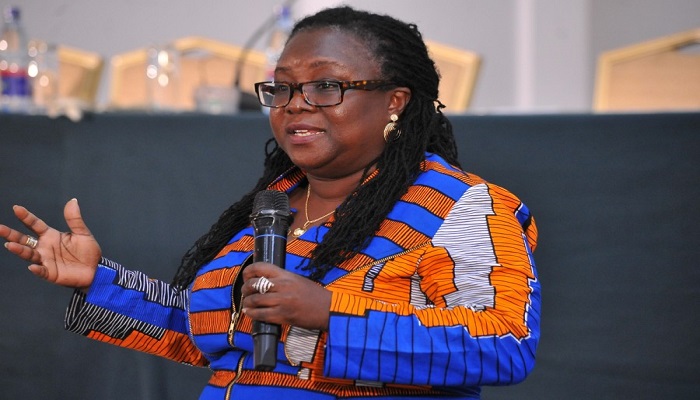
Delivering an inaugural lecture at the University of Ghana (UG) on Thursday, April 29, 2022, Professor Audrey Gadzekpo, Former Dean, School of Information and Communication Studies, UG, said the Covid-19 pandemic had put the media under strain and “needs a bailout.”
“…as a key pillar of democracy, the media sector is too important to fail. It needs a bailout on several fronts,” she said.
“We must remember that the media is a public good and must be supported to survive. If for nothing else, they must survive in the interest of democracy,” she added.
Prof. Gadzekpo said in the wake of the seeming economic challenges, media businesses must adopt new models and find innovative ways to sustain their operations.
“The old model where commercial advertising is the primary source of media funding is obviously atrophied. Other sustainable types of funding from private philanthropy to private subsidies must be explored,” she said.
Prof. Gadzekpo, a Professor of Communication Studies, said media owners must also invest in building the capacities of their employees regularly and not solely rely on stakeholders to build the capacities of their journalists.
She observed that many journalists are “inexperienced, lacking requisite knowledge on the areas they cover and do not have a strong sense of history.”
Prof. Gadzekpo said in spite of the challenges facing the media, journalism practice in Ghana demonstrates a lot of potential.
Making reference to an Afrobarometer report, which indicated that trust in the media among the public has eroded, she said the media must conduct a self-introspection of its performance and work to address the problem.
“Without popular support for civic freedom, there is the risk that authoritarian-minded government would place further restrictions aimed at weakening the media’s ability to hold them accountable.
“If the media is expected to be guardians of democracy, they themselves must deepen their commitment to democratic ideals,” she said.
The media must work in support of public interest and in support of democratic development, she added.
Prof. Gadzekpo said efforts to improve media professional standards of ethics must be strengthened to ward off “hostile external regulations.”
She called on media companies and media associations such as the Ghana Journalists Association (GJA) and the Ghana Independent Broadcasters Association (GIBA) to encourage self-regulation and hold their employees and employers more accountable.
Latest Stories
-
Current account stability to mitigate pressure on cedi; currency to end year at GH¢11.40 to a dollar
19 minutes -
T-bills auction: Government records 32% undersubscription; interest rates rise again
22 minutes -
Economy to remain relatively insulated from fallout of US–Iran conflict – Fitch Solutions
22 minutes -
[Watch Live] Shatta Wale, Kofi Kinaata, and others ignite the grand finale of Gomoa Easter Carnival
3 hours -
Berekum Chelsea edge Aduana FC in Bono derby to boost survival hopes
6 hours -
‘They can’t control the team’ – Ernest Thompson doubts local coaches for Black Stars role
7 hours -
Ghana-born midfielder Seidu realises ‘dream’ with Atlético Madrid debut
7 hours -
GPL 2025/26: Bubakari strikes late to hand All Blacks vital win over Dreams FC
7 hours -
Fatal crash on Kintampo–Tamale highway claims four lives
7 hours -
2025–26 FA Cup Semifinal Draw: Chelsea, Man City Learn Wembley Opponents
7 hours -
GPL 25/26: Gold Stars back on top after beating Nations FC
8 hours -
GPL 2025/26: Heart of Lions roar back with victory over Vision FC in Kpando
9 hours -
Solomon Agbasi: Hearts keeper in stable condition after concussion
9 hours -
GPL 2025/26: Late Salim Adams penalty earns Medeama draw at Bechem
9 hours -
Hearts pip Young Apostles 1-0 to end 5-game winless run
9 hours