

Audio By Carbonatix
A mental health advocacy organization, MindFreedom Ghana has identified the lack of financing as a major stumbling block in ensuring universal mental health coverage in the country.
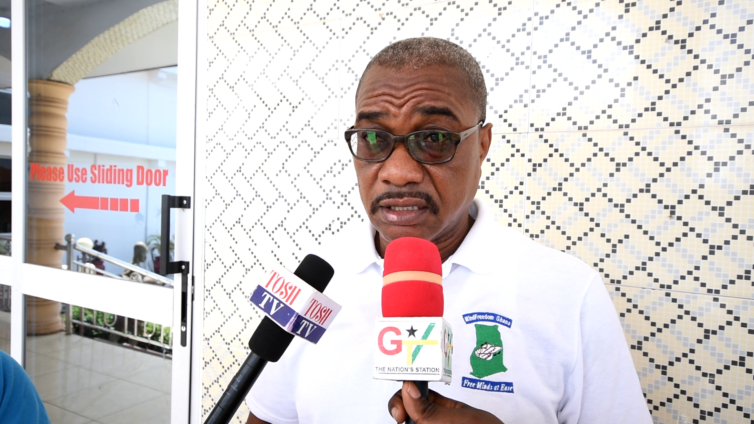
The Executive Secretary of MindFreedom Ghana, Dan Taylor indicated that though mental healthcare is free in Ghana, the lack of funding has made it practically impossible to fully treat mental health patients.
He made the remarks while speaking to the media on the sideline of a Mental Health Advocacy workshop, organized by his outfit in Ho.
He indicated that regardless of the fact that a Mental Health Fund was established, to finance mental healthcare, the fund is suffering a drought, as no proper source of raising money has been institutionalized.
He asserted that the lack of funding contributes to the continuous shortage of medication, and lack of facilities among other problems, leading to patients relapsing treatment, or not being able to access treatment.
“Mental health as a policy in Ghana is free, but currently because of a shortage of medication and other things [used] to treat, people have to buy. And there are those because of the poverty level, they are not able to buy, so relapse, they go back to their conditions”, he lamented.
Mr Taylor thus entreated the government to consider a proposal to tax public-sector workers monthly to raise money for the Mental Health Fund, to establish an effective healthcare system for mental health.
“To start with, 10pesewas should be deducted from the monthly pay of public workers in Ghana, and the number of public workers on the government payroll is about 250,000. Once we start from the public workers tangent, then gradually it will move to the private sector.
And of course, there are other suggestions that there should be some levies on alcohol and cigarettes used to feed the mental health fund”, he said.
He lauded the proposal to incorporate mental health into the National Health Insurance Scheme (NHIS) to enhance the treatment of mental health conditions.
Mr Taylor stressed that mental health conditions are treatable and hence persons identified to be having such conditions must be guided to access healthcare, be diagnosed, and be treated, so they integrate back into society.
“Mental health conditions are not spiritual and all of that, we need to diffuse that kind of thought and wrong perception. Stigma is another issue, as a family, we must not sack them. We must show that kind of love and concern for them.
I can tell you that there are incidents of people who have had mental health conditions, they were aggressive, they were violent, and all of that and they got the treatment. They were able to recollect all that happened or the way they were treated, they will tell you”, he stressed.
Latest Stories
-
A source of excellence across generations – Vice President Opoku-Agyemang lauds Mfantsipim
47 minutes -
(Photos) Mfantsipim School launches historic 150th anniversary
1 hour -
Knights and Ladies of Marshall group backs Catholic Bishops’ stance on anti-LGBTQ+
2 hours -
Bright Simons writes: All the Filla in the Ibrahim Mahama/E&P – Gold Fields Saga
3 hours -
Monetise Idiocy In Ghana
3 hours -
The Ghanaian prophet and the mysterious death of his scottish wife Charmain Speirs
3 hours -
Nearly 400 sentenced in Nigeria for links to militant Islamists
4 hours -
Ghana’s recovery supported by gold strength despite global oil price pressures – Standard Bank Research
4 hours -
Methodist Church hails Mfantsipim@150; calls for “fresh consecration” to excellence
4 hours -
‘Excellence is our inheritance’ – Nana Sam Brew-Butler hails Mfantsipim’s 150-year reign in leadership
4 hours -
Kwaku Azar writes: A-G vs OSP
4 hours -
Mfantsipim–Adisadel rivalry built excellence, not division – Sam Jonah
5 hours -
Vice President launches Mfantsipim’s 150 years of shaping Ghana’s greatest mind
5 hours -
I assure Otumfuo, Mahama will join him to commission KNUST Teaching Hospital by end of this year – Haruna Iddrisu
6 hours -
Barcelona dominate derby to extend La Liga lead
6 hours