

Audio By Carbonatix
The Local Government Service Association of Physical Planners (LoGSAPP) has expressed strong opposition to proposals to merge Development Planning Units and Physical Planning Departments at the local government level, warning that the move could worsen Ghana’s urban development challenges.
According to the association, the proposal is based on the flawed assumption that development planning and physical planning are interchangeable. LoGSAPP insists the two are distinct professional disciplines with different mandates, skills, and outcomes, and treating them as one would undermine effective planning.
In a statement, the association explained that physical planning is a specialized, spatially driven profession focused on land-use planning, urban design, development control, and environmental management, while development planning is largely socio-economic, dealing with policy formulation, budgeting, and programme coordination.
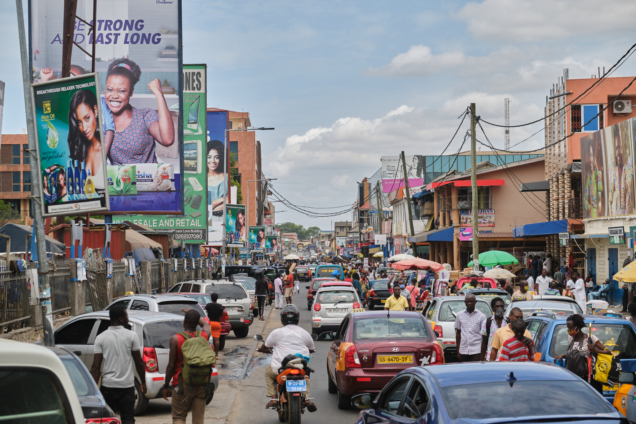
LoGSAPP argued that Ghana’s major urban problems—such as flooding, congestion, informal settlements, environmental degradation, and unsafe developments—are primarily spatial in nature and stem from weak spatial planning and poor development control rather than a lack of socio-economic policies.
The association also pointed to the longstanding neglect of Physical Planning Departments, which remain under-resourced, understaffed, and poorly equipped, with some districts having no physical planners at all. It warned that merging the departments would further marginalize spatial planning and weaken enforcement.
Citing staffing imbalances, LoGSAPP noted that there are about 400 spatial planners in Metropolitan, Municipal and District Assemblies (MMDAs) compared to over 1,000 socio-economic planners nationwide, making it likely that socio-economic planning would dominate in any merged department.
LoGSAPP is therefore calling for reforms that strengthen spatial planning rather than merge the two units, emphasizing investment in qualified physical planners, institutional authority, and enforcement capacity.
The association maintained that sustainable urban development in Ghana depends on protecting professional boundaries and strengthening spatial expertise—not merging fundamentally different planning disciplines.
Latest Stories
-
Prudential Life settles GH¢100,000 medical bills under its PRUCares Valentine Experience Initiative
56 minutes -
Wa West Picnic: Peter Lanchene Toobu champions peace, health and unity in landmark celebration
1 hour -
Dr Mensah Market flooded after downpour in Kumasi
1 hour -
Armed men reportedly storm Adjen Kotoku Onion Market amid tensions
2 hours -
Tecco Mensah writes: Why football fans must look beyond statistics
3 hours -
Police recover stolen Honda CR-V in Kumasi within 48 hours
4 hours -
Apetorku Gbodzi 2026 Festival opens in Dagbamete with development focus
4 hours -
President Mahama arrives in Lyon to co-chair One Health Summit
4 hours -
Beverly View Plus Hotel draws crowds amid coastal Easter rush in Volta
4 hours -
Maiden Zongo Festival held in Wa amid calls to tackle drug abuse among the youth
4 hours -
FDA warns of fake HIV test kits on Ghanaian market
5 hours -
Africa urged to build resilient health systems as donor support tightens
5 hours -
Easter gesture: Ablakwa settles medical bills for 85 North Tongu constituents
7 hours -
Africa must harness its population strength—Titus-Glover
7 hours -
Visa-free access doesn’t mean unlimited stay – Lom Ahlijah
7 hours