

Audio By Carbonatix
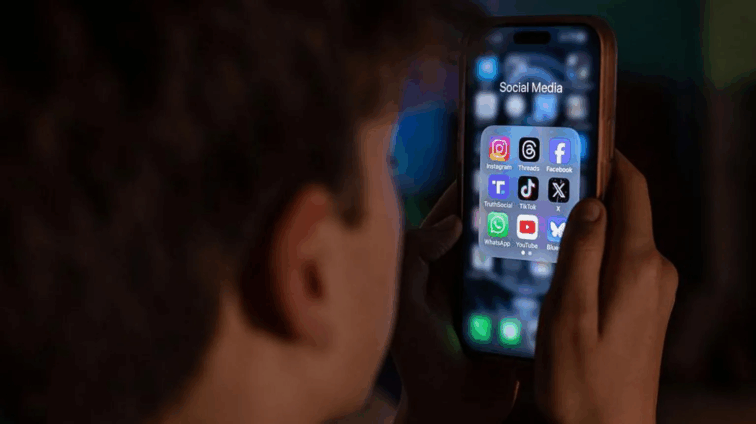
About 550,000 accounts were blocked by Meta during the first days of Australia's landmark social media ban for kids.
In December, a new law took effect requiring the world's most popular social media sites, including Instagram and Facebook, to stop Australians aged under 16 from having accounts on their platforms.
The ban, which is being watched closely around the world, was justified by campaigners and the government as necessary to protect children from harmful content and algorithms.
Companies, including Meta, have said they agree that more is needed to keep young people safe online. However, they continue to argue for other measures, with some experts raising similar concerns.
"We call on the Australian government to engage with industry constructively to find a better way forward, such as incentivising all of industry to raise the standard in providing safe, privacy-preserving, age-appropriate experiences online, instead of blanket bans," Meta said in a blog update.
The company said it blocked 330,639 accounts on Instagram, 173,497 on Facebook, and 39,916 on Threads during its first week of compliance with the new law.
They again put the argument that age verification should happen at an app store level - something they suggested lowers the burden of compliance on both regulators and the apps themselves - and that exemptions for parental approval should be created.
"This is the only way to guarantee consistent, industry-wide protections for young people, no matter which apps they use, and to avoid the whack-a-mole effect of catching up with new apps that teens will migrate to in order to circumvent the social media ban law."
Various governments, from the US state of Florida to the European Union, have been experimenting with limiting children's use of social media. But, along with a higher age limit of 16, Australia is the first jurisdiction to deny an exemption for parental approval in a policy like this - making its laws the world's strictest.
The policy is wildly popular with parents and envied by world leaders, with the Tories this week pledging to follow suit if they win power at the next election, due before 2029.
However, some experts have raised concerns that Australian kids can circumvent the ban with relative ease - either by tricking the technology that's performing the age checks, or by finding other, potentially less safe, places on the net to gather.
And backed by some mental health advocates, many children have argued it robs young people of connection - particularly those from LGBTQ+, neurodivergent or rural communities - and will leave them less equipped to tackle the realities of life on the web.
Latest Stories
-
Catholic Bishops say moral values must match economic priorities in Anti-LGBTQ+ debate
20 minutes -
IGP Yohuno urges merit and hard work ahead of Police Academy exams
33 minutes -
Queendalyn Yurglee releases debut album ‘Clouds of Glory’
1 hour -
UDS moves to clear MPhil student wrongly linked to robbery case
1 hour -
Vodza Regatta 2026: Prof Audrey Gadzekpo rallies investors for coastal tourism growth
1 hour -
Introduction of 100 new Metro Mass buses won’t affect transport unions – GPRTU
2 hours -
Deputy Transport Minister backs Yellow Line traffic initiative
2 hours -
MTN Ashanti-Fest music concert set to hit Kumasi on Saturday
2 hours -
Authorities probe discovery of dead fish at Tema shipyard
2 hours -
Minority welcomes fuel tax cuts, demands accountability for GH¢1 levy
2 hours -
It remains a priority — Sam George on Anti-LGBTQ bill
2 hours -
Police arrest Nigerian national seen in viral videos wearing police uniforms
2 hours -
Free golf training empowers underprivileged girls in Accra
2 hours -
Why SIGA’s reset is not a market sin, but a national necessity
3 hours -
SIGA Directive: Beyond the theatre of institutional displacement
3 hours