

Audio By Carbonatix
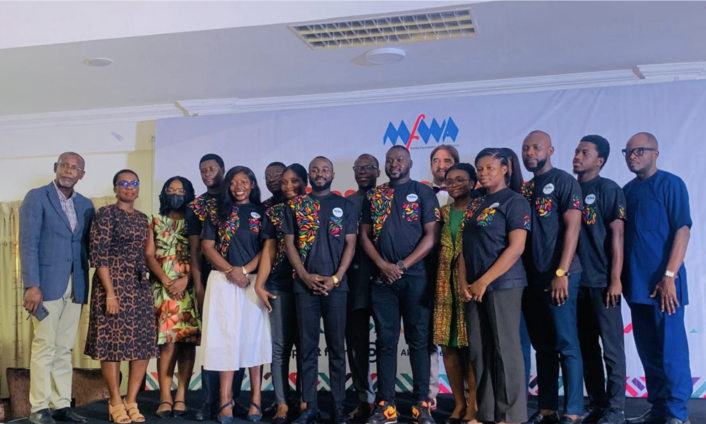
The Media Foundation for West Africa (MFWA) has trained 30 young men and women as part of its Next Generation Investigative Journalism (NGIJ) programme.
The fellows, drawn from diverse fields, including journalism, were charged to produce stories that advanced human rights, accountability and participatory public discourse.
Addressing the fellows and other journalists, Mr. Sulemana Braimah, Executive Director, MFWA charged the fellows to impact society through credible journalism.
He noted that that MFWA established the NGIJ to specifically produce a crop of journalists which would advance the cause of investigative journalism, human rights, good story writing and fact checking.
He noted that journalism practice in Ghana had not been able to demand accountability from duty bearers hence the establishment of the NGIJ.
He admitted that journalists in the country had contributed immensely to the safeguarding of Ghana’s peace, protecting its enviable status as the the beacon of democracy in Africa.
He cited the coverage of the December 7 polls as one of the ways the media safeguarded Ghana’s peace. However, Mr. Braimah noted that a thriving democracy went beyond election reportage.
He said democracy would thrive with a credible media that went beyond election reportage but ensured that the electorate benefited from democracy.
He noted that the Ghanaian media were unable to go past reportage to the responsibility of demanding accountability hence the established the NGIJ to fill that gap.
He said the NGIJ aimed to produce journalists who would undertake enterprising journalism, noting that fellows from earlier cohorts were already doing great and charged the new ones to give off their best.
Madam Ewurama Kodjo, Programmes Manager, DW Akadamie advised the fellows to safeguard Ghana’s democratic values by undertaking credible journalism.
Madam Angela Azumah Alu, Fiscal Policy Adviser, OXFAM Ghana, told the fellows to “Put everything you have learnt into practice and be a light in our world. While exposing wrongdoing and demanding accountability, don’t forget to highlight the positive stories.”
Background
The GNIJ was commemorated in 2021 to promote qualitative journalism, mentor and train fellows to produce compelling stories to promote excellence in journalism, demand accountability and transparency in Ghana’s governance systems.
The programme is targeted at fresh graduates from journalism school, early career journalists and professionals who genuinely have a passion for journalism and who want to contribute to the process of demanding accountability.
They are trained in story writing, fact checking, mobile journalism and investigative journalism.
Latest Stories
-
Netherlands Fire Chief in Ghana to support fire safety reforms and market fire prevention efforts
37 minutes -
Mason goes on remand for stealing
40 minutes -
Gov’t cuts fuel taxes, deploys buses to curb impact of rising fuel prices
1 hour -
Interior Minister calls for intelligence-driven strategy as Ghana strengthens counter-terrorism efforts
1 hour -
Adenta Circuit Court remands Pastor William Gyimah over viral threats against Vice President
2 hours -
“We’ve implemented changes to prevent a repeat of the AFCON final” – CAF President Motsepe
2 hours -
Gov’t orders deployment of Metro Mass buses to cushion commuters amid fuel price hike
3 hours -
Key Indian state polls begin in test for Modi’s party
3 hours -
Playback: Gomoa Easter Carnival in photos
3 hours -
Gov’t orders removal of fuel taxes to ease pump price hikes
3 hours -
“Whatever the decision of CAS, we will respect it” – CAF President Motsepe after AFCON final meetings in Morocco
3 hours -
Emma Ankrah: When waiting becomes part of treatment – Reflections on hospital care
4 hours -
Ghana urges travellers to prepare for new EU border system roll-out
4 hours -
Mahama enforces fuel coupon ban for ministers as cabinet moves to slash fuel taxes
4 hours -
Task force probes strange fish deaths in Tema
4 hours