

Audio By Carbonatix
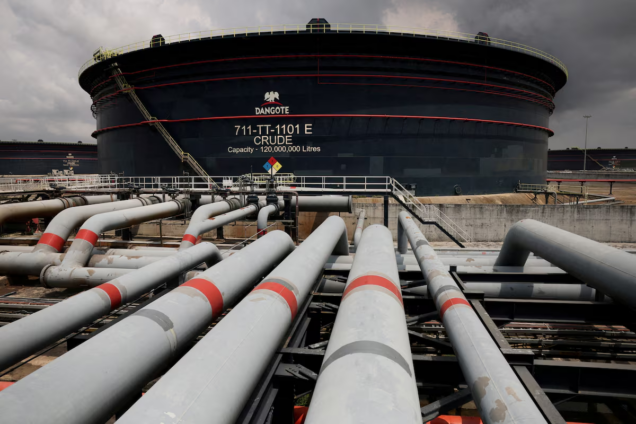
Nigeria's Dangote Petroleum Refinery has stepped up gasoline exports across Africa as disruptions to energy flows due to the Iran conflict squeeze traditional fuel supply routes, curbing the cheap imports that long dominated West African markets.
Data from tanker-tracking firm Kpler show Nigeria's exports of clean petroleum products - which include gasoline, diesel, kerosene and jet fuel - have risen to about 214,000 barrels per day so far in March from an average of 100,000 bpd in February.
Shipments to other African countries have climbed to about 90,000 bpd from 38,000 bpd previously.
The 650,000-barrel-per-day Dangote refinery has sold 12 cargoes of premium motor spirit, totalling 456,000 metric tons, on a free-on-board basis to international traders, with shipments delivered to Cote d'Ivoire, Cameroon, Tanzania, Ghana, and Togo, sources familiar with the deals said.
The sales mark Dangote's first gasoline exports since the plant reached full capacity in February.
OPPORTUNITIES FOR REFINERS WITH SHORTER SUPPLY CHAINS
The escalating Middle East conflict has pushed up global crude prices, lifting feedstock costs for refiners worldwide. At the same time, shipping disruptions and lower fuel availability from Europe and the Gulf have cut flows of low-cost refined products into West Africa.
That has created opportunities for suppliers with shorter supply chains.
Dangote's owner Aliko Dangote has been sparring with Nigerian regulators over continued petrol imports, which he contends undermine his refinery.
Nigeria halted imports last month. Since then, domestic pump prices have risen more than 50% as the Iran conflict roiled energy markets.
The country consumes an estimated 50 million to 60 million litres of gasoline a day — nearly one-fifth of Africa’s total demand — making fuel availability and pricing acutely sensitive to swings in global markets.
For decades, West Africa has depended heavily on imported fuel cargoes from Europe and the Middle East, often of lower quality, leaving the region exposed to logistical delays and external supply shocks.
Preliminary data shows that Nigerian fuel imports are at a daily average of 90,000 bpd so far in March, according to Kpler, down from 209,000 bpd for the whole of February.
Arrivals from offshore Togo, which Dangote has previously accused of being the source of dirty fuel imports into the country, have fallen to zero so far in March, compared with 60,000 bpd in February.
As the Dangote Refinery seeks to end all imports, the Middle East crisis is pushing more local fuel traders to seek supply from the refinery.
Latest Stories
-
Trump seeks $152m to reopen notorious Alcatraz prison
21 minutes -
Ex-Chelsea player Oscar retires with heart issue
30 minutes -
CA Foundation drives constitutional literacy in Kpone Katamanso municipality
35 minutes -
GPRTU to hold talks with Transport Ministry over rising fuel costs
37 minutes -
CUTS International urges gov’t to halt sachet water price hike pending cost review
43 minutes -
Chief Justice: Efficient Judiciary essential to reducing business costs
46 minutes -
Bayern grabs 99th-minute winner to cap superb fightback
46 minutes -
Ahmed Ibrahim urges Ghanaians to reflect Easter values in nation-building
50 minutes -
ECG inefficiencies undermining power supply -Mahama outlines reforms
51 minutes -
Lewandowski scores as Barca fight back to defeat Atletico
53 minutes -
Lack of private sector consultation undermining economic growth – Jerry Ahmed Shaib
57 minutes -
Real Madrid seven points adrift after Muriqi’s late Mallorca winner
57 minutes -
Ghana must lead AfCFTA implementation by example – Trade Minister Ofosu-Adjare
1 hour -
Strong Judiciary key to business confidence – Chief Justice Baffoe-Bonnie
1 hour -
Mahama announces 60-Hectare irrigation project to boost tomato production
1 hour