

Audio By Carbonatix
Ghana’s hard-won macroeconomic stability is facing a grave external threat as escalating hostilities in the Middle East risk undoing months of progress in curbing inflation.
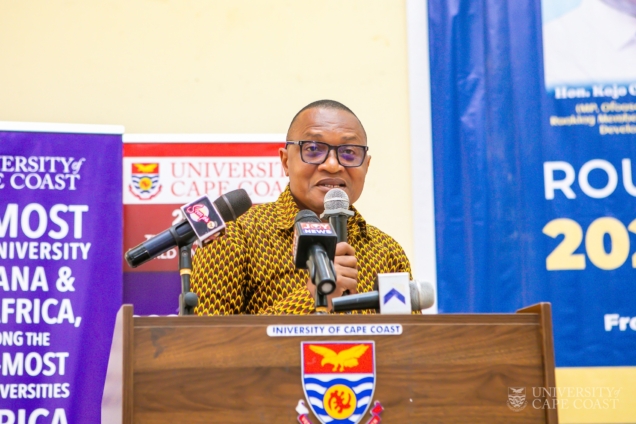
William Brafu-Insaidoo, a Professor of Economics at the University of Cape Coast, has issued a warning that the recent surge in regional conflict could trigger a domestic price spike, potentially pushing inflation back out of the single-digit bracket.
The warning follows a dramatic weekend of military escalation, including U.S. and Israeli strikes on Iranian leadership and the subsequent closure of the Strait of Hormuz, a chokepoint through which nearly one-third of the world’s seaborne oil transits.
The ‘Hormuz’ effect on domestic fuel
With Iran’s Revolutionary Guards confirming that no vessels will be allowed passage through the vital corridor, global energy markets have been thrown into disarray.
Prof. Brafu-Insaidoo, speaking on Channel One Newsroom on Saturday, 28th February 2026, explained that the geographical distance of the conflict provides no shield for the Ghanaian consumer.
“The other angle we can look at this is in terms of global oil prices. Higher global oil prices will immediately increase domestic fuel and transport costs. The trickle-down effect is that once fuel and transport costs go up, it affects almost every other economic activity,” the Professor cautioned.
The 'Cost-Push' contagion
The primary concern for economists is the contagion of rising transport costs into the broader economy.
Because the majority of essential goods in Ghana are moved by road, any increase at the pump is rapidly mirrored in the price of food, medicine, and manufactured goods.
This phenomenon, known as cost-push inflation, threatens to reverse the downward trend in the Consumer Price Index (CPI) that the Bank of Ghana and the Finance Ministry have touted as a major success in early 2026.
“When that is factored into other activities, the fact that a number of essential goods are transported and it will cost more to transport them, then obviously it is going to push up inflation. What we normally call cost-push inflation. And this is likely, if we are not careful, it can derail Ghana’s recent success in bringing inflation down to single digits,” Prof. Brafu-Insaidoo added.
A region on the brink
The economic anxiety is fuelled by a sharp deterioration in Middle Eastern security.
Following retaliatory drone attacks on U.S. bases, Israeli Prime Minister Benjamin Netanyahu confirmed a significant escalation, claiming that Israel had successfully destroyed the compound of Iran’s Supreme Leader, Ali Khamenei.
As the international community calls for restraint, the Ghanaian government is being urged to prepare contingency measures to cushion the impact of potential fuel price hikes.
The "single-digit" milestone, once seen as a sign of recovery, now appears increasingly vulnerable to the volatile geopolitics of the Persian Gulf.
Latest Stories
-
Pastor William Gyimah remanded over threats against Vice President Prof Opoku-Agyemang
44 minutes -
Sunyani Technical University dismisses 3 students over examination malpractice
47 minutes -
NPRA prosecutes 11 employers, recovers GH¢27m in 2025
49 minutes -
NAIMOS cracks down on illegal mining activities along River Tano
51 minutes -
2026 World Cup: Officials selected are the world’s very best – FIFA defends referees list
59 minutes -
NAIMOS taskforce embarks on major anti-galamsey operations at GREL plantation and along Ankobra River
1 hour -
Akufo-Addo arrives in Cotonou to lead ECOWAS mission to observe Benin presidential election
1 hour -
AMA, Mexican Embassy renew commitment to strengthen bilateral cooperation, deepen sister-city ties
1 hour -
Bolt pushes for expanded support for women-owned enterprises
2 hours -
Today’s Front pages : Friday, April 10, 2026
2 hours -
‘We don’t have time’ – Fianoo calls for Schäfer to lead Black Stars temporarily
3 hours -
CAF will not favour any country – President Motsepe
3 hours -
Otto Addo was appointed through the backdoor – Kudjoe Fianoo slams GFA
3 hours -
UG Corporate Football League back from the Easter break
3 hours -
Qualcomm unveils startup selection for Qualcomm Make in Africa 2026
3 hours