

Audio By Carbonatix
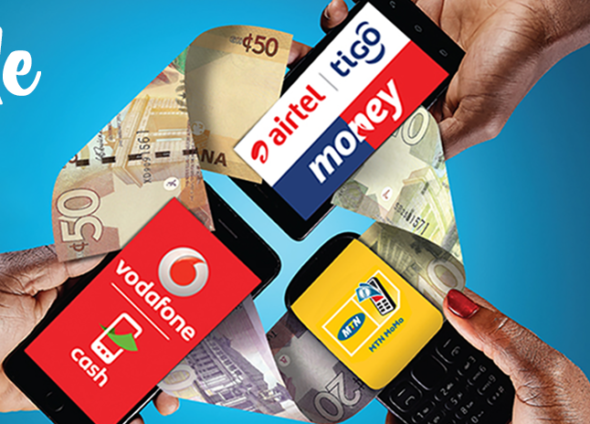
The GSMA has today published its 10th annual ‘State of the Industry Report on Mobile Money’. It reveals that mobile money adoption and use saw continued growth in 2021, processing a record $1 trillion annually.
The industry enjoyed a substantial increase in the number of registered accounts, up 18% since 2020 reaching 1.35 billion globally. The volume of person-to-person transactions were up to more than 1.5 million every hour.
The report reveals that one of the most significant drivers of growth was merchant payments, which almost doubled year on year.
It also highlights how mobile money continues to act as a core pillar of financial and economic inclusion, particularly for women.
Providing significant growth in merchant payments
Mobile money diversified its value proposition beyond person-to-persontransfers and cash-in/cash-out transactions in 2021.
It is now playing an important role in the daily lives of people and businesses, especially in low and middle-income countries (LMICs).
The growth of ecosystem transactions such as merchant payments, international remittances, bill payments and bulk disbursements, together with interoperable transactions, are accounting for a more significant share of the global mobile money transaction mix.
Merchant payments were instrumental in the growth of the mobile money industry in 2021. The value of merchant payments almost doubled, reaching an average of $5.5 billion in transactions per month.
Providers are demonstrating that they can attract businesses to their platform with better incentives, such as efficient remote onboarding processes.
For example, since Safaricom’s M-PESA began allowing companies to register for an account online in Kenya, more than 18% of new merchants are self-onboarding.
“2021 was the year mobile money started to really diversify to B2B services. Beyond traditional person-to-person transactions, such as transferring money to family or friends, the industry is now central in helping small businesses operate more efficiently, and serve their customers better” said Max Cuvellier, Head of Mobile for Development, GSMA.
Increasing financial inclusion for women
Mobile money has also been a driving force for financial inclusion for the world’s most vulnerable, particularly women. Mobile money is empowering women to take more control over their finances and purchase goods that they urgently need.
Additionally, 44% of providers responding to the GSMA Global Adoption Survey now offer credit, savings or insurance products, creating opportunities for underserved individuals to invest in their livelihoods and futures.
With the gender gap in mobile money account ownership raging from 7% in Kenya to 71% in Pakistan - there remain some barriers to vulnerable people benefitting from mobile money.
Owning a mobile phone is an obvious prerequisite to using mobile money, and women across LMIC’s are 7% less likely than men to own a mobile phone.
Overall, 143 million fewer women own a mobile than men. Additional barriers to mobile money access include a lack of awareness of mobile money and a deficit in perceived relevance, knowledge and skills.
While some progress has been made, the report makes clear that more must be done to address the mobile money gender gap across LMICs.
Concerted action is required from policymakers, the private sector, donors and other stakeholders to learn from success stories, address the issue and ensure that existing gender inequalities are not further entrenched, especially in light of the COVID-19 pandemic.
Mobile Money enables access to humanitarian aid, utilities and agricultural solutions
As highlighted in the report, in 2022, the number of people needing humanitarian assistance is predicted to soar to 274 million.
Mobile money is expected to play an increasingly important role in both donations - where it makes delivery systems more efficient and transparent for humanitarian actors and donors – and the receipt of aid.
The UN Refugee Agency sent $700 million in cash and value assistance (CVA) to 8.5 million recipients in 100 countries in 2020.
They have set up digital payment programmes in 47 countries,15 of which use mobile money. In many humanitarian settings, the digitisation of CVA via mobile money has the potential to promote agency and dignity and foster financial inclusion.
Mobile money also helps to enable access to basic utility services and agricultural solutions in LMICs. And to ensure this work continues, the mobile industry and humanitarian sector must keep working together to advance inclusive digital and financial inclusion even further for those who need it most.
To find out more, download the 2022 State of the Industry Report on Mobile Money here:
Latest Stories
-
$600m tomato imports undermining Ghana’s economy — Chamber of Agribusiness
1 hour -
Rainstorm wreaks havoc: Faulty transformers, feeder failures leave parts of 3 regions without power
1 hour -
CUTS International calls for urgent competition law amid sachet water price hikes
2 hours -
‘I never did this advert’, AI clones hijack Ghanaian identities for profit
2 hours -
25-year-old woman battles trauma after surviving deadly Nkwanta attack
2 hours -
Vice President honoured at Tortsogbeza as South Tongu leaders highlight development needs
3 hours -
Kwahu Business Forum 2026: Corporate citizenship, sustaining African businesses take centre stage with KGL as the case study
4 hours -
Trump seeks $152m to reopen notorious Alcatraz prison
6 hours -
Ex-Chelsea player Oscar retires with heart issue
6 hours -
CA Foundation drives constitutional literacy in Kpone Katamanso municipality
6 hours -
GPRTU to hold talks with Transport Ministry over rising fuel costs
6 hours -
CUTS International urges gov’t to halt sachet water price hike pending cost review
6 hours -
Chief Justice: Efficient Judiciary essential to reducing business costs
6 hours -
Bayern grabs 99th-minute winner to cap superb fightback
6 hours -
Ahmed Ibrahim urges Ghanaians to reflect Easter values in nation-building
7 hours