


Audio By Carbonatix
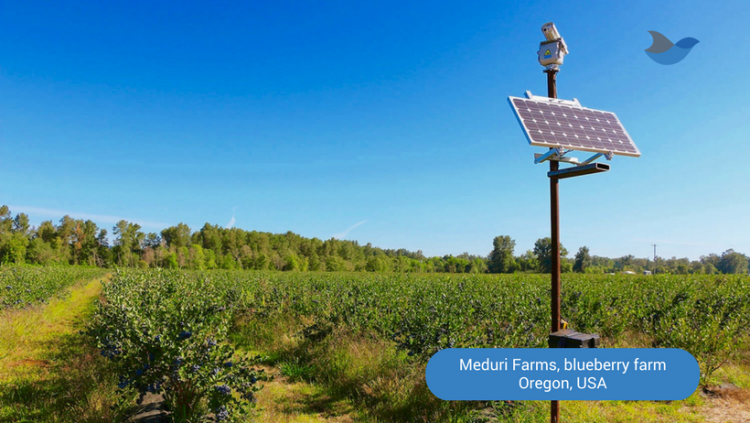
We are always looking for new and innovative ways to harness technology, and the industry of farming is no exception. A blueberry farm in Oregon was having big problems with birds stealing up to 25% of their crops and this year, they addressed the problem using a somewhat unconventional new technology.
At the start of the blueberry growing season, the farm installed 6 Agrilaser Autonomics—automated laser guns which are mounted on a pedestal. These laser guns shoot a steady green laser beam across the bushes. The birds seem to mistake the laser for an incoming predator, and will immediately flee whenever the laser comes close to them.
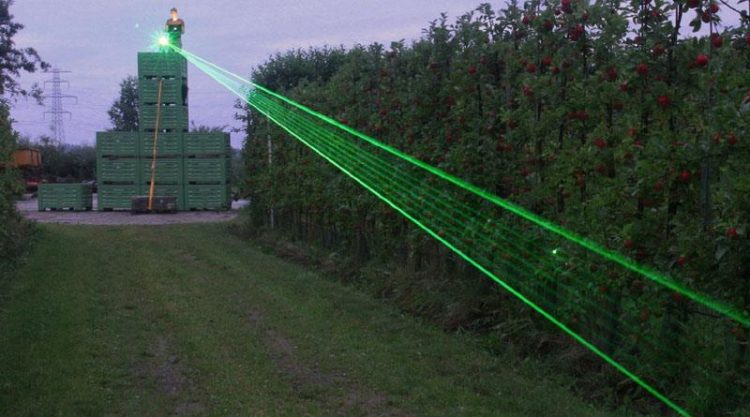
The results have been immediate; Bird Control Group, the company that makes the lasers, claims that their technology has reduced the number of birds on the farm by 99%. The farm believes that the lasers have saved around 262,500 kilograms of blueberries—that is around $99,733 saved!
The laser took around 4 years to develop. In that time, Bird Control Group tested various colors, wavelengths, and beam widths. They decided on a wide, green beam and applied filters to it to reduce the amount of harmful infrared radiation. “We learned the characteristics of what we call the ultimate laser beam for dispersing birds,” says Steinar Henskes, CEO.
But what made them settle on green?
“We researched the color that sends the most amount of signals from the birds’ eye to the brain, so it’s perceived as more intense,” Steinar said. “It’s roughly eight times more effective than red, for example.”
A further reason for the laser’s incredible success lies in the sweeping pattern of the laser. The company tested many different patterns and discovered that some were significantly more effective than others at deterring birds. The laser patterns are always customized for each site to make them as effective of a deterrent as possible.
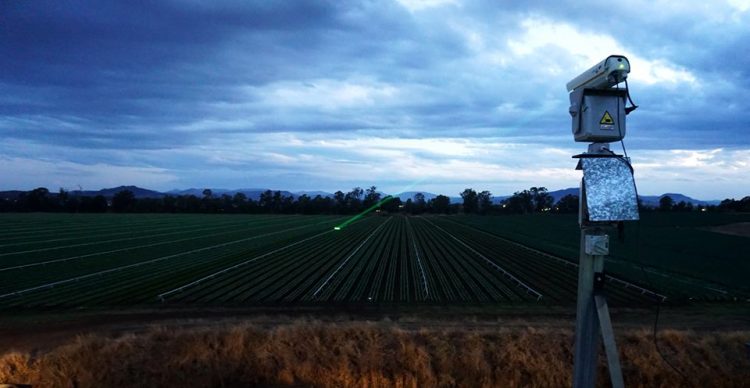
Not only do the lasers now operate in farms around the world, but they are also used in settings such as airports and oil rigs. The laser technology is now in place at over 6,000 facilities worldwide. Unlike other methods of dispersing birds (such as scarecrows), birds do not become accustomed to the laser; it can remain effective years after its initial installation.
There is one downside—the laser’s amazing results don’t come cheap. Each laser gun costs around $10,000 and most places will need more than 1. At the moment, the lasers are not capable of differentiating between different types of birds, nor is it possible for them to only activate when birds are present.
Since there are over 12,000 bird species in the world, it is not surprising that the device doesn’t work on every single type. The lasers work best on birds who have natural predators. Birds that are predators (such as hawks), are not really intimidated by them. Luckily, those kinds of birds aren’t really a problem for farmers, quite the contrary.
Some people have also expressed concern that the lasers may be doing unintended harm: “We know very little about how the power, beam characteristics, and wavelengths affect the visual system of birds, across bird species, or other species,” says Bradley Blackwell, a research wildlife biologist. “Are we doing damage to the vision of these animals? What power levels and wavelengths will suffice for dispersal results, but pose no injury? Currently, we do not know the answers.”
There is no doubt that the lasers are getting results, but the long-term consequences of their use still remain to be seen; innovations in technology can often lead to some very unexpected results. Blackwell recommends that people hold off on purchasing these lasers until they are better understood. However, over 100 US farms have already adopted the technology, and that number is expected to triple by the end of the year.
Latest Stories
-
Mahama endorses ADB at Kwahu Business Summit
36 minutes -
Every gram will be tracked – Gold Board unveils traceability push to deal with illegally-mined gold
42 minutes -
Analysis: Why the Bank of Ghana sold half its gold reserves
50 minutes -
Buy wrong gold, face prosecution – Gold Board CEO cracks down on rogue dealers
52 minutes -
Africa pushes integrated health agenda ahead of One Health Summit in Lyon
1 hour -
We own the strategy, its not head office decision – GCB MD positions bank as engine of Ghana’s economy
2 hours -
No more waiting for head office – GCB boss pushes Ghana-first banking
2 hours -
Mahama lauds Julius Debrah for shaping Kwahu Business Forum
2 hours -
Why actors beg in difficulty – Patience Ozokwor on Nollywood financial struggles
2 hours -
Any man who apologises to woman deserves to suffer – Brymo
3 hours -
Nigerian artistes no longer put effort into making music – Omah Lay claims
3 hours -
‘I’m now skeptical about going into politics’ – Davido
3 hours -
Nigeria’s Seplat Energy resumes operations as oil workers halt strike action
3 hours -
Nigeria launches manhunt after abductions by bandits in northwest Zamfara
3 hours -
Kenya fuel executives resign as state probes supply chain irregularities
4 hours