

Audio By Carbonatix
Political Scientist and CDD Fellow, Dr. John Osae-Kwapong, has welcomed parliament’s revised standing orders.
According to him, the new standing orders will place the legislature in a better position to carry out its oversight mandate more efficiently.
“In a lot of our public discourse, we keep saying that parliament is weak, parliament is not a strong institution, that we’ve designed an imperial presidency, an imperial executive. I have been arguing that for me the weakness that people have been refering to when it comes to parliament is not so much that it is weak in design but at least in my opinion, I believe parliament doesn’t flex it powers enough. So for me, more oversight can never hurt the purpose of good governance,” he said.
Speaking on JoyNews’ PM Express, he noted that concerns about what has been described as an overreach of parliamentary powers are quite unfounded.
He explained that as parliament is entrusted with oversight responsibility, especially of the executive, it is supposed to pass laws that will ensure that such duties are carried out smoothly for the sake of transparency and accountability.
“In principle I don’t think parliament is overreaching, afterall in our constitutional design they’re empowered to be the ones who provide oversight over especially the executive arm of government. And so thinking about this within the context of their oversight responsibility, I don’t think they’re overreaching,” he said.
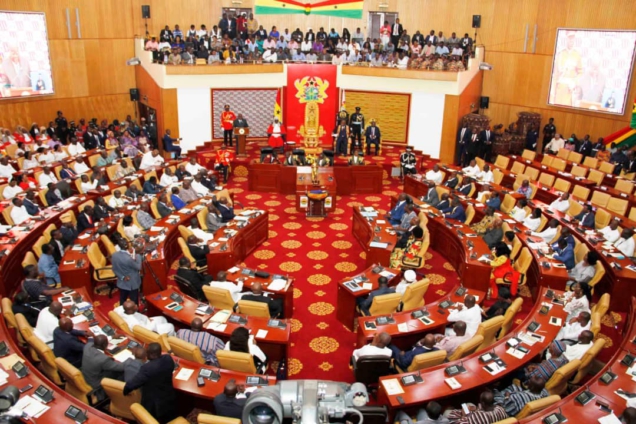
Parliament has conducted a sweeping revision of its standing orders for the first time since 2000.
The revised standing orders is to among other things empower the legislature carry out its mandate of checks and balance.
Among the revision including the introduction of at least three new committees including a budget committee to be headed by an opposition figure that will be mandated to assist the finance ministry draw yearly budgets.
Dr. Osae-Kwapong is convinced that some of the new standing orders will, however, face legal challenges especially in relation to the oversight role of the legislature over indepndent constitutional bodies.
Some have argued the new standing orders are an encroachment on the independence of said constitutional bodies and could undermine their functions.
However, the political scientist argues that “independence doesn’t mean lack of accountability.”
“That there are certain bodies designed as independent bodies I agree with that and I support that, but I don’t think that being an independent body should insulate you from oversight and accountability. And so it becomes a question of; how do you balance that respect and appreciation of that independent constitutional bodies whilst at the same time allowing an institution like parliament to provide the necessary oversight and accountability as well,” he said.
Latest Stories
-
Why volunteering might be Africa’s most underrated career accelerator
15 seconds -
ActionAid Ghana raises concern over gender gaps in Feed Ghana Programme
2 minutes -
Windstorm wreaks havoc in Gushegu, displacing nearly 2,000 residents and damaging schools
5 minutes -
Friends of Bridget Bonnie Marks her 35th birthday with donation to Kasseh Model Health Centre
53 minutes -
From Ekumfi Kokodo to the Pulpit Stage: Essi Donkor’s gospel journey takes shape
1 hour -
Landfilling waste management creates no value, it’s an economic waste
1 hour -
Photos: Speaker Bagbin Commissions MPs constituency office under parliamentary decentralisation programme
2 hours -
Black Stars technical advisor Winfried Schäfer sacked as GFA shakes up backroom staff
2 hours -
Wenchi water project almost complete, critical to gov’t agenda – GWL MD
2 hours -
Anti-LGBTQ+ bill not part of government’s legislative agenda – Inusah Fuseini
2 hours -
Anti-LGBTQ Bill: Forget the rumour mongers, I’m a man of action, and will pass the bill – Speaker
3 hours -
Women and children among those killed in Sudanese army shelling of wedding celebration
3 hours -
President Mahama is not sincere with Ghanaians on LGBTQ bill matter – Hassan Tampuli
3 hours -
Gov’t to establish Prison Industrial Hub to equip inmates with income-generating skills – Prison Service boss
3 hours -
Alhassan Tampuli donates cement, roofing sheets to support storm victims in Gushegu
3 hours