

Audio By Carbonatix
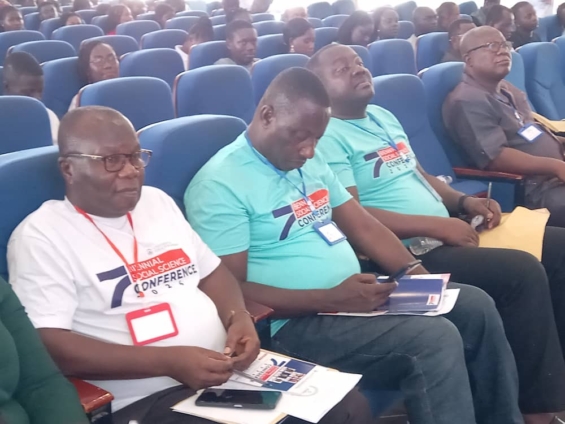
Participants at the Seventh Biennial Social Science Conference at Winneba in the Central Region have recommended further research to explore the effects of Covid-19 on the various facets of society.
They also resolved that collaboration between research and industry needed to be strengthened to enhance synergy and effective coordination of research ideas.
The recommendations were put in a communique issued at the University of Education, Winneba (UEW), signed by Prof Anselm Abotsi, Dean of the Faculty of Social Science Education (FSSE), during a two-day conference at the UEW.
It was hosted by the Department of the FSSE UEW on the theme: “Bringing the Grown to Town; Governance, Society and Post-Pandemic Adjustments.”
The communique called for continued funding from the government, industry and research bodies to expand the scope and scale of research at the various levels.
The participants, drawn from diverse institutions and countries, shared research findings on various topics of global relevance including, “performance expectancy and efforts expectancy.”
There was also a robust engagement of intellectuals, lecturers, scholars, experts and practitioners in the social sciences, humanities and allied courses.
Prof Victor Antwi, Pro Vice-Chancellor of UEW, who chaired the conference, extended compliments from Prof Joseph Jobson Mitchual, Vice-Chancellor of the University, to the FESSE for organising the conference.
It formed part of the university’s core mandate in generating a data driven conversation through research and advocacy.
He highlighted the appropriateness of the conference theme, which sought to examine post pandemic adjustments through governance and societal lens.
He applauded the presenters for their dedication and commitment to research, given the challenges in securing funds, long tenure of research processes and other competing activities.
Prof Peter Quartey, the Director of Institute of Statistical, Social and Economic Research, University of Ghana - Legon, delivered the first keynote address on the topic: “Ghana’s Economy and the Post Covid Adjustment.”
He revealed that between 2004 and 2013 the nation’s GDP was 4.1 percent even though emerging markets and developing economies grew by 6.4 percent.
Unfortunately, the challenges and vulnerabilities developing countries faced were visible before the pandemic, as real GDP growth rates suffered a sharp decline in 2014 and did not recover till 2016 when a marginal growth was recorded.
He said Ghana's post Covid-19 GDP growth rate had been rising and there was significant expectations of recovery, albeit with a low projected growth in 2023 (3.8 percent), saying the country seemed to have borrowed beyond its sustainable threshold with no buffer to absorb major shocks.

He recommended the creation of a fund to service debts from 2025, the broadening of the tax base to rope in the informal sector and the need to rationalise government spending to ensure value for money.
Prof Samuel Kobina Annim, the Government Statistician, who spoke on: “Bringing the Statistical Grown to Town, Governance, Society and Post Pandemic Adjustments”, urged academics and the public to be active participants of the data revolution as current developmental challenges required data driven discussions and solutions.
He advocated support and collaboration in building capacity in data and statistical literacy as well as liberating data for transparency and accountability.
There was the need for an understanding of emerging issues like mapping pandemic hotspots and severities, adaptations and infrastructural support like the recent undersea cable damage and internet disruptions as well as cost efficiencies during pandemics, he said.
Prof Samuel Kojo Kwofie, the Head of Department of Biomedical Engineering, University of Ghana, who delivered the second keynote address, titled: “Bringing the grown to town; The Role of Artificial Intelligence (AI),” explored the implications of machine learning and AI to understand societal issues on agriculture, healthcare, education and humanitarian aid.
He recommended the creation of supportive policies, regulations and robust infrastructure, development of AI ethics review committee, provision of state, private, local and inter-nation funding, as well as scholarships and training opportunities for Ghanaians.
Latest Stories
-
MTN Ashanti-Fest music concert set to hit Kumasi on Saturday
4 minutes -
Authorities probe discovery of dead fish at Tema shipyard
7 minutes -
Minority welcomes fuel tax cuts, demands accountability for GH¢1 levy
16 minutes -
It remains a priority — Sam George on Anti-LGBTQ bill
22 minutes -
Police arrest Nigerian national seen in viral videos wearing police uniforms
24 minutes -
Free golf training empowers underprivileged girls in Accra
41 minutes -
Why SIGA’s reset is not a market sin, but a national necessity
44 minutes -
SIGA Directive: Beyond the theatre of institutional displacement
46 minutes -
Boso Odweegyi Festival 2026 launched with call for unity, cultural preservation
47 minutes -
YEA clears majority of beneficiary arrears, assures completion of outstanding payments
1 hour -
AfCFTA key to building globally competitive African businesses – Zambia envoy urges Ghanaian CEOs
2 hours -
Albert Kobina Mensah, soil pollution and remediation: Risk assessment, phytoremediation, revegetation
2 hours -
GIFEC supports national rollout of One Million Coders Programme with laptop presentation
2 hours -
Old Tafo MP rolls out street lights project to boost security and night-time economy
2 hours -
Telecel Ghana CEO urges urgent education reform and stronger industry-academia partnership at UEW Public Lecture
2 hours