

Audio By Carbonatix
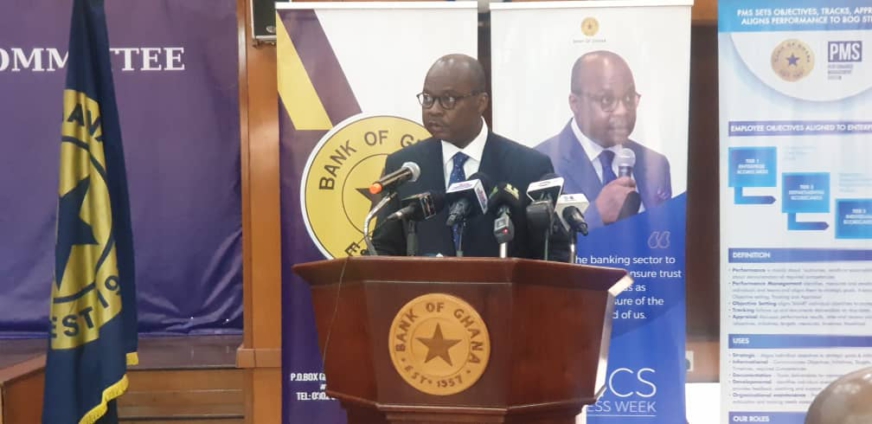
The Monetary Policy Committee of the Bank of Ghana will begin its 102nd meeting from today, 22nd September, 2021.
The meeting which is expected to end on Friday will look into various developments in the Ghanaian economy in the last two and half months, with a decision on the Policy Rate – the rate at which commercial banks borrow from the Central Bank, to be made.
It is unlikely the MPC will alter the base lending rate of 13.5%, based on recent developments in the economy, where inflation has been surging and the fiscal economy had not improved for the better.
Another major development that the Committee will look at is the stability of the cedi. The cedi has come under some pressures in recent times and it’s expected that the Dr. Addison led committee will come out with strategy to help address the challenge.
The MPC will also assess the Central Bank’s Composite Index of Economic Activity as well as the Business and Consumer Confidence indicators.
It will also make projections for inflation as well as proffer advice to the central government on measures to tackle the nation’s rising debt and improve the fiscal balance.
BoG maintains policy rate to 13.5%
The Bank of Ghana maintained its Policy Rate at 13.5% in July 2021, attributing the reason to the third wave of Covid-19, high budget deficit because of revenue underperformance as well as the balanced of risks to inflation and growth, among others.
“To summarise, although the process of global growth recovery is ongoing, driven by continued policy support and rising consumer confidence, the outlook remains uncertain. This is due to uneven vaccination across regions, rising Covid-19 infection rates fuelled by new variants of the virus, cases of vaccine hesitancy and divergence in the recovery across jurisdictions”, a statement from the Committee revealed.
“The banking sector performance reflected sustained growth in customer deposits, investments, total assets, and profits and key financial soundness indicators remain healthy in relation to liquidity and solvency. Based on macro-prudential risk assessments, the Committee expects the banking sector to withstand mild to moderate credit risk shocks although a new wave of the pandemic in Ghana could further elevate credit risks and would require close monitoring of banks’ capital and liquidity buffers”, it noted
Latest Stories
-
NACOC Central Regional Command partners with NSRA on drug awareness campaign
12 minutes -
Galaxy, DPS and Lycee Français shine at part 2 of 2026 Ghana International School Festival
13 minutes -
Project C.U.R.E. Donates Vital Medical Supplies to Support ‘Heal Ghana’ Agenda
16 minutes -
Engineers and Planners Ltd secures Damang Mining Lease after grueling $500m competitive tender
20 minutes -
I never went to university – Tommy Annan Forson
30 minutes -
NACOC concludes four-day anti-drug operation in Eastern, Greater Accra regions
46 minutes -
Cedi dips further as external shocks intensify; one dollar equals GH¢11.70 at forex bureaus
58 minutes -
Sampa chieftaincy dispute: Sammordua dragged to court for contempt
1 hour -
Okyere Baafi calls for suspension of Publican AI system over ‘serious flaws’
1 hour -
Fuel fraud: OSP uncovers “secret collusion” between 5 oil companies and 3 state entities
1 hour -
VIP Transport defends fare increase over rising fuel and maintenance costs
1 hour -
LGBTQ+ issues not a priority for Ghanaians – Felix Kwakye Ofosu
2 hours -
Kwakye Ofosu rejects NPP Minority’s call for apology over anti-LGBTQ bill
2 hours -
Music giant Universal gets $64bn takeover offer
2 hours -
NPP criticism of anti-LGBTQ Bill ‘nothing more than political posturing’ — Kwakye Ofosu
2 hours