

Audio By Carbonatix
The Monetary Policy Committee of the Bank of Ghana has begun its review of the Ghanaian economy with all eyes on the policy rate to stimulate spending and growth amid the spike in covid-19 cases.
For the first time since March 2020, there are high hopes that the base lending rate will go down albeit slightly to enhance consumer and business spending.
And that’s the anticipations by many economists, analysts and market watchers.
The four days meeting is decisive because of the recent spike in coronavirus cases which could have rippling effect on consumers, businesses and the economy.
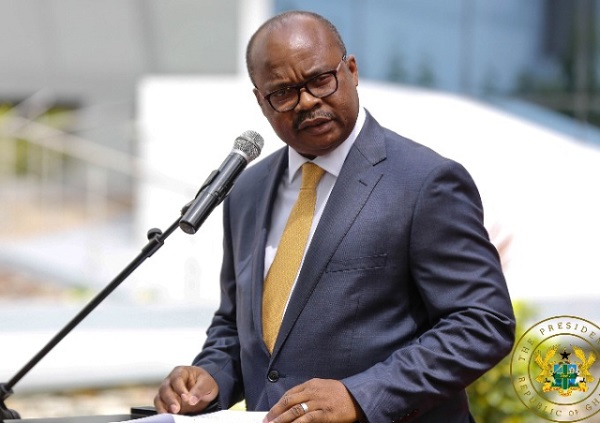
As such, the MPC chaired by the Governor, Dr. Ernest Addison will have to make critical decisions that will ease the financial pressures on businesses and consumers in the face of the second wave of Covid-19 pandemic.
The Bank of Ghana lowered the regulatory limits and the prudential rates for banks in March last year to enable them release more money into the system.
The Primary Reserve Requirement of banks was reduced from 10 to 8 percent, to provide more liquidity to banks to support critical sectors of the economy.
Business School Lecturer and a Financial Analyst, Dr. Laud Mensah wants the Policy Rate to be reduced further from the present 14.5 percent.
“If you look at the happenings around, clearly you could see that the system lacks liquidity. So for me if you ask me the adaption by the Monetary Policy Committee should be the expansionary approach where the policy rate will be reduced to give some confident and funds can easily flow into the system.”
“If they adopt the expansionary approach and the monetary policy is reduced consistently to the next two or three quarters, I think we will gradually see the policy rate to feed into our lending on our market”, he added.
Policy rate kept same for 4th consecutive
The Policy rate was kept for the fourth consecutive time in November 2020, a decision which triggered a relatively unchanged lending rate.
Governor Dr. Ernest Addison attributed the decision to some risks on the fiscal front that is lower revenue but high expenditure.
“The key risks are the evolution of the budget deficit and the financing needs to support budget implementation and the uncertainty surrounding the pandemic.”
Latest Stories
-
[Watch Live] Shatta Wale, Kofi Kinaata, and others ignite the grand finale of Gomoa Easter Carnival
2 hours -
Berekum Chelsea edge Aduana FC in Bono derby to boost survival hopes
5 hours -
‘They can’t control the team’ – Ernest Thompson doubts local coaches for Black Stars role
6 hours -
Ghana-born midfielder Seidu realises ‘dream’ with Atlético Madrid debut
6 hours -
GPL 2025/26: Bubakari strikes late to hand All Blacks vital win over Dreams FC
6 hours -
Fatal crash on Kintampo–Tamale highway claims four lives
6 hours -
2025–26 FA Cup Semifinal Draw: Chelsea, Man City Learn Wembley Opponents
6 hours -
GPL 25/26: Gold Stars back on top after beating Nations FC
7 hours -
GPL 2025/26: Heart of Lions roar back with victory over Vision FC in Kpando
8 hours -
Solomon Agbasi: Hearts keeper in stable condition after concussion
8 hours -
GPL 2025/26: Late Salim Adams penalty earns Medeama draw at Bechem
8 hours -
Hearts pip Young Apostles 1-0 to end 5-game winless run
8 hours -
Boakye Agyarko marks Easter Sunday with a call for Godly leadership ahead of nationwide campaign tour
9 hours -
Pepsi withdraws as UK festival sponsor after Kanye West backlash
9 hours -
Pope Leo calls for global leaders to choose peace in his first Easter Mass
10 hours