

Audio By Carbonatix
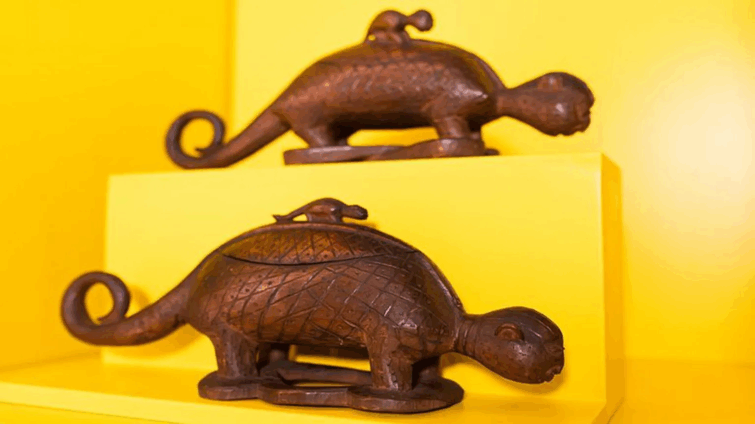
Thousands of African objects "given, stolen and forcefully taken" at the height of the British Empire have gone on display at a museum, and curators admit they have almost no record of where they came from.
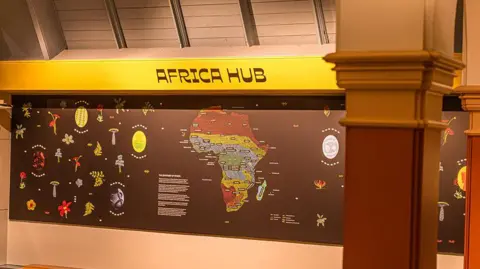
The items have been taken out of storage by Manchester Museum and placed in its Africa Hub to highlight "the gaps and silences" in its records.
In one case, all that is known about a figure of a horse with an ibis on its back is that it was donated by Mrs M. A. Bellhouse in 1976, with no information about its name, place of origin or traditional use.
The museum said it hopes the "honest approach" will provoke a conversation about how the items should be displayed, or even returned.
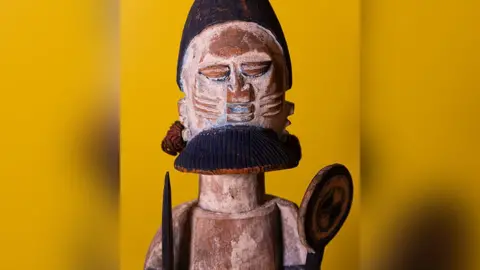
Curator Lucy Edematie said the Africa Hub gallery was unlike most others as it was "the beginning", rather than the culmination of years of research.
"It is a chance to do our thinking in public, with honesty and transparency, and to involve people in that process from the start," she said.
More than 40,000 objects from across Africa, many collected during the period of the British Empire, arrived in to the museum's collection.
Some were taken via trade, while others were taken through anthropology, confiscation and looting, a museum spokesman said.
Many of the objects have sat in storage for years, with key details absent from their object labels.
The museum, which is part of the University of Manchester, said the items could be returned to their place of origin, or the exhibition could lead to working with diaspora communities to develop ways of sharing and celebrating cultural heritage.
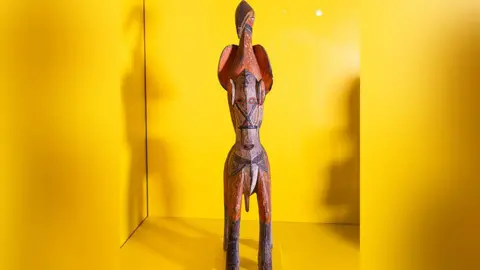
Other items on display include those from the Igbo people, one of the largest ethnic groups in West Africa.
It has been co-curated with Igbo Community Greater Manchester (ICM), whose vice-chairwoman, Sylvia Mgbeahurike, said it was important the items were brought to one place.
She said, "Some of these objects were given, some were stolen, some were taken forcefully out of conquest.
"It is important we start bringing them together again. It shows inclusiveness. It shows there is strength in diversity.
"It shows we are one people. Irrespective of our colour or where we are from. Something must hold us together."
Latest Stories
-
Gov’t to overhaul free zones into manufacturing hubs for local production – Trade Minister
14 minutes -
Ghana losing $2.5bn yearly from raw exports – Trade Minister reveals
20 minutes -
President Mahama unveils plans for Kwahu Airport, Convention Centre
23 minutes -
World’s oldest leader, Paul Biya to get a deputy for first time in 43-year rule
31 minutes -
TCDA rejects rubber export claims, demands retraction
32 minutes -
Search for missing US airman continues as Trump threatens ‘hell’ if Iran does not reach deal
36 minutes -
US says it has arrested relatives of late Iranian general Qasem Soleimani
42 minutes -
La Liga: Real Madrid’s title hopes hang in the balance as Mallorca snatch stoppage-time winner
48 minutes -
FA Cup: Haaland hat-trick powers Man City past Liverpool into semi-finals
57 minutes -
FA Cup: Chelsea thrash Port Vale to reach Wembley semi-final
1 hour -
Gov’t to boost tourism in coastal communities through infrastructure, sanitation – Vice President
1 hour -
Universities management urged to involve alumni in curricula development, career guidance to reduce unemployment after school
2 hours -
Vice President Opoku-Agyemang enstooled as Development Queen of Kedzi
2 hours -
Globen School @30: From humble beginnings to a hub of innovation and excellence
2 hours -
Children’s health and happiness take centre stage at 2026 Giggle Fun Fest in Peki Avetile
2 hours