

Audio By Carbonatix
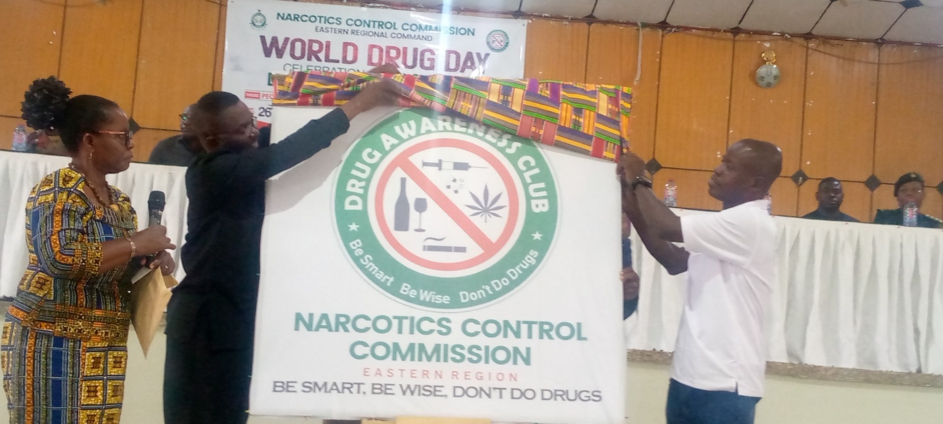
The Narcotics Control Commission in the Eastern Region has launched a drug awareness club and a book for schools in the region to help students understand more about the adverse effects of drug use on the body.
Senior Narcotic Control Officer and the Eastern Regional Commander of the Narcotics Control Commission, Mr. Felix Sarfo Yeboah addressed the event and said that the club would operate in both basic and senior high schools.
The objective is to educate students about the need to stop stigmatising individuals with substance use disorders and to instead strengthen the substance abuse prevention campaign.
In addition, the book will serve as a guide for school-based facilitators who will lead the club in educating students about substance abuse, a move that is anticipated to foster the growth of resourcefulness and autonomy.
Mr. Yeboah gave highlights of the contents of the book which included guiding individuals to set goals, figuring out what to do with their life, dealing with resistance, learning life skills, drugs, and communicating.
Abusing drugs means taking them in large amounts or in ways that hurt you or other people, while certain drugs make the brain feel good.
Ms. Patricia Birago Gyamfi, the Eastern Regional Coordinator for Girl Child Education at the Ghana Education Service, Mr. John A. Donkor, the Chief Director at the Eastern Regional Coordinating Council, and Mr. Yeboah introduced the drug awareness club, with the theme "Be smart, be wise, don't do drugs."
Ms. Gyamfi said that she thought the number of people who use drugs was going up and that it was scary that many young people had mental health issues.
She stressed how important it was to teach the people more about drug use and keep kids from using drugs, which is bad for national growth.
She also talked about how important it was to raise good leaders for the social and economic growth of the country.
The Eastern Regional Coordinator for Girl Child Education at the Ghana Education Service said that stigmatisation was another thing that made it hard for people with drug use problems to get health care and other kinds of help because it hurt their self-esteem and made them feel ashamed.
Latest Stories
-
‘Carlos Queiroz not the sort of coach Black Stars need’ – Nii Lante Vanderpuye
11 minutes -
AFCON 2027Q: ‘Our Black Stars team is gone’ – Former Sports Minister
30 minutes -
Prof. Prempeh calls for public review of draft constitutional reform bills
43 minutes -
AFCON 2027Q: ‘I have never seen a poor performance from Black Stars like against Gambia’ – Nii Lante Vanderpuye
47 minutes -
Nigeria set to launch National Digital Address System 9 years after Ghana showed the way
1 hour -
Policy rate decision takes time to reflect in lower lending rates – BoG
1 hour -
Western Regional Minister applauds Karpowership’s role in Ghana’s power sector
2 hours -
Livestream: Road safety crises: Where are we getting it wrong?
2 hours -
Enterprise Life celebrates 25 years of protecting families and building trust
2 hours -
ICC London rules in favor of Ghana against Tullow over $400m tax charge
2 hours -
We are disappointed in ICC’s ruling over our corporate income tax assessment in Ghana – Tullow Oil
2 hours -
Cost of building inflation for August 2026 increases to 4.6% – GSS
2 hours -
Today’s front pages: Wednesday, September 30, 2026
3 hours -
Bawumia highlights agricultural, compulsory insurance reforms in IBAG engagement
3 hours -
Ghana will secure Tullow tax revenues while protecting Jubilee, TEN investments – Ato Forson
3 hours