

Audio By Carbonatix
Over two million school-age children between five and 14 years have been targeted for a deworming exercise scheduled from Monday, October 28 to Sunday, November 3, 2024.
Up to 2.6 million of the targeted population are school-age children in both public and private schools in 100 districts in 15 regions.
About 1.6 million more people targeted for the exercise are community-based children and adults in 57 districts in 11 regions.
The deworming exercise dubbed the 2024 National School and Community Deworming Exercise, is a collaborative effort between the Ghana Health Service (GHS) and the Ghana Education Service (GES) to boost the health and immunity of school-age children.
It is aimed at eliminating schistosomiasis and to control soil-transmitted helminth (STH) infestations.
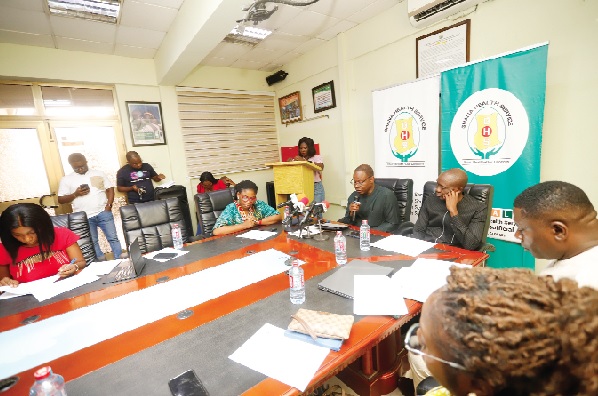
The Director-General of the Ghana Health Service, Dr Patrick Kuma-Aboagye, who announced the exercise at a media briefing in Accra yesterday, said the eligible children would be administered 600-milligram (mg) praziquantel and 400mg albendazole medicines during the exercise.
Those medicines, he explained, were donated to the GHS through the World Health Organisation (WHO), and would be administered under the strict supervision of specially trained school teachers and health workers.
Dr Kuma-Aboagye said it was important for all children to eat before taking the medicines, explaining that it would help in the effective absorption of the medication.
"Preferably, medicines should be administered immediately after the first break or after children have been served food to ensure that all children have eaten. Therefore, all parents, guardians and caregivers should ensure their children eat before going to school," he advised.
Schistosomiasis is a disease caused by parasitic worms that live in freshwater.
The infestation is more common in children in poverty-stricken areas due to poor sanitation and hygiene.
Environmental exposure to schistosoma-contaminated water is the primary mode of transmission in endemic areas.
Signs and symptoms of schistosomiasis include abdominal pain, diarrhoea, blood in urine and stool, liver damage, anaemia, malnutrition and decreased productivity.
Dr Kuma-Aboagye said female genital schistosomiasis was a severe consequence of a schistosoma infestation that occurred in girls and women, especially in endemic areas.
He stated that the condition always had a significant impact on the quality of life, including causing possible infertility, menstrual disorders and recurrent urinary tract infections.
For these reasons, he indicated that it was essential to increase awareness of schistosomiasis prevention among the public.
In Ghana, he said, schistosomiasis had an estimated country-wide prevalence of 23.3 per cent, with localised prevalence levels exceeding 50 per cent.
For soil-transmitted helminths, Dr Kuma-Aboagye explained that they were most prevalent in areas with poor sanitation, inadequate hygiene practices and low socio-economic conditions.
He mentioned its symptoms to include abdominal pain, diarrhoea, anaemia, malnutrition and impaired physical and reduced cognitive development.
Dr Kuma-Aboagye said it was important to eliminate schistosomiasis and control soil-transmitted helminth in Ghana to improve the overall health and well-being of the population.
The Director of the Public Health Division of the GHS, Dr Franklin Asiedu-Bekoe, urged the media to use their platforms to enlighten the public on the deworming exercise, raise awareness about its importance, and encourage individuals to participate fully.
The Director of the School Health Education Programme of the GES, Theresa Oppong-Mensah, gave the assurance that the schools were ready for the deworming exercise, adding that they had collaborated with the Ghana School Feeding Programme to ensure that enough food was provided on the day of the administration of the medicines.
“Parents have also been educated on it and they are also going to support us with water and food as well. This is to indicate that GES is ready, and we are fully in support of this exercise,” she said.
In a message from one of the partner agencies, the Programme Director of USAID Act to End NTDs Programme, Irene Dzathor, expressed the commitment of her outfit to the fight against schistosomiasis and soil-transmitted helminth elimination in Ghana.
Present at the media briefing was the Programme Manager of Neglected Tropical Diseases, Dr Joseph Opare.
Latest Stories
-
Wave of violence kills at least 26 in Nigeria as army thwarts mass church abduction
7 minutes -
Latvian businessman Aldis Ozols enstooled as development Chief of Supresu-Man
19 minutes -
‘We should go in for the best’ – Ernest Thompson on next Black Stars coach
23 minutes -
US, Iran receive 45-day ceasefire proposal as Trump deadline to reopen Strait of Hormuz looms
37 minutes -
Iran defiant as Trump vows ‘entire country’ could be taken out if no deal reached by tonight
42 minutes -
Afigya Kwabre North crowned champions of maiden MTN Ashantifest Regional U17 football competition
42 minutes -
The case for an explicit and limited Legal threshold for internal military deployment in Ghana
43 minutes -
UK Wireless Festival sponsorship withdrawals highlight high cost of Kanye West controversy for global brands
45 minutes -
CAF President to pay working visit to Senegal over AFCON title saga
54 minutes -
GPL 2025/26: Samartex end winless run with victory over Kotoko
56 minutes -
Afreximbank to avail US$10bn under its Gulf Crisis Response Programme to shield African, CARICOM economies from Middle East conflict
1 hour -
NPP behind every monumental agenda in Ghana – Miracles Aboagye
1 hour -
Ho Airport not a misplaced priority — GACL Board Chair
1 hour -
Nationwide sensitisation of haulage truck drivers ahead of Axle Load Enforcement
1 hour -
Vice President backs community tourism at Vodza Regatta 2026
1 hour