

Audio By Carbonatix
The Director of the Ghana Non-Communicable Disease Alliance (GhNCDA), Mr Labram Musah said Non-Communicable Diseases (NCDs) account for more than 41 million deaths annually, representing 70 percent of all global deaths.
He described NCDs such as cancers, strokes, asthma, and diabetes as emerging significant public health threats that require immediate attention.
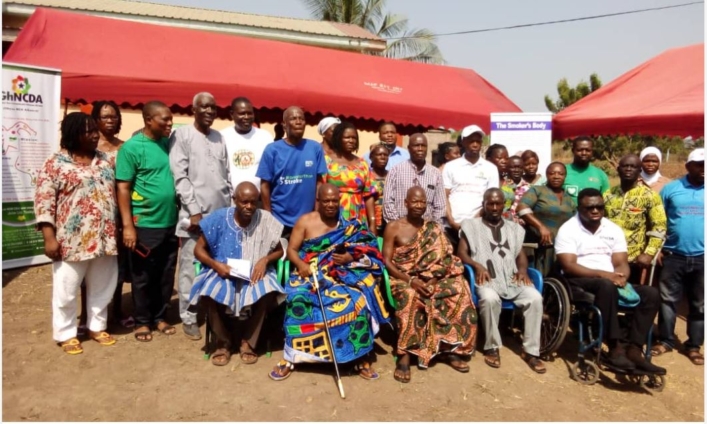
Mr Musah made these remarks during the opening of a two-day workshop at the Kodzobi CHPS Compound in the Adaklu District of the Volta region.
The workshop, titled: “Our View, Our Voice,” is an initiative of the Global NCD Alliance, aimed at empowering 20 selected individuals living with NCDs in the Volta and Oti regions.
“NCDs have become the leading cause of death worldwide and are no longer diseases confined to wealthy nations,” he said.
Mr Musah emphasised that those diseases were largely preventable when measures to regulate risk factors such as alcohol and tobacco consumption, unhealthy food intake, air pollution, and physical inactivity were prioritised.
“There is a huge gap in access to treatment, care, and support for NCDs in Ghana. Government attention and investment in NCD management remain inadequate. The cost of treatment and care is often inaccessible for the average Ghanaian,” he stated.
The training, dubbed: “Our View, Our Voice” aims to strengthen the capacity and leadership of People Living with NCDs (PLWNCDs) with a focus on breaking stigma and discrimination while encouraging them to become active advocates for prevention and care.
The objectives include empowering PLWNCDs to share their experiences and amplify the Ghana Advocacy Agenda, equipping participants with advocacy skills to push for government action on NCD policies, and encouraging PLWNCDs to actively participate in addressing community health challenges and driving national health improvement.
Mr Musah acknowledged recent government efforts to address NCDs, including the introduction of hypertension and diabetes clinics, annual health checks, childhood cancer treatments, and dialysis interventions, which commenced on December 1, 2024.
“We commend the recent steps taken by the Government to address NCDs. However, it is our hope that these policies will be sustained and improved upon, even with the changing dynamics of governance. Government must invest more in prevention, as this is the best legacy for public health,” he said.
Achieving global NCD targets required a “whole-of-government, whole-of-society” approach, he noted, urging government, civil society, and communities to collaborate to gain the desired results.
“To make progress in combating NCDs, it is crucial to build a strong network of advocates who can push for policy changes, promote prevention, and ensure that no one is left behind in accessing treatment and care,” he said.
The Midwife, Kodzobi CHPS Compound, Madam Mavis Amedzorku, expressed gratitude to the Ghana NCD Alliance for selecting the facility for the training programme.
She urged the participants to remain committed to the cause and work together to improve health outcomes in their communities.
The Chief of Kodzobi, Togbe Dzegblade IV, who chaired, appealed to the GhNCDA and the Ghana Coalition of NGOs in Health to assist in upgrading the facility to meet the health needs of the community.
“The facility lacks basic development. The community had to provide water and electricity when contractors abandoned the project in 2014 and 2015. To this day, no significant improvements have been made,” he said.
He highlighted the absence of a proper toilet facility there and called on the Alliance to extend its support to the facility to meet community needs.
The Ghana NCD Alliance, an umbrella body of 15 organizations, continues to play a leading role in addressing NCDs in Ghana. Their work spans advocacy, prevention, and support for PLWNCDs, with a growing network in Greater Accra, Ashanti, Western North, Northern, Eastern, Volta, and Oti Regions.
The training programme in Kodzobi marks another step in GhNCDA’s commitment to empowering individuals, improving health systems, and advancing national efforts to tackle those crises.
Latest Stories
-
One firm awarded a Big Push sole-sourced contract was created in January 2025 – Sulemana Braimah
7 minutes -
Procurement Specialist says Value for Money Office is unnecessary, warns it’ll create confusion
12 minutes -
Inter Miami name stand after Argentina great Messi
25 minutes -
Value for Money Office should be part of PPA – Baffour Awuah
26 minutes -
Kofi Bentil blames leadership failures, not law, for procurement problems in Ghana
27 minutes -
Academic City’s Tech Expo showcases innovative technologies to tackle galamsey
32 minutes -
Gov’t actions contradict its own accountability pledges – Manhyia South MP
33 minutes -
CFY Partners Managing partner Felix Tamattey, honoured at 11th Corporate Ghana Hall of Fame Awards
39 minutes -
Academic City president Prof. McBagonluri named among Africa’s top education leaders
39 minutes -
Complete Agenda 111 projects and put them to use – Akufo-Addo tells Mahama
43 minutes -
Roads Ministry contracts were fully sole-sourced before we took over, we’re reforming it – Suhuyini
43 minutes -
Kobina Ata-Bedu: Value for Money Office Bill will be useless, create confusion
49 minutes -
‘A scandal is inevitable in 4-years, but don’t manufacture them’ — Suhuyini urges restraint
50 minutes -
UK and Ghana open new chapter to boost trade and unlock growth
53 minutes -
‘We published what the Roads Ministry gave us’ — Sulemana Braimah defends Big Push report
53 minutes