

Audio By Carbonatix
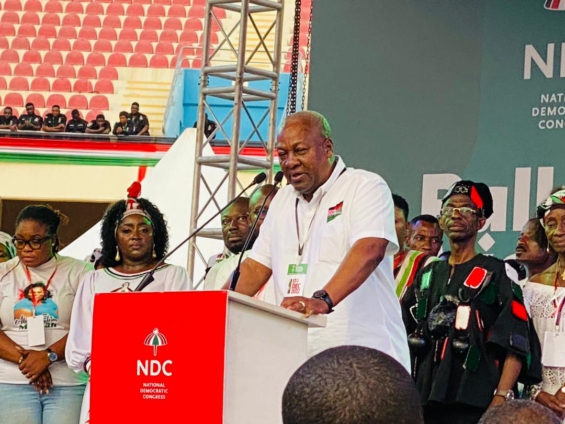
The opposition National Democratic Congress (NDC) is most likely to win the 2024 presidential elections, Fitch Solutions has stated in its analysis titled “Positive Shift in Ghana's Political Risk Profile Following IMF Programme Approval”.
According to the UK-based firm, the rapid deterioration of economic conditions in 2022 and slow progress in the fight against perceived corruption will exacerbate anti-incumbency sentiment among the electorate
“The rapid deterioration of economic conditions in 2022 and slow progress in the fight against perceived corruption – in a July 2022 Afrobarometer study, 85.0% of Ghanaians believed the government was doing a poor job in tackling corruption - will exacerbate anti-incumbency sentiment among the electorate”.
“In addition, the IMF has voiced concerns over President Nana Akufo-Addo’s flagship Free Senior High School programme (introduced in 2017), labelling it as “poorly targeted”. Potential modifications to the programme in order to rein in spending could weaken the NPP’s campaign agenda, increasing the chances of an NDC win”, it added.

Risks to Ghana’s IMF programme are limited
Despite its view that a government change is likely after the 2024 general election, Fitch Solutions said “we believe that risks to Ghana’s IMF programme are limited. Previous NDC governments have requested IMF loans (Ghana’s 2015-2019 IMF programme was started under an NDC government) and current NDC leadership has expressed support for Ghana’s re-engagement with the IMF”.
Given the limited risks to the IMF programme, it revised Ghana’s 'policy continuity' score in Short-Term Political Risk Index (STPRI) to 70.0 out of 100, from 62.5 previously.
Social unrest to go down
Despite fiscal consolidation efforts under the IMF programme, Fitch Solutions said economic stabilisation and moderating price growth will yield net positive outcomes for Ghanaian households.
“While the government has raised taxes including income taxes and VAT in first-half of 2023, a more stable exchange rate, easing inflation and a stronger external position will gradually normalise economic conditions”.
“We believe that this will lower protest activity in the second half of 223, after the number of protests and riots increased by 17.2% year-on-year in first-half of 2023. To reflect this, we have revised up the 'social stability' score in our Short-Term Political Risk Index (STPRI) to 47.5 out of 100, from 40.0 previously (a higher score implies lower risk)”.
Ghana’s headline STPRI score now stands at 63.1, from 59.4 before. The country remains a regional outperformer, with the average Sub-Saharan Africa STPRI score standing at 50.3, implying that political risks remain relatively contained in Ghana.
Latest Stories
-
MTN set to deploy 5G services after winning spectrum licenses worth US$202m
1 hour -
NPP national elections: 3,000–4,000 police to handle security, traffic in Kumasi – Karbo
3 hours -
Atta Akyea fumes as Manhyia MP is to spend another night in EOCO custody
4 hours -
SSNIT says La Beach clearance was to protect hotel investments, beaches to remain public
5 hours -
APSU congratulates St Augustine’s College after back-to-back National Investment Quiz wins
5 hours -
Renewed flood intervention at Mallam Junction raises hopes among residents, businesses
5 hours -
St Augustine’s College retain National Investment Quiz title after nail-biting grand finale
6 hours -
Education infrastructure investment will drive Banda’s development – Ahmed Ibrahim
6 hours -
Teacher unions strike: Gov’t presents fresh proposals as talks end inconclusively
6 hours -
51,000 teachers’ promotion arrears to be validated for October payment – Education Minister
7 hours -
Kwabena Boamah appointed Board Chair for Impact Investing Ghana
7 hours -
Striking teacher unions to meet Fair Wages and Salaries Commission on October 6
7 hours -
EOCO working with AG to arraign Nana Baffour Awuah before weekend court
7 hours -
Duraplast reassures customers after fire, announces October 5 reopening
7 hours -
Call off strike, gov’t will not renege on promotion arrears pledge – Haruna Iddrisu to teacher unions
7 hours