

Audio By Carbonatix
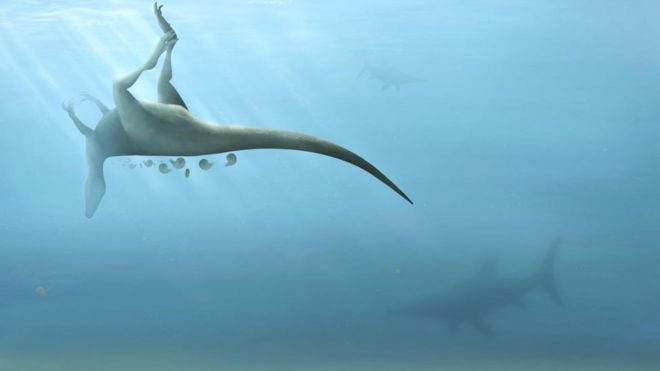
A new species of dinosaur has been discovered on the Isle of Wight.
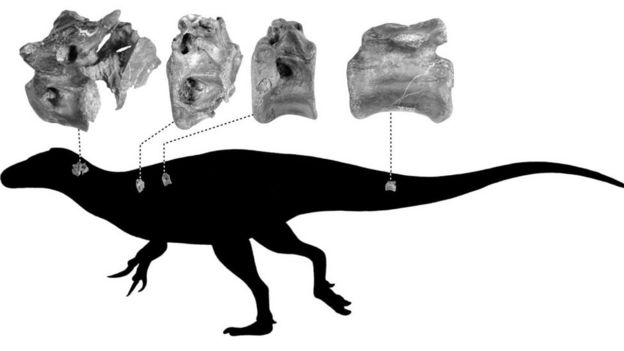
Palaeontologists at the University of Southampton believe four bones found at Shanklin last year belong to a new species of theropod dinosaur.
It lived in the Cretaceous period, 115 million years ago, and is estimated to have been up to 4m (13ft) long.
It has been named Vectaerovenator inopinatus and belongs to the group of dinosaurs that includes Tyrannosaurus rex and modern-day birds.
The name refers to the large air spaces found in some of the bones - from the neck, back and tail of the creature - which is one of the traits that helped the scientists identify its theropod origins.
These air sacs, also seen in modern birds, were extensions of the lung, and it is likely they "helped fuel an efficient breathing system while also making the skeleton lighter", the University of Southampton said.
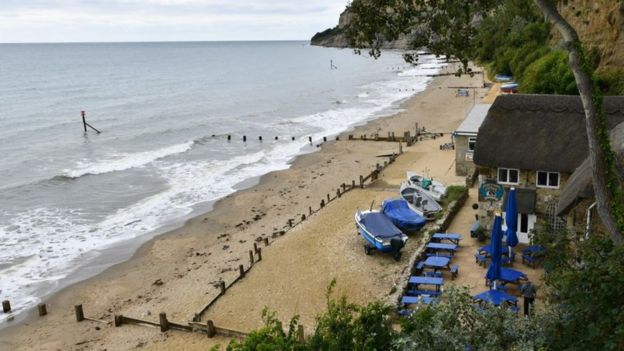
The fossils were found in three separate discoveries in 2019 and handed in to the nearby Dinosaur Isle Museum at Sandown, where they are being displayed.
Robin Ward, a regular fossil hunter from Stratford-upon-Avon, was visiting the Isle of Wight with his family when they made their discovery.
"The joy of finding the bones we discovered was absolutely fantastic," he said.
James Lockyer, from Spalding, Lincolnshire, was also visiting the island when he found another of the bones.
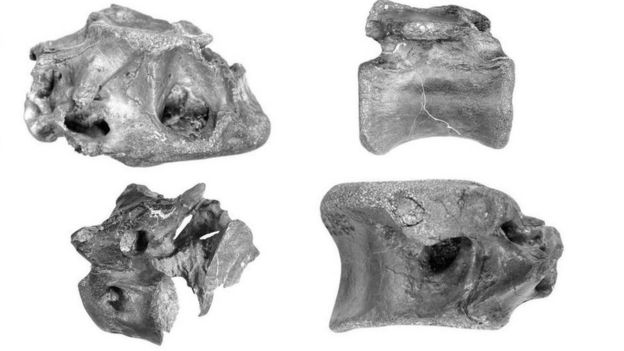
"It looked different from marine reptile vertebrae I have come across in the past," he said.
"I was searching a spot at Shanklin and had been told, and read, that I wouldn't find much there.
"However, I always make sure I search the areas others do not, and on this occasion it paid off."
Paul Farrell, from Ryde, added: "I was walking along the beach, kicking stones and came across what looked like a bone from a dinosaur.
"I was really shocked to find out it could be a new species."
'Delicate skeleton'
Chris Barker, who led the University of Southampton study, said: "We were struck by just how hollow this animal was - it's riddled with air spaces.
"Parts of its skeleton must have been rather delicate.
"The record of theropod dinosaurs from the 'mid' Cretaceous period in Europe isn't that great, so it's been really exciting to be able to increase our understanding of the diversity of dinosaur species from this time.
"You don't usually find dinosaurs in the deposits at Shanklin as they were laid down in a marine habitat. You're much more likely to find fossil oysters or drift wood, so this is a rare find indeed."
It is likely that the Vectaerovenator lived in an area just north of where its remains were found, with the carcass having washed out into the shallow sea nearby.
The university findings are due to be published in the journal Papers in Palaeontology and co-authored by those who discovered the fossils.
Latest Stories
-
Education Ministry begins review of Ghana Library Authority law
7 minutes -
Ghana U-15 girls clinch back-to-back CAF Schools titles
12 minutes -
Rev. Ntim Fordjour urges Mahama to issue directive to fast-track anti-LGBTQ+ bill
14 minutes -
GPL 2025/26: Stoppage-time penalty hands Aduana FC win over leaders GoldStars
17 minutes -
Ntim Fordjour rejects call for more dialogue, says anti-LGBTQ+ bill has faced a decade of debate and delay
19 minutes -
Catholic Bishops say moral values must match economic priorities in Anti-LGBTQ+ debate
46 minutes -
IGP Yohuno urges merit and hard work ahead of Police Academy exams
59 minutes -
Queendalyn Yurglee releases debut album ‘Clouds of Glory’
2 hours -
UDS moves to clear MPhil student wrongly linked to robbery case
2 hours -
Vodza Regatta 2026: Prof Audrey Gadzekpo rallies investors for coastal tourism growth
2 hours -
Introduction of 100 new Metro Mass buses won’t affect transport unions – GPRTU
2 hours -
Deputy Transport Minister backs Yellow Line traffic initiative
2 hours -
MTN Ashanti-Fest music concert set to hit Kumasi on Saturday
2 hours -
Authorities probe discovery of dead fish at Tema shipyard
2 hours -
Minority welcomes fuel tax cuts, demands accountability for GH¢1 levy
3 hours