

Audio By Carbonatix
Government plans to shorten mining licence durations and mandate direct revenue-sharing with local communities in its most sweeping mining law reforms in nearly two decades, details of which were announced by the Lands Minister on Wednesday.
The planned overhaul reflects a broader trend across West Africa, where governments are rewriting mining codes to capture more value from rising commodity prices.
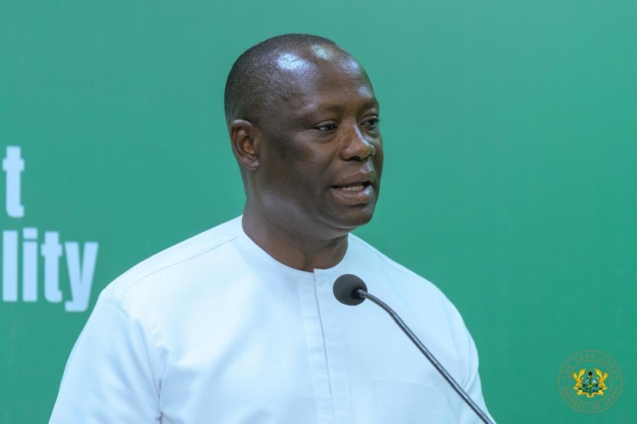
Lands and Natural Resources Minister Emmanuel Armah Kofi Buah said the changes, which include scrapping automatic renewal of some licences, will apply only to future contracts, a departure from the stance in Mali and Burkina Faso, where military-led governments have applied reforms retroactively.
“In Ghana, we don't do retrospective laws,” Buah said at a presentation in the capital, Accra. “Existing agreements are sanctified and will be respected.”
He added that the overhaul of the Minerals and Mining Act and mining policy was 85% complete following extensive stakeholder consultations.
DEVELOPMENT REQUIREMENT
Ghana, Africa's top gold producer, expects output to rise to 5.1 million ounces this year. Major miners in the country include Newmont, Gold Fields, AngloGold Ashanti, Zijin, Asante Gold, and Perseus.
It also exports bauxite and manganese with plans to start lithium production.
Under the proposed law changes, prospecting licences would no longer be held indefinitely, and the maximum term for mining leases would be reduced from 30 years to a shorter period agreed by the government and firms. Companies failing to meet environmental, social or production obligations would lose the right to automatic licence renewal.
In a major shift, the government plans to abolish development agreements, in which companies send money to the central government.
Instead, companies will be required to sign agreements committing a fixed percentage of gross mineral sales revenue to fund local development projects as the government seeks to address long-standing grievances from communities that they have seen little benefit from mining operations.
The reforms also propose a three-tier mineral rights regime, introducing a new medium-scale licence category to bridge the gap between large multinational operators and small-scale artisanal miners.
Another key change under consideration is the reduction or abolition of stability agreements, which currently offer up to 15 years of tax and regulatory protection to large investors.
Future agreements would be limited to capital recovery periods for major investments.
Latest Stories
-
Breaking borders, building futures: How African-led AI is rewriting the rules of global innovation
44 minutes -
Guinea orders dissolution of 40 political parties, including three main opposition groups
50 minutes -
Iran Embassy in Ghana opens Book of condolence after death of Supreme leader in US-Israel attacks
3 hours -
GPL 2025/26: Vision FC cruise past Berekum Chelsea with emphatic 3–1 win
3 hours -
GPL 2025/26: Samartex held by Dreams FC as winless run extends to five
3 hours -
New Juaben North MP challenges gov’t to provide evidence of jobs created and cheap loans
4 hours -
Nadowli-Kaleo District marks 69th Independence Day with cultural exhibition, academic awards
4 hours -
Confusion, tension rock NPP polling station registration exercise in Tarkwa-Nsuaem
5 hours -
Burger King opens first Kumasi branch in Ahodwo
5 hours -
Burma Camp Tennis Club hosts successful 12th Ghana–Nigeria Independence Day Tennis Tournament
5 hours -
Rights, justice and action for all women and girls must include women and girls with disabilities
5 hours -
The Lover and the Fighter: China, the west, and Africa’s geopolitical awakening
6 hours -
UCC student dies in tragic road accident on campus
6 hours -
Health Ministry establishes committee to probe death of hit-and-run victim
6 hours -
RTI Commission, NACOC explore collaboration to promote transparency and accountability
6 hours