

Audio By Carbonatix
The Institute of Statistics, Social, and Economic Research has indicated that the new restriction on mobile money (MOMO) transactions could derail the digitization of micro, small, and medium-sized enterprises and progress in the cash-lite economy.
In a press statement copied to the Ghana News Agency, the Institute acknowledged that the proposed rate would have a minimal impact on small-value transactions.
However, ISSER noted that the move would adversely impact micro, small, and medium enterprises that rely on MoMo for their financial transactions.
“Worthy of attention is the potential impact on micro and small enterprises, especially traders and farmers within the agricultural value chains concentrated in rural areas. For these segments, especially traders and transporters of foodstuffs who rely on MoMo to address security concerns with carrying cash across the country, an increase in cost is likely to be transferred to consumers,” the statement said.
This move, the institute said, could be a trigger for both food and non-food inflation.
The institute raised concern that beyond the move to restrict MoMo transactions, the developing social media-driven e-commerce ecosystem, which relies on MoMo for payment, would also see the transfer of the revised charges to consumers.
“As service providers on the various e-commerce platforms will pass on the charges to consumers in the form of increased prices of goods and services,” the statement said.
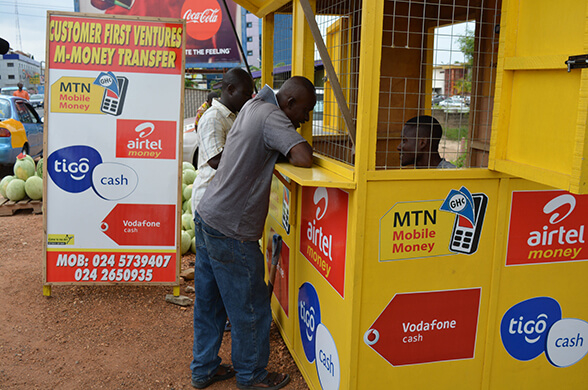
In a joint statement copied to the media, MOMO agents around Ghana said they would implement a temporary measure that limits cash withdrawals to GHS 1,000 per transaction from December 1.
ISSER said that the potential impact of the restrictions might be significant, particularly for neglected and last-mile populations.
“On average, 76 percent of mobile money agents are within 30 minutes of consumers in rural areas. On the other hand, it takes 2 hours for over 50 percent of rural dwellers to reach an ATM, with only about 40 percent being able to reach a bank or microfinance in two hours,” the statement said.
This situation ISSER said that many MoMo users in rural areas, where ATMs, banks, and microfinance institutions were not an option, would be confronted with the option of either enduring the high transaction costs or resorting to cash.
Latest Stories
-
Ghana must lead AfCFTA implementation by example – Trade Minister Ofosu-Adjare
2 minutes -
Strong Judiciary key to business confidence – Chief Justice Baffoe-Bonnie
5 minutes -
Mahama announces 60-Hectare irrigation project to boost tomato production
13 minutes -
WPL: Hasaacas Ladies win on last day to set up final with Ampem Darkoa
13 minutes -
Chisora beaten by Wilder in captivating bout
37 minutes -
One dead, six maimed as bloody land feud tears Krachi Nchumuru apart
1 hour -
Missing service member rescued by US forces after jet downed in Iran, Trump announces
1 hour -
Gomoa Easter Carnival: Sarkodie, Kuami Eugene, Tinny, set festival ablaze as Day 3 ends on high note
2 hours -
“Feels amazing” – Antoine Semenyo reveals after Manchester City dismantle Liverpool
2 hours -
Mahama calls for emergency cabinet meeting over rising fuel prices
3 hours -
Asante Gold reports US$345million loss for 2025
4 hours -
Prof. Naana Jane Opoku-Agyemang provides update on Women’s Development Bank
4 hours -
‘It’s not easy’ – Mother of late Dr Omane Boamah breaks silence
5 hours -
Gov’t making progress in clearing $1.7bn power debt – Mahama
5 hours -
Justice is the engine of growth – Chief Justice
5 hours