

Audio By Carbonatix
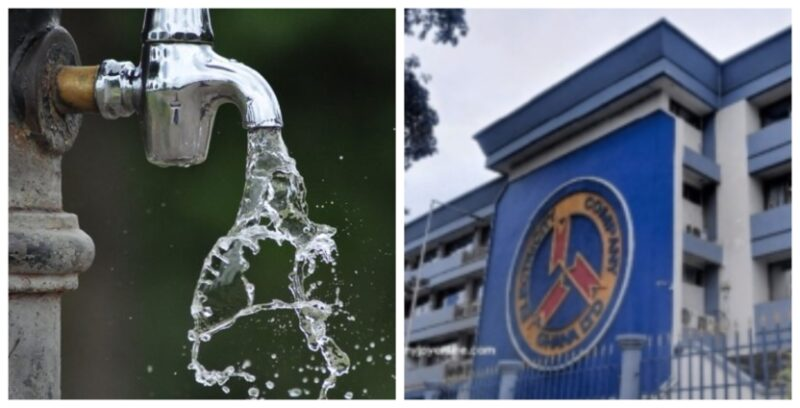
Consumers face higher utility bills as new water and electricity tariffs take effect. Ghanaians have started the New Year facing increased utility bills after the Public Utilities Regulatory Commission (PURC) introduced new electricity and water tariffs from January 1, 2026.
Under the new rates, electricity tariffs have gone up by 9.86 per cent, while water tariffs have increased by 15.92 per cent. The adjustments follow the completion of the PURC’s 2026–2030 Multi-Year Tariff Review (MYTO).
The Commission said the new tariffs apply to the first quarter of 2026 and form part of a framework that allows for quarterly reviews throughout the year.
The increases come at a time when many households and businesses are still struggling with high living costs, rising food prices, and slow income growth.
Utility costs rise after a tough 2025
The latest hikes follow a difficult 2025, during which electricity tariffs increased by a combined 18.34 per cent, while water charges rose by 4.02 per cent.
For many families, the new adjustments represent another strain on already tight household budgets. Small businesses and informal sector operators say higher electricity and water bills will either reduce their profit margins or force them to increase prices.
Manufacturers and agro-processing firms have also warned that rising utility costs will push up production expenses and weaken the competitiveness of locally produced goods.
Impact on production and prices
Electricity remains a key input for most sectors of the economy, including manufacturing, mining, hospitality, and services. The 9.86 per cent increase across all customer categories is expected to raise operating costs, which may be passed on to consumers.
Industries that rely heavily on water, such as food and beverage production, pharmaceuticals, textiles, and construction, are also bracing for the effects of the 15.92 per cent increase in water tariffs.
Economists caution that sustained increases in utility tariffs often lead to wider price increases, as higher production costs feed into the general cost of goods and services. With inflation still a concern, the new tariffs could deepen financial pressure on low- and middle-income households.
PURC explains the increases
In a statement, the PURC said the tariff adjustments followed months of investment hearings, stakeholder consultations and public forums held across the country.
According to the Commission, the review took into account the investment needs of utility companies, expected production inputs, and key economic indicators such as inflation, the exchange rate and fuel costs.
For electricity, the PURC said the approved tariffs are based on a projected power generation mix made up of 78.79 per cent thermal, 20.9 per cent hydro, and 0.31 per cent renewable energy.
The review also factored in a higher Weighted Average Cost of Gas, set at US$7.8749 per MMBtu, as well as targets to reduce transmission and distribution losses.
Macroeconomic assumptions used include an inflation rate of 8 per cent and an exchange rate projection of GH₵12.01 to the US dollar.
Water sector changes and new additions
On water tariffs, the PURC said the 15.92 per cent increase was based on projected production levels, expected capital investments, and efforts to reduce non-revenue water.
Non-revenue water, caused by leakages and illegal connections, is projected to fall to 43 per cent under the new framework.
Residential users will pay more across all consumption bands, while commercial, industrial users and public institutions will also face higher charges. Service charges are expected to remain largely unchanged.
For the first time, the tariff review includes charges for mini-grids serving island and remote communities. The cost of supplying these areas at uniform national rates has been added to the Volta River Authority’s revenue requirement to support fair access to electricity.
Quarterly reviews to continue
The PURC said quarterly tariff reviews will continue to allow adjustments for factors such as fuel prices, exchange rate movements and changes in power generation.
While the system is meant to protect utility companies from financial shocks, many consumers worry that frequent reviews could lead to regular increases that make budgeting difficult.
As 2026 begins, households and businesses are preparing for higher utility bills, with growing calls for stronger consumer protection, improved efficiency in utility operations and broader economic reforms to ease the burden on Ghanaians.
Latest Stories
-
Iran Embassy in Ghana opens Book of condolence after death of Supreme leader in US-Israel attacks
2 hours -
GPL 2025/26: Vision FC cruise past Berekum Chelsea with emphatic 3–1 win
2 hours -
GPL 2025/26: Samartex held by Dreams FC as winless run extends to five
2 hours -
New Juaben North MP challenges gov’t to provide evidence of jobs created and cheap loans
2 hours -
Nadowli-Kaleo District marks 69th Independence Day with cultural exhibition, academic awards
3 hours -
Confusion, tension rock NPP polling station registration exercise in Tarkwa-Nsuaem
4 hours -
Burger King opens first Kumasi branch in Ahodwo
4 hours -
Burma Camp Tennis Club hosts successful 12th Ghana–Nigeria Independence Day Tennis Tournament
4 hours -
Rights, justice and action for all women and girls must include women and girls with disabilities
4 hours -
The Lover and the Fighter: China, the west, and Africa’s geopolitical awakening
4 hours -
UCC student dies in tragic road accident on campus
5 hours -
Health Ministry establishes committee to probe death of hit-and-run victim
5 hours -
RTI Commission, NACOC explore collaboration to promote transparency and accountability
5 hours -
Three dead as truck overturns near Asenema Waterfalls
6 hours -
Four Ghanaian UN peacekeepers recovering after Lebanon missile attack — Defence Ministry
6 hours