

Audio By Carbonatix
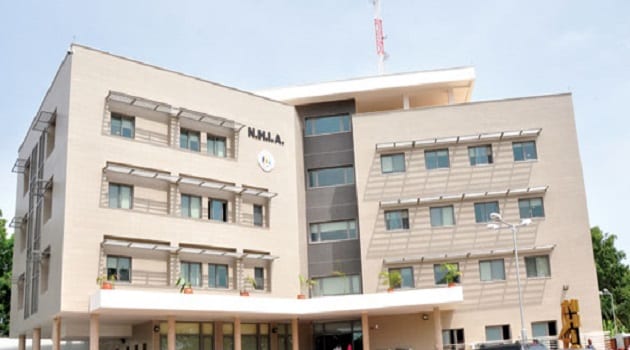
The National Health Insurance Authority (NHIA) is working to stop illegal payments, popularly known as “copayment”, charged to clients with the Insurance Scheme (NHIS) at some health facilities.
The conduct by some health service providers, as alleged by clients, in charging for services covered by the NHIS deemed as co-payment was illegal, and the scheme has issued warning letters to some of them while working closely with stakeholders to abort the practice.
“Some of our members have expressed concern that they still pay for some services covered by the NHIS,” says Mr Mohammed Awudu, the District Director of the NHIA in charge of Talensi and Nabdam, Upper East Region.
“…And we are working to stop those illegal payments that are happening at some of the hospitals because it is affecting our members.”
“The agreement we have with the service providers is that under the benefit package, they should give us 100 per cent of the services that we have agreed with them, and under no circumstances should they charge for any services we have contracted with them”.
Mr Awudu revealed this in an interview with the Ghana News Agency on the sidelines of a data validation forum of research conducted by the Rural Initiative for Self-Empowerment Ghana in the Nabdam and Talensi districts.
The research was to assess the utilisation of NHIS by pregnant women for Antenatal Care (ANC) services in the two districts.
Among the findings were that 17.3 per cent of pregnant women at Nabdam and 38.0 per cent at Talensi expressed concern over co-payments.
Also, 18.7 per cent in Nabdam and 5.3 per cent in Talensi were said to have limited knowledge of the NHIS policy coverage.
It revealed that 51.3 per cent of pregnant women in Nabdam and 33.3 per cent in Talensi were faced with the challenge of limited medicines using NHIS for antenatal care services.
More than half of the respondents (68.80%) were generally satisfied with services under the Scheme at Nabdam while 50 per cent at Talensi expressed satisfaction with accessing ANC services under the Scheme.
Mr Awudu said: “With regards to the limited knowledge on the NHIS policy coverage, what actually happens is that when we go to the community we carry out a holistic sensitisation and we don’t target only the pregnant women.”
“What we do is that we sensitise the service providers, the midwives and the nurses who then educate the pregnant women during their ANC.”
He reiterated the Authority’s efforts at addressing the concerns and called on Ghanaians whose NHIS were inactive to renew while urging those yet to register to do so in order to enjoy the benefits.
Latest Stories
-
Edmond Boateng takes up secretary role at Honorary Consular Corps of Ghana
1 hour -
Gambia appoints British barrister to prosecute gruesome Jammeh-era crimes
2 hours -
Girl group Flo on entering into their ‘bombastic, confident, strong’ era
2 hours -
Germany suspends military approval for long stays abroad for men under 45
2 hours -
Liverpool face uphill Champions League task after PSG thrashing in Paris
2 hours -
‘Ketamine Queen’ sentenced to 15 years in Matthew Perry overdose death
2 hours -
Nigeria begins mass trial of 500 terrorism suspects
2 hours -
Atletico Madrid stun 10-man Barcelona to seize Champions League semi-final advantage
3 hours -
Black Stars coach to be announced by next week – Sports Minister
3 hours -
Chiefs, queen mothers and principal elders of Odau group denounce ‘rebellious Etweresohene’, pledges allegiance to Okyenhene
3 hours -
KNUST library dress code sparks online backlash over strict rules
3 hours -
Cultural Diplomacy in Action: Ghanaian youth leaders present symbolic smock to U.S. Chargé d’Affaires
3 hours -
Ghana Card payment activation under review – NIA breaks silence on financial integration
4 hours -
Ofori-Atta’s ICE release on bail positive; he poses no risk – Amanda Clinton
4 hours -
Ken Ofori-Atta’s passport seized after bail, set to reappear in US Court on April 27
4 hours