

Audio By Carbonatix
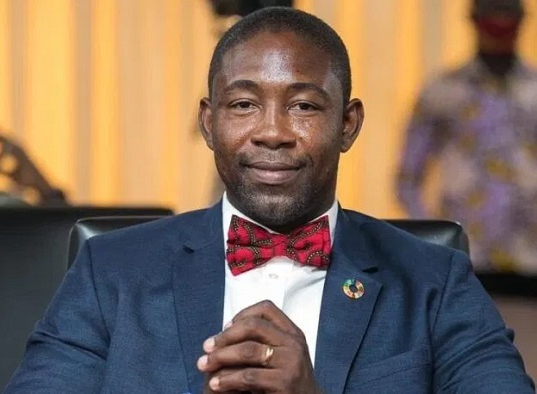
The Chief Executive Officer of the National Health Insurance Authority (NHIA), Dr Bernard Okoe Boye has suggested measures the government can adopt to reduce out-of-pocket expenses for renal patients.
According to him, dialysis was too huge a cost for individuals battling kidney conditions to bear alone since most of them might be unable to pay for these services.
Speaking to JoyNews he said, “As a country, I can tell you boldly, if we are committed we can pay totally for kidney care."
Elaborating on the ways the government can reduce the burden on kidney patients, he said; "First of all, politically we have been going back and forth on funding to NHIS. Kenya even pays for kidney transplants. The reason is very simple, 90% to 95% of the funds are directly with them."
"Secondly, we can put some levy referred to as syntax on some one or two products which are normally not consumed by the ordinary person but by people in a particular class and the inflows on that can go into a fund not necessarily with National Health Insurance.
"It can be the chronic disease fund or the peripheral disease fund which would go to the departments that take care of kidney care and other conditions like cardio diseases so that instead of the GHȼ700 cedis that is been looked at, you can retain GHȼ200 because GHȼ500 cedis has been paid for by this fund.
"Thirdly, we as a country can come together to take away all the taxes on any item that goes into kidney care. We can look at two or three consumables that affect the pricing and the state can procure them directly."
Conversations on what can be done to improve renal services have been in the news for some time now, following the Korle Bu renal unit's closure for over five months.
Read also: Opening Korle Bu renal unit without sustainable financing recipe for disaster – Beyuo
Various stakeholders have advised that the service be migrated onto the NHIS, but those opposed say the scheme lacks the financial strength to take it up.
It is currently unclear what the next line of action would be. However, Dr Boye mentioned that a five-member committee has been charged to come up with recommendations to sustain the renal unit.
Latest Stories
-
NRGI Country Manager questions speed of ministerial approval in Damang mining deal
5 minutes -
Publish the assessment — NRGI demands transparency in Damang mining deal award to E&P
21 minutes -
Tamale: Alhaji Hussein Fuzak funds construction of 3-storey classroom block at Ambariya Islamic School
48 minutes -
Gender Ministry holds staff durbar, welcomes new Chief Director
49 minutes -
Anti-LGBTQ+: Mahama prioritises sentiments of development partners over Ghanaian values – Ntim Fordjour
54 minutes -
CPA intensifies crackdown on fake diapers across public hospitals
1 hour -
Deputy Defence Minister urges failed GAF applicants to check medical disqualification reasons
1 hour -
Video: President Mahama’s speech at One Health Summit
1 hour -
Constitution review must protect Ghanaians values, not advance LGBTQ agenda — Haruna Mohammed
1 hour -
Foreign Affairs Ministry advises Ghanaians to take recommended vaccinations before traveling to Senegal
2 hours -
If you have fixed the economy, why hide behind basic needs to delay Anti-LGBTQ+ Bill? – Ntim Fordjour to Mahama
2 hours -
NACOC Central Regional Command partners with NSRA on drug awareness campaign
2 hours -
Galaxy, DPS and Lycee Français shine at part 2 of 2026 Ghana International School Festival
2 hours -
Project C.U.R.E. donates vital medical supplies to support GMTF’s ‘Heal Ghana’ agenda
2 hours -
Engineers and Planners Ltd secures Damang Mining Lease after grueling $500m competitive tender
2 hours