

Audio By Carbonatix
Some 7.4 million people are registered to vote for the new president, the ballot coinciding with legislative elections.
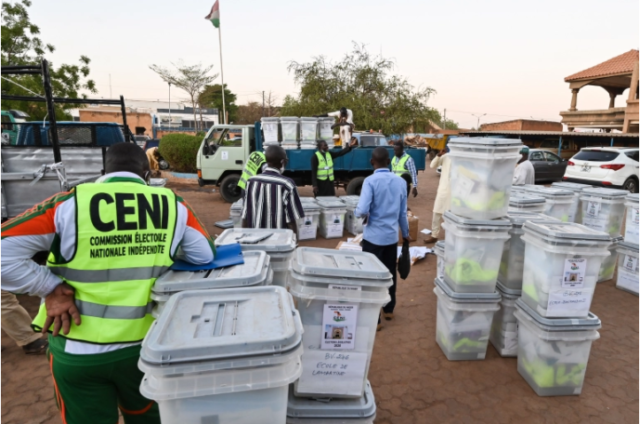
Polls have opened in Niger where people are voting in an election that is expected to lead to the first transfer of power between two democratically elected presidents in a country reeling from violence.
Former Minister of the Interior Mohamed Bazoum, the ruling party’s candidate, is the overwhelming favourite to succeed President Mahamadou Issoufou, who is stepping down after two five-year terms leading the largely desert country of 23 million.
Bazoum, 60, has promised continuity with Issoufou’s policies, while also vowing to clean up pervasive corruption.
He faces 29 other candidates, who will hope to force a second round by denying him an outright majority of the vote.
Hama Amadou, who finished runner-up in the last election, was barred from running because of a criminal conviction, leaving the opposition without an obvious figurehead until last week, when his party called on its supporters to turn out for Mahamane Ousmane, who was president from 1993 to 1996.
Al Jazeera’s Ahmed Idris, reporting from Niamey, said President Issoufou was seen entering a polling centre in the city to cast his ballot.
Meanwhile, in other parts of Niamey, voting has been “progressing peacefully and in an orderly manner,” Idris said.
“What we noticed at the start of the day is that the process is slow – people didn’t come out so early in the morning, but elections officials are telling us the numbers will pick up as the day progresses,” he said.
Approximately 7.4 million people are registered to vote for the new president, a race that coincides with legislative elections.
Campaigning has been overshadowed by the issue of security in a country that has suffered repeated attacks near its borders with Mali and Burkina Faso from fighters linked to al-Qaeda and ISIL (ISIS). Near its southeastern border with Nigeria, it faces attacks from Boko Haram.
Hundreds of soldiers and civilians have been killed in the last year.
The economic situation is also critical. More than 40 percent of the population lives in extreme poverty, and the COVID-19 pandemic has slowed growth to a crawl, compounding the effects of climate change and low prices for its top export, uranium.
A peaceful transfer of power would be a milestone for Niger, which has experienced four coups since gaining independence from France in 1960.
The army has been deployed for Sunday’s vote, authorities say.
“Sporadic attacks will not prevent the stage of the elections,” a spokesman said on Thursday.
Latest Stories
-
‘At the age of 12, I was teaching people and collecting money from them’ – Forty Under 40 Awards
36 minutes -
I broke my virginity at the age of 26 after university – Richard Abbey Jnr.
1 hour -
Sacked for fees, saved by faith: The untold story of Forty Under 40 Awards founder Richard Abbey Jnr
2 hours -
GCB Bank surges GH¢0.45, ETI gains GH¢0.06 as GSE ends week higher
2 hours -
Two teens jailed 55 years for robbery
3 hours -
UDS demands apology for MPhil student wrongly branded as Tamale robber
3 hours -
“We don’t sell fish!” – Tema Shipyard CEO hits back over dead fish discovery
4 hours -
Sam George defends anti-LGBTQ+ Bill as ‘national priority’ amid debate over gov’t focus
4 hours -
Artemis II astronauts safely back on Earth after trip around moon
5 hours -
Sam George unveils massive 1,150-cell site rollout to end network woes
5 hours -
This Saturday on Prime Insight: Fuel levy suspension, LGBTQ+ legislation, and Damang Mine controversy
5 hours -
Struggling Real suffer title blow with Girona draw
6 hours -
Mahama nominates Pamela Graham as Auditor-General
6 hours -
The five big sticking points in US-Iran talks
7 hours -
Melania Trump’s speech propels Epstein crisis back to forefront
8 hours