

Audio By Carbonatix
For many Nigerian children who have never been abroad, few stories about the West are as fascinating as the fact that electricity can stay on from dusk till dawn seven days a week.
"Ehhhh?!" I've often heard children exclaim in amazement when presented with this detail.
No sudden power outages just when mummy is about to iron the blouse she will wear to work, or just when Kelechi Iheanacho is about to take a penalty in a Super Eagles' World Cup qualifying match.
Not even stories of snow, or underground trains, or double-decker buses, can compare with the wonder of constant power - a basic feature of modern living that has eluded our beloved country for decades.
Nigeria has been going through what is probably the most trying power outage the country has experienced since I was a child.
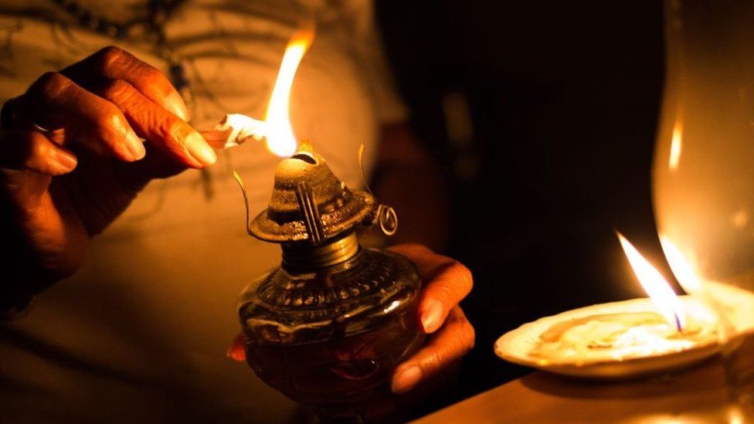
Some of my fondest memories of childhood in the 1980s are of sitting with my family in our home in the south-eastern town of Umuahia at night, the entire living room dark except for the glow of a kerosene lamp on the wooden centre table.
With the TV off and the entire neighbourhood silenced by the power outage, we devised ways to fill the time and darkness.
Usually, my parents told us Igbo folk tales, many of which included choruses that required my siblings and me to sing along, or stories from their childhoods, growing up in colonial Nigeria, when many communities had no electricity.
My maternal grandfather, Wilfred Okonyia Okoroafor, was one of the first men in the town of Oguta to own a Tilley lamp, my mother said. This meant that their home in the early 1950s became one of the few in the community to be lit by a device safer and more potent than the usual fireplace or feeble oil lamp.
My ancestral home of Umujieze had no electricity, my father said, until the late 1970s when his close friendship with the-then manager of the state power company, Nepa, influenced the decision to prioritise our village and connect us to the national grid.
But there is a major difference between those times when my family shared stories in the dark and today
Back then, we knew that it was only a matter of time before the electricity was restored - an hour or two, or three perhaps.
Apart from when something major went wrong, usually with the district's transformer, it was rare for power outages to last for hours, let alone days, on end.
Over the years, however, Nigerians gradually got used to the fact that our government just cannot generate enough electricity for the entire country.
Nepa, the acronym for the Nigerian Electricity Power Authority, soon became known jocularly as "Never Expect Power Always".
When the government renamed the company Power Holding Company of Nigeria (PHCN), the joke became: "Problem Has Changed Name" or "Please Hold Candle Now".
Nigerians who can afford it always find a way to solve their problems when their government can't.
They dig boreholes at their backyards for potable water.
They buy SUVs to overcome the cavernous potholes, or hire bulldozers to grade and gravel the portions of road on their regular routes.
They employ private security to protect their premises and accompany them on trips to insecure regions.
They acquire electricity generators for their homes and offices, the size and efficiency of the machine depending on what each can afford.
The proliferation of generators, particularly cheap ones from China, mean noise pollution and noxious fumes that sometimes in unventilated environments have wiped out families in their sleep.
It also means the additional expense of fuel to power the machines.
The richer you are, the more likely your generator would run for hours on end instead of only at night. In the past few years, inverters have also become popular among those who can afford the uninterruptible power device that can be charged when the electricity is on and act as a standby during outages.
Alas, this perfect arrangement for managing a long-standing problem was scuttled for many Nigerians in recent weeks.
Presidential regrets
A national scarcity of fuel coincided with the collapse of the national power grid that plunged parts of major cities across Nigeria, including Lagos and Abuja, into darkness for days on end.
"I deeply regret the inconvenience caused," President Muhammadu Buhari apologised to the country last week.
He blamed marketers for the fuel shortages and technical issues for the power outages, promising that the twin misfortunes would be resolved soon.
Many inverters ran out of battery charge. Many people have their generators but can find no fuel to buy.
Not even the black market sellers, who usually quadruple their price at such times, could provide a regular supply.
Not even the rich, who can afford fuel at any price, have been able to escape at least some of the darkness.
I doubt if anybody was in the mood to tell folk tales.
Latest Stories
-
We can tackle multiple priorities – Sam George defends Anti-LGBTQ Bill push
29 minutes -
Statement: Ghana Chamber of Mines’ Response to Claims in Joe Jackson’s “Ananse Stories about the Economy of Ghana”
30 minutes -
GES opens 2026 teacher recruitment for licensed B.Ed graduates
33 minutes -
Ghana must value skilled trades, build resilient learners — Ibn Chambas
41 minutes -
Ghana must rethink education around relevance, resilience and responsibility — Ibn Chambas
44 minutes -
Prince Harry faces defamation lawsuit from charity he co-founded
46 minutes -
South Korea deploys thermal cameras to track escaped zoo wolf
47 minutes -
Calls for royal meeting with Epstein survivors grow ahead of US visit
51 minutes -
Ibn Chambas advocates blend of technology and human values in education
52 minutes -
UMA improves healthcare access in Asutifi North with GH₵700k ‘Kim Taylor Legacy’ Walkway
57 minutes -
Scholarships Authority and Fanaka University offer sponsorship for procurement and supply chain studies
1 hour -
Bisa Kdei drops new single ‘Go N Look’ featuring Medikal
1 hour -
Benin facing rising terrorism in north as French military presence faces growing criticism
1 hour -
UEW Public Lecture Series 2026: Education debate ‘about the soul of Ghana’s future’ — Dr Ibn Chambas
1 hour -
EU fingerprint and photo travel rules come into force from today
2 hours