

Audio By Carbonatix
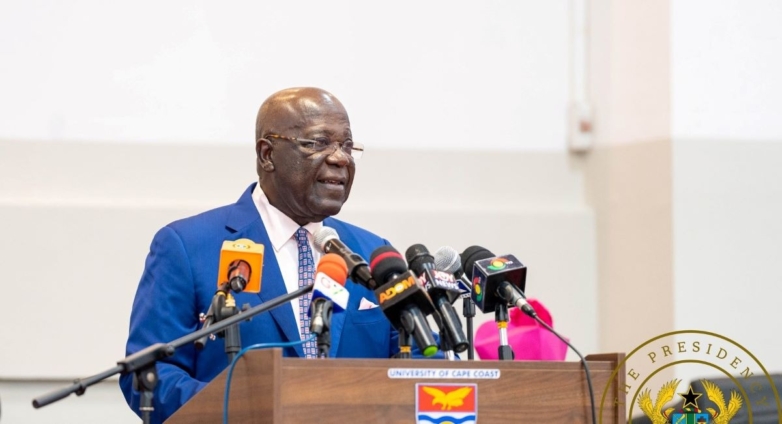
Business magnate Sir Sam Jonah has delivered a message to African leaders and the private sector, insisting that the continent’s industrial ambition is doomed to fail unless individual nations abandon isolationist policies and commit fully to continental economic integration.
The Executive Chairman of Jonah Capital anchored his address on a central theme: the impossibility of unilateral national industrialisation, regardless of a country's size or wealth.
"No African country can industrialise alone," Sir Jonah stated emphatically at the launch of the Africa Trade Summit 2026 in Accra on Tuesday, November 18. "Not Ghana, not Nigeria, not Kenya, not Egypt, not South Africa. Industrialisation requires supply chains that run across borders."
He illustrated this necessity with clear manufacturing examples: "A car manufacturer needs steel from one country, rubber from another, plastics from a third, electronics from a fourth. A pharmaceutical plant needs chemicals, logistics, skills, and harmonised regulation across the region."
The AfCFTA: Framework vs. Momentum
Sir Jonah acknowledged the historic progress made through the African Continental Free Trade Area (AfCFTA) but warned that the agreement remains a mere blueprint without decisive execution.
The AfCFTA, headquartered in Accra, represents the largest free-trade zone globally by the number of countries, uniting 1.3 billion people with a combined Gross Domestic Product (GDP) of US$3.4 trillion.
World Bank estimates suggest its full implementation could lift 30 million Africans out of extreme poverty and boost the continent's income by $450 billion by 2035, predominantly in the manufacturing sector.
However, Sir Jonah’s remarks underscored a critical deficit in intra-African trade, which remains woefully underdeveloped.
Intra-African exports currently make up only around 16.6% of the continent’s total exports.
This figure stands in sharp contrast to other global economic blocs, where intra-regional trade accounts for 68.1% in Europe and 59.4% in Asia, demonstrating Africa’s deep fragmentation.
"The AfCFTA gives us the framework," he stressed. "Partnerships will give us the momentum. Execution will give us the results."
The Poverty of Raw Material Export
The business mogul pointed out that Africa’s failure to build value chains has trapped it in an economically damaging dependency on raw material exports, a model he described as importing poverty.
Factoring in commodity and raw material dependency, data shows that approximately 80% of Africa’s total exports (which reached over $700 billion in 2023) still consist of raw or unprocessed commodities. This perpetual cycle means Africa's share of global manufacturing has stagnated, now accounting for less than 2% of the world total, down from about 3% in the 1970s.
Sir Jonah challenged leaders to embrace a necessary "Hard Reset," insisting that while genuine foreign collaborations are welcome, the agenda must be Africa-led.
“We do not seek charity. We seek collaboration based on mutual benefit and mutual respect,” he asserted. He defined genuine collaboration as including “Technology transfer, fair market access, and investment in regional value chains—that is what Africa requires.”
A Vision of the Industrialised Africa
Concluding his address, Sir Sam Jonah painted a vibrant picture of the “Africa We Want—and the One We Must Build”, one that reverses the current economic structure to capture the full value of its resources and leverage its booming youth population.
His vision focused on local value addition:
- "An Africa that exports finished chocolate, not raw beans." (Currently, countries like Ghana export primary intermediates like raw cocoa, capturing limited value-added.)
- "An Africa that processes its own bauxite into alumina and aluminum."
- "An Africa that produces electric vehicle batteries from its lithium."
- "An Africa whose youthful energy drives innovation, not migration."
Sir Jonah ended on a note of urgent choice for the continent: “We can continue the old way—exporting raw materials and importing poverty. Or we can choose the more difficult, but far more rewarding path—building industries, strengthening partnerships, and empowering the private sector to lead the charge.”
He concluded, “The world will not wait for Africa. And Africa must not continue waiting for the world. Let us seize this moment with clarity and courage.”
Latest Stories
-
Former Effia MP demands full disclosure of Truedare AI deal, warns of ‘hidden risks’
3 minutes -
Joseph Cudjoe raises alarm over potential revenue loss in Truedare AI Customs deal
3 minutes -
Video: Awoshie-Anyaa Highway: Years of fatal crashes caused by faulty traffic lights
8 minutes -
No financial transactions with Ghana Card yet, says NIA
14 minutes -
Former Netherlands Fire Chief engages GNFS Tema Command on capacity building
14 minutes -
Finance Ministry defends Publican AI rollout amid stakeholder concerns
17 minutes -
Police arrest 5 in Asankrangwa robbery; cash and guns retrieved
18 minutes -
Why I joined NPP – Jeneral Ntatia
19 minutes -
Three UDS students remanded over alleged armed robbery
23 minutes -
Kudus Mohammed at risk of missing World Cup 2026 after fresh injury blow
25 minutes -
Minority urges cocoa farmers to resist pressure from galamseyers
26 minutes -
President Mahama applauds astronaut Christina Koch’s Ghana ties in Artemis II mission
28 minutes -
Ex-wife of Richard Nii Armah Quaye moves to Court of Appeal
29 minutes -
Insecurity: US orders non-emergency staff to leave embassy in Nigeria
30 minutes -
ASFC 2026: Ghana U15 girls set up Burkina Faso final after win over Zambia
34 minutes