

Audio By Carbonatix
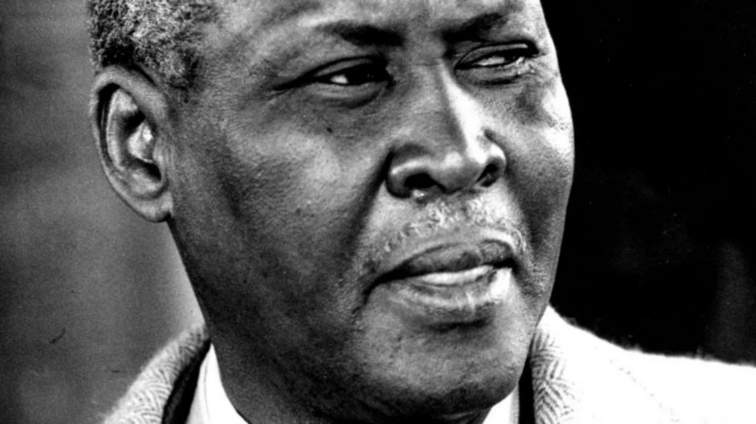
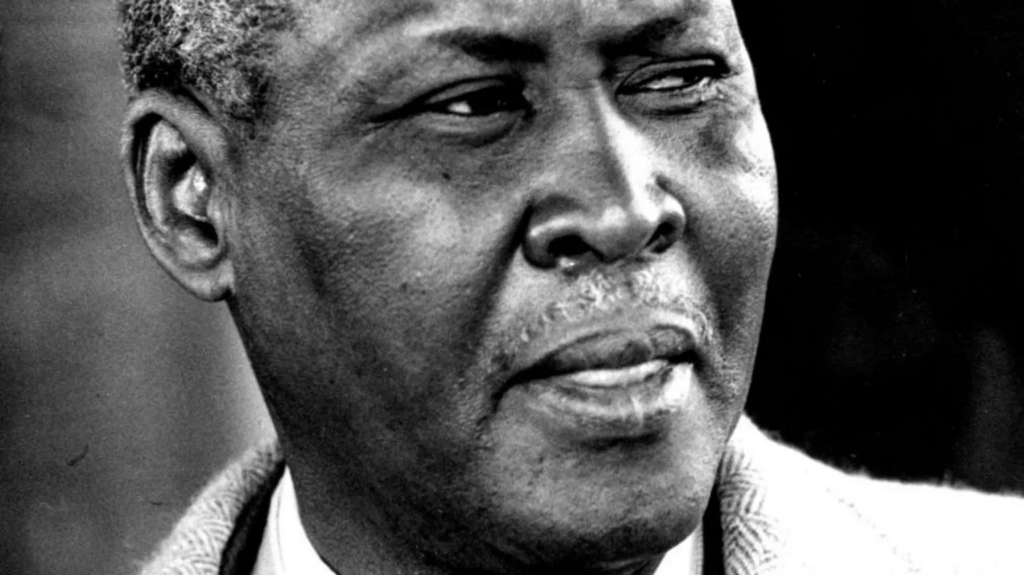
A new inquest will be held into the mysterious death in 1967 of South Africa's anti-apartheid leader and first Nobel Peace Prize winner Chief Albert Luthuli, justice minister Ronald Lamola has said.
Chief Luthuli's family and activists have long cast doubts on the white-minority government's version of his death.
Its inquest found that the Nobel laureate had died in an accident after being hit by a train as he was walking by a railway line near his home in KwaZulu-Natal province.
But campaigners suspected the regime killed him and covered it up by claiming he had died of a fractured skull after being struck by a train.
At the time of his death, Chief Luthuli was not allowed to leave his residential area in Groutville or take part in politics.
He was the leader of the banned African National Congress (ANC) - the liberation movement that came to power in 1994 when the racist system of apartheid ended.
Chief Luthuli won the Nobel Peace Prize in 1960 for spearheading the campaign against apartheid - an award that was later given to three other South Africans: Archbishop Desmond Tutu in 1984 and Nelson Mandela and FW de Klerk in 1993.
Mr Mandela went on the next year to become the country's first democratically elected president, taking over from Mr De Klerk.
The new government set up the Truth and Reconciliation Commission (TRC), which looked into the crimes of the apartheid era and was chaired by Archbishop Tutu.
In a statement, Mr Lamola said a new inquest would "open very real wounds", but "the interest of justice can never be bound by time".
"The truth must prevail," he added.
Mr Lamola said he acted on the recommendation of the National Prosecuting Authority (NPA), which cited a "mathematical and scientific" report as saying that it was "highly unlikely that Chief Luthuli was struck by a train and died because of that".
Mr Lamola also announced new inquests into the deaths of two other prominent anti-apartheid activists - Griffiths Mxenge and Booi Mantyi.
Mr Mxenge was killed by a hit squad of the regime. Its commander, Dirk Coetzee, was granted amnesty by the TRC after he confessed that he gave the order to kill him. Two others members of the hit squad were also granted amnesty.
The justice ministry said the inquest into Mr Mxenge's death would be re-opened as new evidence had emerged, suggesting that "certain critical information" had not been presented to the TRC.
Mr Mxenge's body was found with multiple stab wounds at a stadium near Durban, the main city in KwaZulu-Natal, in 1981. His throat had been slit open.
Mr Mantyi was killed in an alleged altercation with the apartheid regime's police force in 1985 in the small town of De Aar in the Northern Cape province.
An inquest at the time found no-one was responsible for his death.
The justice ministry said an eyewitness, who had previously not testified, had been identified prompting the decision to re-open the inquest.
Similar inquests have been held in recent years into the deaths of other anti-apartheid activists.
The first such inquest led to a judge finding in 2017 that school teacher and activist Ahmed Timol was murdered by police. It overturned the findings of the apartheid regime's inquest that he had taken his own life by throwing himself from the 10th floor of a police building.
The announcement of the latest inquests comes just over two weeks before South Africa holds its general election.
The ANC is facing its toughest electoral test in 30 years, with opinion polls suggesting it could lose its outright majority for the first time.
Latest Stories
-
Philanthropist Alhaji FuZak donates Da’wah bus to Ambariya Sunni community
7 minutes -
GUTA calls for suspension of Publican AI system over trade disruptions, demands temporary halt in import activities
10 minutes -
TTAG raises alarm over proposed recruitment of 7,000 teachers, demands national posting roadmap
43 minutes -
Civilians feared killed after reports of air strike on Nigerian market
53 minutes -
Bishop Simon Kofi Appiah installed as new Jasikan Diocese Bishop
54 minutes -
Trump’s Strait of Hormuz blockade threat raises risks and leaves predicaments unchanged
56 minutes -
US Court backs extradiction of former MASLOC CEO Sedina Tamakloe-Attionu’s to Ghana
1 hour -
Seven arrested as NAIMOS dismantles illegal mining camp, seizes firearms at Boin River
1 hour -
Fire erupts at Madina Ritz Junction, destroys multiple wooden structures and containers
2 hours -
Daniel-Kofi Kyereh returns from long-term injury, registers assist for Freiburg U23
2 hours -
Knifeman calling himself ‘Lucifer’ slashes three at NYC’s Grand Central
2 hours -
Brands are built from within to without
2 hours -
Matriculants urged to pursue excellence as gov’t reaffirms support for Maritime education
2 hours -
See the areas that will be affected by ECG’s planned maintenance on Monday, April 13, 2026
2 hours -
GPL 2025/26: Salim Adams double fires Medeama back to summit after Kotoko rout
2 hours