

Audio By Carbonatix
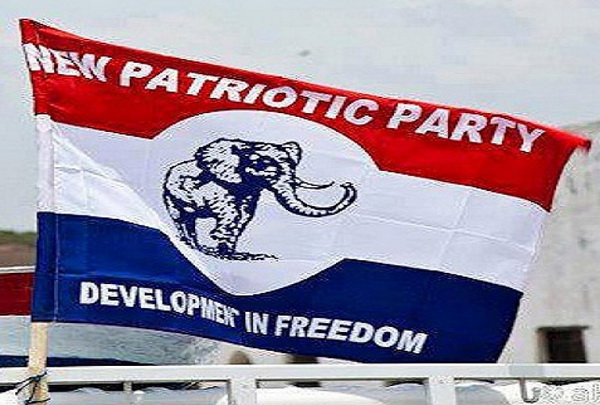
The New Patriotic Party (NPP) Ashanti Caucus in Parliament has strongly criticised the government’s decision to reduce the scope of the Suame Interchange Project from its original four-tier design to a two-tier configuration.
The Caucus described the move as unjustified, technically flawed and unfair to the people of Kumasi and the wider Ashanti Region.
In a statement on Monday, February 9, the caucus said the explanation offered — debt-related constraints and challenges with contractor drawdown — was insufficient, given the national importance of the project and its advanced stage of implementation.
As Members of Parliament whose constituencies are directly affected, the caucus expressed deep concern over what it described as a retrogressive decision that undermines years of planning and engineering work aimed at addressing Kumasi’s worsening traffic congestion.
Origins and Rationale of the Project
The Suame Interchange Project was initiated under the administration of former President Nana Addo Dankwa Akufo-Addo as a long-term response to severe congestion in Kumasi, Ghana’s second-largest and fastest-growing city.
In July 2022, Parliament approved both the Commercial Agreement and the Loan Agreement for the design and construction of the Suame Interchange and ancillary works under Phase One.
The project was financed by Deutsche Bank S.A. of Spain, supported by an export credit guarantee from the Spanish Export Credit Agency (CESCE), a backing the caucus said reflected the project’s international credibility, bankability and technical soundness.
The caucus emphasised that Kumasi is not merely a regional capital but a strategic national transport hub linking major north–south and east–west corridors, as well as key markets, industrial zones and transit routes.
According to the statement, traffic congestion at Suame, Krofrom, Bantama, Abrepo Junction, Anomangye, Magazine and Abusuakruwa has reached “unbearable levels”, leading to excessive travel times, lost productivity, increased fuel consumption, higher accident risks and a declining quality of life for residents and businesses.
Why a Four-Tier Design Was Chosen
The caucus stressed that the original four-tier design was the outcome of extensive traffic modelling, engineering analysis and long-term urban planning, rather than an arbitrary choice.
Despite disruptions caused by Ghana’s International Monetary Fund (IMF) programme and subsequent debt restructuring, which affected the original financing arrangement, the government at the time reallocated funding under the Afreximbank loan facility to keep the project on track.
By 2024, major utility relocations had been completed and foundation works had begun, with detailed engineering designs finalised for all four tiers as a unified and integrated system.
Phase One of the project included a four-tier grade-separated interchange at Suame Roundabout, an overpass at Krofrom Junction, an underpass at Abrepo Junction and the widening of key sections of the Kumasi Inner Ring Road.
Phase Two was designed to deliver additional overpasses at Anomangye, Magazine New Road and Abusuakruwa, the dualisation of the Offinso Road into a six-lane carriageway, the construction of about 15 kilometres of local roads and improvements to critical intersections.
Concerns Over the Revised Two-Tier Plan
According to the caucus, reducing the interchange to two tiers fundamentally compromises the project’s integrity. It warned that such a configuration would fail to eliminate traffic conflict points, would not cater for projected traffic growth and would merely shift congestion from one junction to another.
The caucus further cautioned that revising the already completed engineering designs would likely lead to delays, cost overruns, technical compromises and contractual complications.
“In urban transport engineering, under-designing is often worse than doing nothing, because it locks a city into congestion for decades,” the statement noted.
Questions for Government
The Ashanti Caucus raised several questions for the government, including why funding could be mobilised for other major road projects such as the Ofankor–Nsawam Road while the Suame Interchange was being scaled down.
It also questioned the decision in light of the project’s inclusion in the government’s own “Big Push” road programme in 2025, which was intended to guarantee sustained funding and timely payments.
The caucus further pointed to the Finance Minister’s public statement that GH¢43 billion has been allocated to road infrastructure this year, asking why a portion of that amount could not be used to complete the interchange as originally designed.
Additional concerns were raised about the prioritisation of new road projects over existing high-impact commitments, as well as what the caucus described as inconsistencies in the handling of the Accra–Kumasi dual carriageway project.
Call for Transparency and Restoration of Original Design
The caucus warned that the decision forms part of a worrying pattern of discontinuity, suggesting that projects initiated under the Akufo-Addo administration may be deliberately deprioritised in favour of new initiatives.
“Kumasi deserves infrastructure that reflects its national importance, not half-solutions justified by selective constraints,” the statement concluded.
Latest Stories
-
Education Ministry begins review of Ghana Library Authority law
2 minutes -
Ghana U-15 girls clinch back-to-back CAF Schools titles
7 minutes -
Rev. Ntim Fordjour urges Mahama to issue directive to fast-track anti-LGBTQ+ bill
9 minutes -
GPL 2025/26: Stoppage-time penalty hands Aduana FC win over leaders GoldStars
12 minutes -
Ntim Fordjour rejects call for more dialogue, says anti-LGBTQ+ bill has faced a decade of debate and delay
13 minutes -
Catholic Bishops say moral values must match economic priorities in Anti-LGBTQ+ debate
41 minutes -
IGP Yohuno urges merit and hard work ahead of Police Academy exams
54 minutes -
Queendalyn Yurglee releases debut album ‘Clouds of Glory’
1 hour -
UDS moves to clear MPhil student wrongly linked to robbery case
2 hours -
Vodza Regatta 2026: Prof Audrey Gadzekpo rallies investors for coastal tourism growth
2 hours -
Introduction of 100 new Metro Mass buses won’t affect transport unions – GPRTU
2 hours -
Deputy Transport Minister backs Yellow Line traffic initiative
2 hours -
MTN Ashanti-Fest music concert set to hit Kumasi on Saturday
2 hours -
Authorities probe discovery of dead fish at Tema shipyard
2 hours -
Minority welcomes fuel tax cuts, demands accountability for GH¢1 levy
2 hours